




403
Sorry!!
Error! We're sorry, but the page you were looking for doesn't exist.
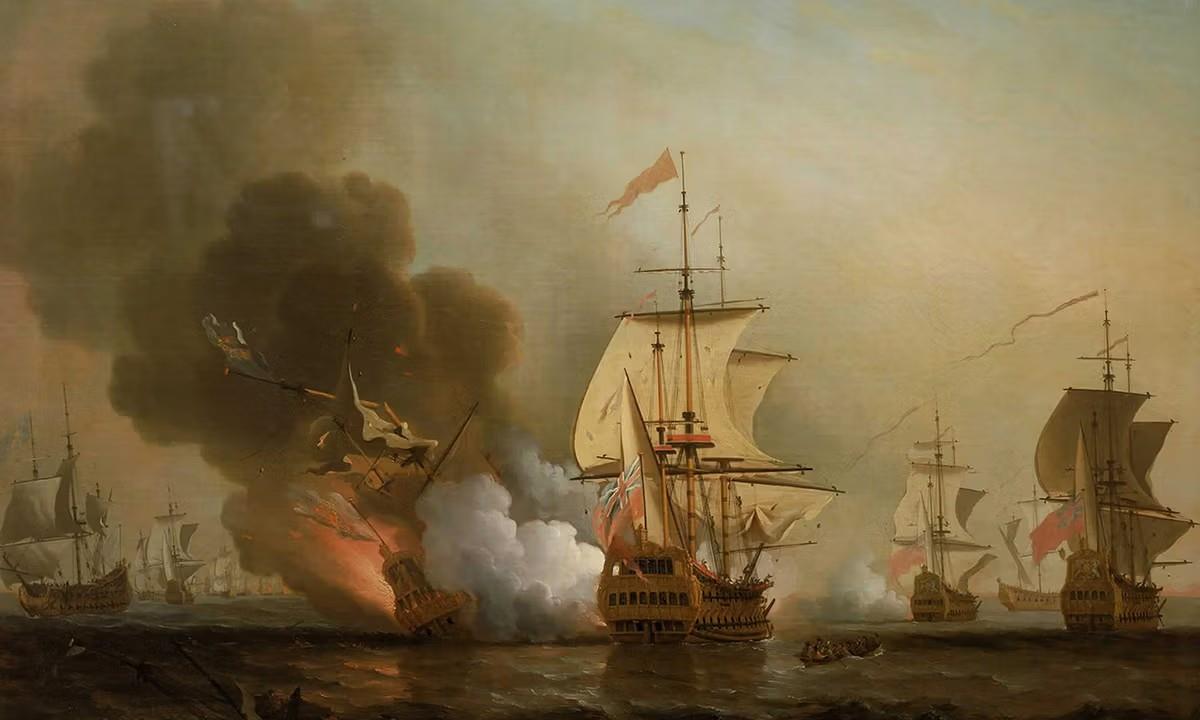
Controversy Resurfaces In Colombia Over Treasure-Filled San José Shipwreck The Art Newspaper International Art News And Events
(MENAFN- USA Art News)
San José Shipwreck Dispute Deepens as Colombia Faces New Looting Allegations
The wreck of the San José has become more than an archaeological site. It is now a test case for how Colombia protects submerged heritage, and for who gets to control the story of a ship that went down with gold, silver, and emeralds in 1708.
A Colombian oversight group, Veeduría Nacional para el Control Social del Patrimonio Cultural Sumergido de Colombia (VNPCS), has renewed pressure on the government with an open letter to the attorney general. The group says the site has suffered looting and unauthorized interventions in 2016 and 2022, and it alleges that the shipwreck's coordinates, treated as a state secret, may have been disclosed.
The San José, a Spanish galleon destroyed by the British during the War of the Spanish Succession, sank off Colombia's coast with nearly 600 people aboard. Its cargo was intended to help finance the war, but the ship went down more than 600 meters below the surface. Since Colombia announced the wreck's discovery in 2015, the site has drawn competing claims from archaeologists, state agencies, and salvage interests.
VNPCS has been pressing the case since 2017. Francisco Muñoz Atuesta, the group's director, said its legal efforts helped lead to the ship's designation as a cultural interest site in 2020, which barred private involvement. Maritime Archaeology Consultants, the Swiss firm that helped locate the wreck in 2015, is now seeking compensation.
The site received another layer of protection in 2024, when it was designated a protected archaeological area under the Colombian Institute of Anthropology and History (ICANH). But Muñoz argues that earlier complaints were ignored, including allegations raised through legal channels in January 2021.
The dispute is not only legal. It is also methodological. Rodrigo Pacheco Ruiz, a deep-sea maritime archaeologist and fellow at the University of Southampton, compared partial imagery from 2015 and 2016 in a 2020 analysis. He said the available evidence makes it difficult to determine whether sediment changes were caused by natural processes or human activity, though some areas appear to show selective removal.
The wreck's value has also been contested in court. Sea Search Armada, the U.S.-based salvage company, says it found the San José in the early 1980s and is seeking $10 billion, which it claims represents half the cargo's value. The case has reached the Hague's Permanent Court of Arbitration.
Questions intensified after underwater robotics retrieved a cannon, a porcelain cup, and three coins in November 2025. Juan Guillermo Martín Rincón, an archaeologist at Universidad del Norte in Barranquilla, said no scientific justification was given for the extraction. Pacheco was blunter: what damages deep-sea archaeological contexts, he said, is human intervention.
For Colombia, the central issue is no longer simply what lies in the wreck. It is whether the site can be protected as heritage before its meaning is reduced to salvage value.

Legal Disclaimer:
MENAFN provides the
information “as is” without warranty of any kind. We do not accept
any responsibility or liability for the accuracy, content, images,
videos, licenses, completeness, legality, or reliability of the information
contained in this article. If you have any complaints or copyright
issues related to this article, kindly contact the provider above.
Most popular stories
Market Research

More Story






Comments
No comment