




403
Sorry!!
Error! We're sorry, but the page you were looking for doesn't exist.
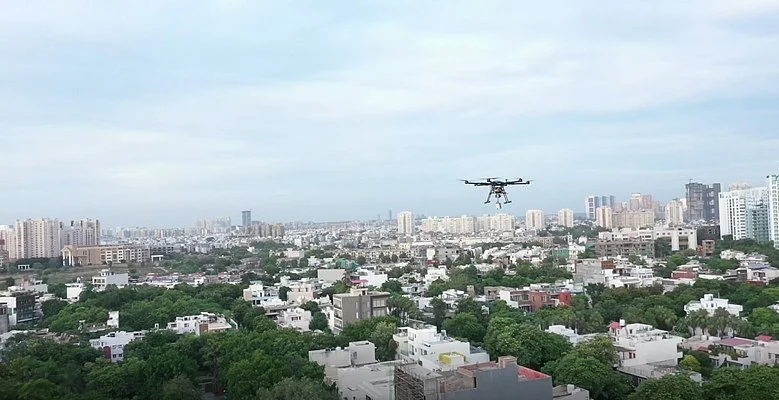
How Nearly 40,000-Strong Drone Network Reaches India's Congested Cities, Villages
(MENAFN- Khaleej Times) Just about three years ago, drone delivery in India was seen as a concept many associated with science fiction or marketing videos. But of late, there have been remarkable changes and drones are increasingly being used by hospitals, logistics outfits, e-commerce platforms, infrastructure, and agriculture sectors, besides defence, catapulting the country to among the fastest-growing in the Asia-Pacific region.
The projected long-term CAGR (compound annual growth rate) expectation is of ~22% through 2030, and both the central government and the states are responding overwhelmingly in adapting the concept, making India one of the most progressive drone regulatory environments globally.
Recommended For You Iran weighs peace proposal, accuses US of 'excessive demands'India now has over 38,500 registered drones, nearly 40,000 DGCA-certified remote pilots, and 244 approved training organisations.
Stay up to date with the latest news. Follow KT on WhatsApp Channels.
“The structural challenges are real,” explains Ankit Kumar, founder and CEO, of Gurugram-headquartered Skye Air Mobility, one of the largest autonomous drone delivery operators in India, and among the top-three globally.
“India's density - with 1.4 billion people distributed across 640,000 villages and a handful of hyper-congested megacities - means our drones must navigate crowded urban air corridors, erratic weather patterns across monsoon seasons, varied terrain from coastal plains to Himalayan foothills, and inconsistent ground infrastructure,” Kumar told Khaleej Times over the weekend.
“Beyond the physical, building reliable public trust in new aerial technology over densely populated areas takes consistent, safe performance over time," he added.
Next 15 years
Interestingly, over the next 15 years, Kumar believes autonomous aerial logistics will become as unremarkable as the internet - ubiquitous infrastructure that people rely on without thinking about the technology underneath.
“In December 2024, India completed its first corneal tissue delivery by drone - a journey that previously took hours by road was compressed to minutes. More than 10 All India Institutes of Medical Sciences (AIIMS) facilities are now receiving drone-led medical logistics” under a government scheme.
In urban delivery, a Skye Air drone covers 7.5 km in 3–4 minutes versus 15 minutes by road - a 70 per cent time saving that translates directly into fresher groceries, faster medicines, and fewer delivery vehicles adding to already congested roads, he adds. Besides governments funding multi-billion-rupee drone programmes,“major e-commerce platforms like Flipkart and BlueDart are active delivery partners, healthcare institutions including AIIMS are using drone logistics, and NVIDIA has onboarded us into its global inception programme. That is a meaningful shift in credibility.
“The corporate sector has moved fastest,” noted Kumar, adding:“Quick commerce and e-commerce players understand that last-mile delivery is where margin is won or lost, and drones offer a structurally better economics - at scale, we can do Rs 3 per delivery compared to Rs 25–40 by road.”
Growth opportunitiesThere are tremendous opportunities to accelerate further in residential housing societies, business parks, and secondary hospitals where adoption can happen very quickly with minimal friction.“Skye Pods - our smart delivery receptacles - can be installed in any residential complex within days, enabling same-day drone delivery for residents without any infrastructure upheaval,” said Kumar.
At the individual level, awareness is the key gap, he believes. Once people experience drone delivery personally, scepticism dissolves rapidly. Sky Air is expanding to Bengaluru, and other Tier 1-2 cities over the next 18 months.
“We are scaling our fleet from 30 operational drones today to 150 by March 2027, expanding our coverage to 400 new pin codes, and building 75 Skye Pods across 250 residential societies,” noted Kumar.
He explained The next five years, will be defined by BVLOS (Beyond Visual Line of Sight) commercialisation at scale.“A single remote pilot supervising 20 drones will make drone delivery economics compelling enough for mainstream adoption across thousands of cities. Drone fleet sizes will move from dozens to tens of hundreds per operator. India alone could have hundreds of millions of drone deliveries annually by 2030, up from roughly 2 million today.”
Meanwhile, Dubai's Civil Aviation Authority and Abu Dhabi's GCAA are among the most forward-looking regulatory bodies globally.
Kumar finds Dubai and Abu Dhabi compelling because of the convergence of three factors: Visionary government leadership that actively embraces emerging technology, world-class infrastructure that can support advanced drone operations, and a genuine appetite for being first-movers in autonomous mobility.
ALSO READ- Drone deliveries set to expand in Dubai as Sobha Realty, Keeta sign deal Why UAE is becoming global testbed for air taxis and self-driving cars

Legal Disclaimer:
MENAFN provides the
information “as is” without warranty of any kind. We do not accept
any responsibility or liability for the accuracy, content, images,
videos, licenses, completeness, legality, or reliability of the information
contained in this article. If you have any complaints or copyright
issues related to this article, kindly contact the provider above.
Most popular stories
Market Research

More Story







Comments
No comment