




403
Sorry!!
Error! We're sorry, but the page you were looking for doesn't exist.
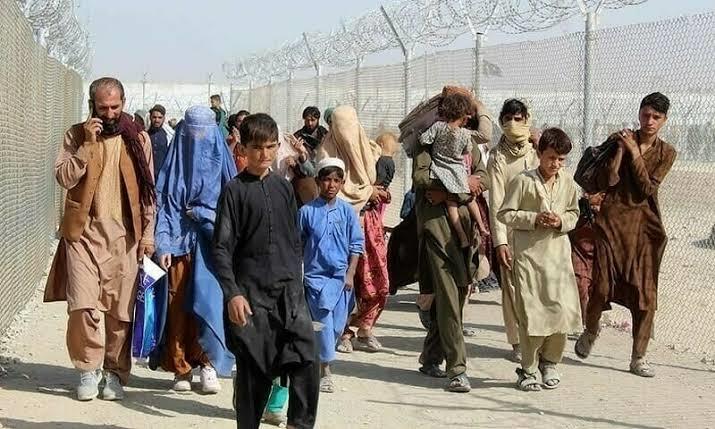
An Uncertain Eid For Afghan Families Returning Through Torkham
(MENAFN- Tribal News Network) Eid brings a message of joy, ease, and mutual compassion, but these days at the Torkham border, many Afghan families are spending Eid amid travel, uncertainty, and preparations for return.
Women, children, and elderly people are returning to Afghanistan along with their household belongings, while many families appear worried about their future. In such circumstances, an important question is increasingly being raised: during religious festivals, can temporary humanitarian relief be provided so that affected families may make their decisions with greater peace and dignity?
In this regard, journalist Mehrab Shah Afridi from Khyber district of Khyber Pakhtunkhwa says that during the last 45 days, approximately 210,000 Afghan nationals have returned to Afghanistan through the Torkham border, while since 2023 nearly 2.5 million Afghan refugees have gone back to their homeland. According to him, an average of 4,000 people return daily.
He says that even after the announcement of Eid, there has been no significant change in the repatriation process, and the daily average has remained almost the same.
According to him, women, children, and elderly people are also among those returning, as most families are going back together as complete households. Every day, hundreds of vehicles carrying families and their belongings can be seen heading towards Afghanistan through the Torkham border.
Mehrab Shah Afridi says that the highest number of Afghan nationals are returning from Punjab, while the repatriation process is also continuing from Khyber Pakhtunkhwa and other provinces.
According to official information, notices have already been issued to undocumented Afghan nationals, after which many families are returning voluntarily. Authorities say that the phased repatriation process will continue. Various official estimates suggest that between 1.5 and 1.8 million undocumented Afghan nationals are currently residing in Pakistan.
On the other hand, Islamabad-based human rights activist Ahsan Ahmadzai says that due to the current situation around Eid, Afghan families are facing uncertainty and anxiety.
Also Read: Pak-Afghan Highway Blocked: Transporters Protest Over Stranded Drivers in Afghanistan
According to him, elderly individuals speak about the need for safe and dignified return, young people are worried about continuity in education and employment, while women express concerns regarding children's education, healthcare, and social protection.
Ahsan Ahmadzai says that Afghan families are currently facing basic challenges related to legal documentation, housing, employment, healthcare, and education. He adds that these difficulties become even greater during Eid, as many families are spending their savings on travel and relocation expenses.
He says that mental stress and anxiety among women and children are increasing, and many families are occupied with decisions about their future instead of preparing for Eid. According to him, several families returning to Afghanistan may also face problems related to housing, employment, and basic facilities there.
Ahsan Ahmadzai says that temporary humanitarian relief could be provided during Eid and for some time afterward so families may prepare and make decisions with dignity. According to him, special facilitation is needed for women, children, sick individuals, and students to reduce hardships.
Islamic teachings also emphasize compassion, ease, and humanitarian consideration during religious festivals.
Maulvi Muazullah from Swat says that Islamic law contains clear principles regarding asylum, protection, and the rights of refugees. According to him, the fundamental message of Eid is joy, ease, and mutual mercy.
He says that Islamic teachings encourage creating convenience for vulnerable groups during such occasions; therefore, providing temporary relief or additional time for women, children, and the elderly can be considered in line with the spirit of Islam.
According to him, Islam teaches respect for state laws, but also stresses human dignity and compassion. He says that although the repatriation process may be necessary, temporary relief can still be given during religious festivals so families may complete their affairs with relative ease and dignity.
Legal experts say that international principles also allow room for human dignity, family protection, and humane treatment in sensitive situations.
In this context, Advocate Malik Saddam Hussain of the Peshawar High Court says that international law gives fundamental importance to human dignity and family protection in matters concerning refugees.
According to him, under international principles, no individual should be returned to conditions where they may face extraordinary hardship or inhumane circumstances.
He says that different countries have adopted temporary administrative flexibility during religious festivals or exceptional situations so vulnerable families can avoid immediate difficulties.
Advocate Malik Saddam Hussain says that although Pakistan is not a formal signatory to the international refugee convention, it still bears responsibility for protecting human dignity and basic rights under various international human rights agreements.
According to him, the state has the right to maintain its national policies, but humanitarian considerations must also be taken into account.
He says that for women, children, sick individuals, and documented persons, limited humanitarian facilitation or a phased return mechanism during Eid may help create a balance between legal requirements and humanitarian concerns.
According to Malik Saddam Hussain, examples exist in different countries where temporary relief has been provided during religious festivals or sensitive situations on administrative grounds. He says that if the government provides short-term temporary facilitation, phased repatriation, or easier registration during Eid, it may be considered a balanced step from both legal and humanitarian perspectives.
The situation of Afghan families during Eid raises a question that is not only about borders, but also about humanity, compassion, and collective responsibility. This is why different groups are emphasizing that alongside the law, humanitarian aspects should also be considered so affected families may pass through this difficult phase with relative ease, respect, and dignity.

Legal Disclaimer:
MENAFN provides the
information “as is” without warranty of any kind. We do not accept
any responsibility or liability for the accuracy, content, images,
videos, licenses, completeness, legality, or reliability of the information
contained in this article. If you have any complaints or copyright
issues related to this article, kindly contact the provider above.
Most popular stories
Market Research

More Story




Comments
No comment