




403
Sorry!!
Error! We're sorry, but the page you were looking for doesn't exist.
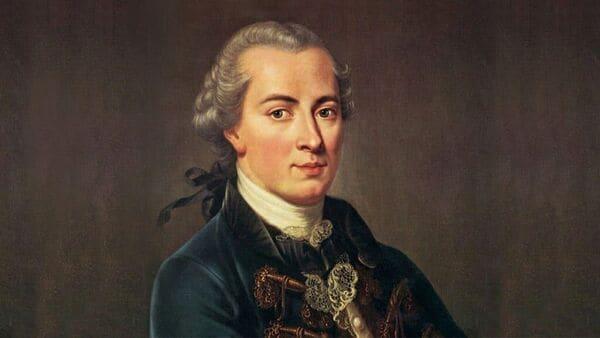
Quote Of The Day By Immanuel Kant: Philosopher's 3-Part Formula For Happiness Is 'Something To Do...'
(MENAFN- Live Mint) Immanuel Kant is best remembered for philosophical works so dense and demanding that generations of university students have lost sleep wrestling with them. The Critique of Pure Reason, published in 1781, is the kind of book that sits on shelves more often than it is read. His writings on metaphysics, epistemology and moral philosophy reshaped the foundations of Western thought so profoundly that scholars are still unpacking them more than two centuries later.
And yet, tucked inside one of history's most formidable intellectual legacies is a definition of human happiness so disarmingly simple it stops you mid-scroll.
The 18th-century German philosopher, who was born in Königsberg in 1724 and rarely travelled more than a few miles from his hometown across his entire life, distilled the good life into just three things. No vast fortune. No perfect circumstances. No guarantee of ease or recognition or status
Also Read | Quote of the day by Salman Khan: 'Life used to be black-and-white...now it' grey...'"Rules for happiness: something to do, someone to love, something to hope for."
That is it. Three clauses. Eleven words of substance. And yet remarkably little has been written since that meaningfully improves upon them.
Why This Quote Has Endured for Over Two CenturiesThe formula endures because it is built not around what we accumulate, but around what we are oriented towards. Purpose, connection and anticipation. A reason to get up in the morning, a reason to care about something beyond ourselves, and a reason to keep going when circumstances make that difficult.
Each element, considered on its own, is sustaining. Meaningful work, the kind that engages and stretches us, has been linked repeatedly in psychological research to life satisfaction. Deep relationships, the kind that require vulnerability and commitment, consistently rank among the strongest predictors of long-term wellbeing. And hope, the quiet conviction that tomorrow holds something worth reaching for, has been shown to be one of the most powerful buffers against despair.
Also Read | Carl Jung quote of the day: Why loneliness is about being unheardTogether, the three do not merely coexist. They reinforce one another. Work gives us stories to bring to the people we love. Love gives us reasons to hope. Hope makes the work feel worth doing. Kant did not spell this out. He did not need to.
A Formula That Speaks Directly to Modern LifeWhat makes this observation feel particularly striking today is how directly it cuts against the dominant narratives of modern life. Contemporary culture tends to locate happiness in outcomes: the promotion secured, the relationship formalised, the financial milestone reached, the number of followers accumulated. Kant locates it somewhere else entirely, in orientation, in process, in the texture of an ordinary day lived with intention.
In an age that measures wellbeing in metrics, productivity in outputs and success in net worth, his three-part framework carries an almost disruptive simplicity. It asks nothing about your income, your status, your productivity score or your inbox. It asks only whether you have something to do that matters, someone to love who matters, and something on the horizon that makes the present feel purposeful.
The Man Behind the QuoteKant lived what might charitably be described as an extremely structured life. He was so punctual in his daily walks through Königsberg that neighbours reportedly set their clocks by him. He never married. He spent the vast majority of his life within a remarkably small geographical radius. By the metrics of modern aspiration, his biography would not trend particularly well.
Also Read | Epictetus quote of the day: Why difficulties reveal true characterAnd yet he thought with extraordinary depth about what it means to live well, to act rightly and to be fully human. The quote attributed to him suggests that somewhere beneath the formidable architecture of his philosophical system, he understood something deeply human and deeply simpl about the conditions for a contented life.
What Kant Is Really Telling UsThe good life, he suggests, is less about arrival than it is about direction. Less about having achieved than about being genuinely engaged. The three rules he offers are not destinations. They are orientations, ways of being in the world that make the journey itself feel worthwhile rather than merely instrumental.
In a world that is noisier, faster and more distracted than anything Kant could have imagined, that quiet reminder feels less like philosophy and more like a necessity.
Also Read | Quote of the day by Walt Whitman: 'Keep your face always toward the....'Immanuel Kant (1724 to 1804) was a Prussian philosopher whose works, including the Critique of Pure Reason and the Groundwork of the Metaphysics of Morals, remain central to the study of ethics, metaphysics and epistemology. He spent almost his entire life in Königsberg, Prussia, which is present-day Kaliningrad, Russia.

Legal Disclaimer:
MENAFN provides the
information “as is” without warranty of any kind. We do not accept
any responsibility or liability for the accuracy, content, images,
videos, licenses, completeness, legality, or reliability of the information
contained in this article. If you have any complaints or copyright
issues related to this article, kindly contact the provider above.
Most popular stories
Market Research

More Story








Comments
No comment