




403
Sorry!!
Error! We're sorry, but the page you were looking for doesn't exist.
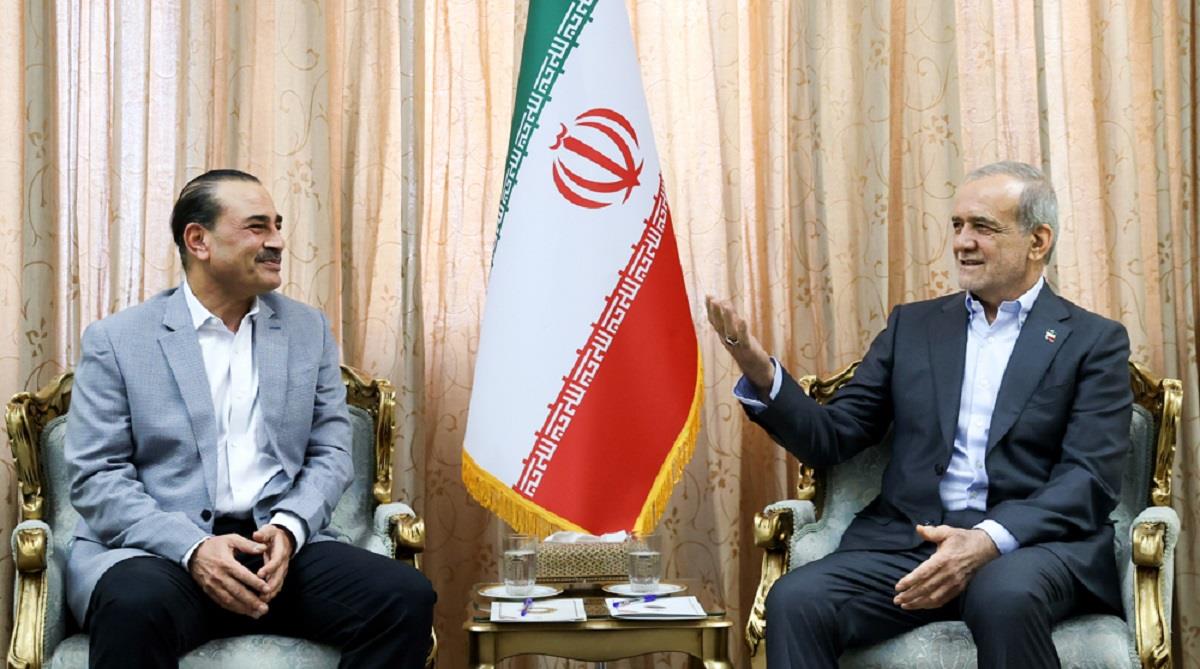
Munir In Tehran As Diplomacy Overtakes War Rhetoric
(MENAFN- Kashmir Observer) Tehran – Pakistan's army chief held talks with Iran's top leadership in Tehran as diplomatic activity intensified around efforts to secure a broader Iran-U.S. understanding, with Tehran signalling cautious optimism that negotiations were narrowing differences even as officials warned substantial disputes remained unresolved.
ADVERTISEMENT
Field Marshal Asim Munir, who arrived in Tehran on Friday on what Pakistan described as part of“ongoing mediation efforts”, separately met Iranian President Masoud Pezeshkian, Foreign Minister Abbas Araqchi and Parliament Speaker Mohammad Baqer Qalibaf, according to Iranian media and Pakistani officials.
ADVERTISEMENT
The visit comes amid a flurry of regional diplomacy that has raised hopes negotiations are gaining momentum, reducing the immediate risk of renewed hostilities even as key disagreements continue to cloud prospects for a final settlement.
Munir's trip, his second to Iran in little over a month, follows several days of consultations by Pakistan's Interior Minister Mohsin Naqvi, who has been in Tehran holding meetings with senior Iranian officials.
Pakistan, increasingly emerging as a key intermediary between Tehran and Washington, says its outreach is aimed at preventing a return to conflict and sustaining diplomatic channels opened after a fragile ceasefire paused weeks of confrontation.
According to a statement issued by Iran's presidency, President Pezeshkian told Munir that Tehran sought only the restoration of its legitimate rights and remained deeply cautious because of previous experiences with Washington.
“The Islamic Republic seeks only to restore its rights,” Pezeshkian said, while adding that Iran distrusted the United States because of what he described as repeated breaches of commitments, attacks during negotiations and the killing of Iranian officials.
“Under such circumstances, the Islamic Republic of Iran - relying on brotherly relations with friendly countries including Pakistan - has entered the path of negotiation,” he said.
Munir, according to Iran's Press TV, said the negotiation process was“proceeding well” and praised efforts aimed at reducing tensions. He also accused Israel of benefiting from divisions in the Muslim world and seeking instability in the region.
Iran's official IRNA news agency reported that Munir also held lengthy discussions with Foreign Minister Araqchi and later met Parliament Speaker Ghalibaf to discuss regional developments and bilateral relations.
ADVERTISEMENTThe meetings took place as Tehran offered its clearest indication yet that diplomatic discussions with Washington may be advancing, albeit slowly.
Iranian Foreign Ministry spokesperson Esmaeil Baqaei said on Saturday that an agreement appeared simultaneously“very far and very close”, reflecting both progress and lingering mistrust.
He said Pakistan's role had been central in facilitating exchanges between Tehran and Washington and confirmed that Munir's visit formed part of efforts to continue transmitting messages between the two sides.
Baghaei said Iran was currently focused on finalising a proposed 14-point memorandum of understanding aimed at ending what he described as an imposed war and creating a framework for broader negotiations.
He said the document had been exchanged multiple times and discussions over wording and disputed provisions were continuing.
“Over the past week the trend has been toward reducing points of disagreement,” Baqaei said, while cautioning that unresolved issues still required further discussion and mediation.
The spokesman suggested that while a final agreement remained distant, recent diplomacy had moved discussions toward narrowing differences rather than widening them.
He said Iran hoped first to finalise a framework agreement focused on ending hostilities before moving within 30 to 60 days toward broader negotiations covering more complex issues.
Iran's priorities in the current phase include ending conflict across multiple fronts, lifting sanctions, securing the release of frozen Iranian assets and addressing maritime disputes linked to the Strait of Hormuz, Baqaei said.
He described restrictions affecting Iranian shipping as unlawful and accused the United States of actions amounting to“maritime aggression”.
Baghaei also said Iran and Oman were discussing mechanisms for managing security and navigation through the Strait of Hormuz, one of the world's most important energy chokepoints.
“The Strait of Hormuz has nothing to do with the United States,” he said, adding that Tehran expected international support for arrangements intended to safeguard maritime traffic.
He declined to discuss details relating to Iran's nuclear programme, saying Tehran had deliberately shifted focus toward ending conflict first before addressing other sensitive issues.
Nuclear questions remain among the most difficult obstacles in negotiations, along with sanctions relief, guarantees and access to Iranian assets frozen abroad.
Read Also Asim Munir Meets Iran FM in Tehran Amid Peace Push Pak Army Chief Heads to Tehran as Iran-US Talks AdvanceAnalysts say diplomacy now appears to be moving along two parallel tracks: one seeking an immediate understanding to prevent renewed war and another attempting to build a framework for a longer-term settlement.
The renewed momentum follows reports that U.S. President Donald Trump is considering fresh military action if talks fail to produce results.
Yet despite such warnings, the latest round of diplomacy appears to have shifted the immediate trajectory from escalation toward negotiation.
Whether that momentum can survive longstanding distrust and unresolved disputes may become clearer in the coming days.

Legal Disclaimer:
MENAFN provides the
information “as is” without warranty of any kind. We do not accept
any responsibility or liability for the accuracy, content, images,
videos, licenses, completeness, legality, or reliability of the information
contained in this article. If you have any complaints or copyright
issues related to this article, kindly contact the provider above.
Most popular stories
Market Research

More Story




Comments
No comment