




403
Sorry!!
Error! We're sorry, but the page you were looking for doesn't exist.
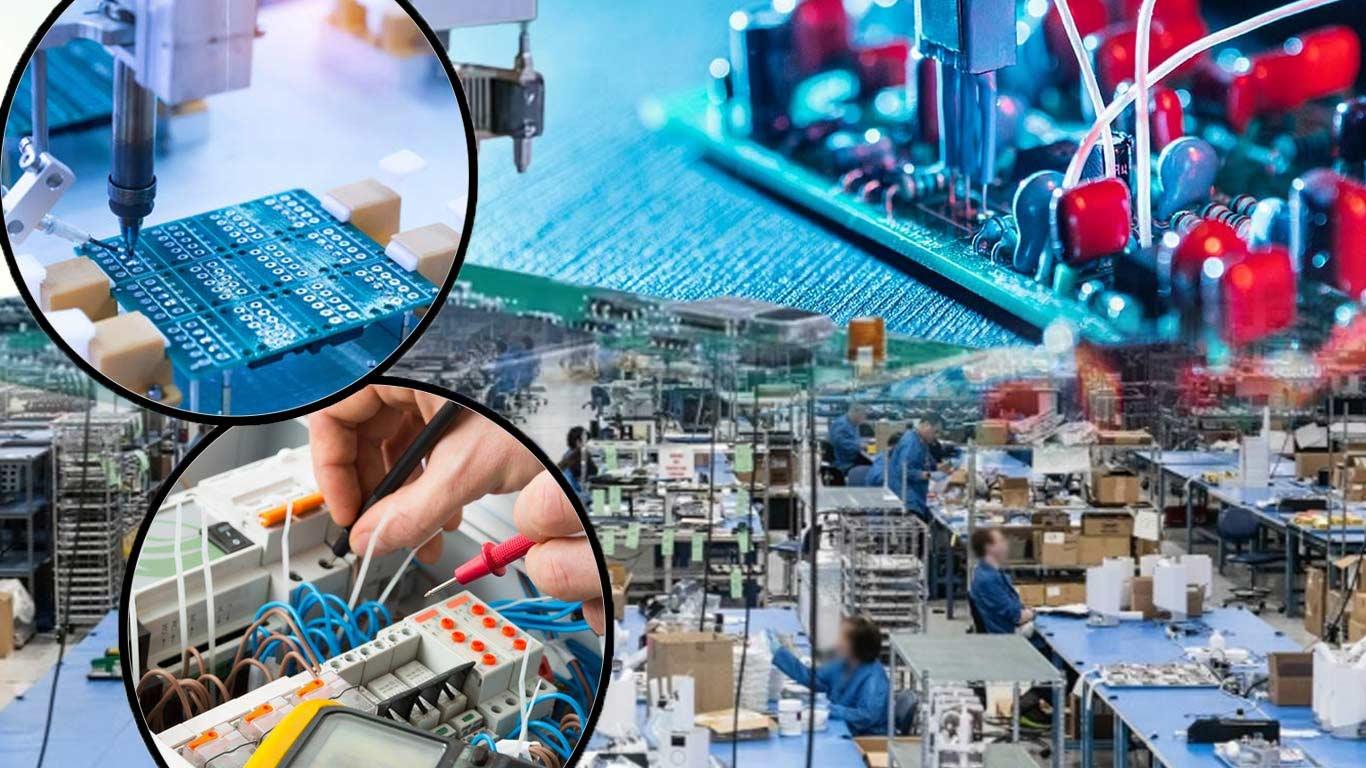
India Risks USD 130 Bn Production Gap In Electrical Equipment Without Manufacturing Scale-Up: Report
(MENAFN- KNN India)
New Delhi, May 22 (KNN) India's electrical equipment sector could become a USD 235-billion manufacturing opportunity by 2035, but risks a production shortfall exceeding USD 130 billion and import dependence rising above 70 per cent if domestic manufacturing capacity is not rapidly expanded, according to a new report by McKinsey & Company.
The report highlighted that India's domestic electrical equipment consumption has reached approximately USD 59 billion in FY2025, growing at an annual rate of 11 per cent over the past five years. However, import dependence has simultaneously climbed from 22 per cent in 2020 to 33 per cent in 2025, exposing a widening gap between surging demand and domestic manufacturing capability. Current domestic production stands at around USD 50 billion.
The sector's growth is being driven by record electricity demand, rapid renewable energy capacity addition, large-scale transmission expansion, and accelerating investments in electric mobility, battery storage, and industrial electrification.
The Opportunity - and the Risk
McKinsey projects India's domestic electrical equipment production could rise to USD 195–235 billion by 2035, with domestic consumption reaching USD 170–205 billion. Exports could cross USD 60 billion, enabling India to capture nearly 5 per cent of global electrical equipment trade.
The sector is expected to grow at a compounded annual rate of 11–13 per cent over the next decade.
Bhavesh Mittal, Partner, McKinsey & Company and co-author of the report, said,“Business-as-usual will not be enough. Without a step-change in domestic manufacturing, India could face a USD 130 billion production shortfall and import dependence above 70 per cent by 2035.”
High-growth segments such as renewable energy equipment, advanced cables, and power electronics together represent a global market opportunity exceeding USD 500 billion by 2035 - one that Indian manufacturers risk missing.
Key Constraints Holding Back the Sector
The report identifies several structural bottlenecks, including heavy reliance on imported raw materials and sub-components, limited backward integration, manual manufacturing processes, and dependence on imported production equipment.
Addressing these will require large-scale investments in electrical steel, precision manufacturing, automation, smart grid technologies, and workforce upskilling.
McKinsey estimates that aggressive localisation across batteries, solar PV cells and modules, power electronics, and critical sub-components could reduce import dependence from the current 33–34 per cent to below 14–17 per cent.
India's Emerging Export Competitiveness
India has already begun demonstrating export capability in select segments. Indian manufacturers currently account for nearly 20 per cent of non-European transformer imports into the UK market - a signal of latent global competitiveness that the report says can be scaled.
Amit V. Gupta, Senior Partner, McKinsey and co-author of the report, noted, "In sectors such as IT services and auto components, India has already demonstrated that global leadership is achievable when policy, entrepreneurship and innovation align."
“Adapting a similar approach to the electrical equipment sector could support the country's transition from being a major consumer of electricity to becoming a significant player globally in the technologies that enable its delivery,” Gupta added.
(KNN Bureau)

Legal Disclaimer:
MENAFN provides the
information “as is” without warranty of any kind. We do not accept
any responsibility or liability for the accuracy, content, images,
videos, licenses, completeness, legality, or reliability of the information
contained in this article. If you have any complaints or copyright
issues related to this article, kindly contact the provider above.
Most popular stories
Market Research

More Story







Comments
No comment