




403
Sorry!!
Error! We're sorry, but the page you were looking for doesn't exist.
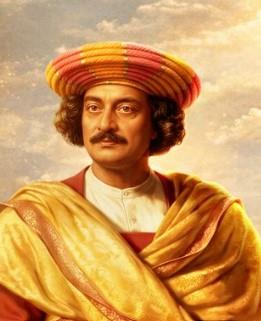
Raja Ram Mohan Roy's Ideologies Will Forever Illuminate Path Of Nation-Building: Amit Shah
(MENAFN- IANS) New Delhi, May 22 (IANS) Union Home Minister Amit Shah on Friday paid rich tributes to social reformer Raja Ram Mohan Roy on his birth anniversary, saying his ideologies and ideals would continue to guide the country towards social awakening and nation-building.
In a post on X, HM Shah described Raja Ram Mohan Roy as the pioneer of the Indian Renaissance and hailed his contribution to eradicating social evils and strengthening the foundation of modern India.
“On the birth anniversary of Raja Ram Mohan Roy, the pioneer of the Indian Renaissance, I offer him millions of salutations. Through the establishment of the Brahmo Samaj, Raja Ram Mohan Roy awakened people against social superstitions, blind faith, and inequalities. At the same time, through 'Gaudiya Vyakarana', he endowed the Bengali language with new ideologies and intellectual directions,” wrote HM Shah on X.
“His contributions in the fields of education, social reform, and public administration have firmly strengthened the foundation of modern India. Raja Ram Mohan Roy's ideologies and ideals will forever illuminate the path of nation-building and social awakening,” he added.
Union Minister for Road Transport and Highways Nitin Gadkari also remembered the noted reformer and paid homage to him on the occasion. In his message on X, Gadkari said,“The work of the great social reformer Raja Ram Mohan Roy Ji, known as the father of modern India, is significant. On his birth anniversary today, humble salutations to him.”
Meanwhile, Uttar Pradesh Chief Minister Yogi Adityanath paid tribute to Raja Ram Mohan Roy and highlighted his role in promoting rational thought and modern education.
In a post on X, CM Yogi wrote,“On the birth anniversary of Raja Ram Mohan Roy, the pioneer of the Indian Renaissance, great social reformer, and founder of the Brahmo Samaj, humble tribute. He led society from superstition towards reason, from regressive customs towards progressive consciousness. His contribution to the spread of modern education will forever continue to inspire the nation.”
Raja Ram Mohan Roy (1772-1833) was a prominent Indian social reformer, scholar, and founder of the Brahmo Samaj, a socio-religious reform movement.
Born on May 22, 1772, in Radhanagar in Bengal, he belonged to a prosperous and orthodox Brahmin family and emerged as one of the foremost voices for progressive social change in India.
Often referred to as the“Father of Modern India”, he played a pivotal role in the 19th-century Indian Renaissance and strongly advocated social, religious and educational reforms.
His contributions spanned several areas, including religion, social justice, education and journalism.

Legal Disclaimer:
MENAFN provides the
information “as is” without warranty of any kind. We do not accept
any responsibility or liability for the accuracy, content, images,
videos, licenses, completeness, legality, or reliability of the information
contained in this article. If you have any complaints or copyright
issues related to this article, kindly contact the provider above.
Most popular stories
Market Research

More Story






Comments
No comment