





403
Sorry!!
Error! We're sorry, but the page you were looking for doesn't exist.
UAE, India Are Emerging As One Of The World's Fastest-Growing Retail Corridors
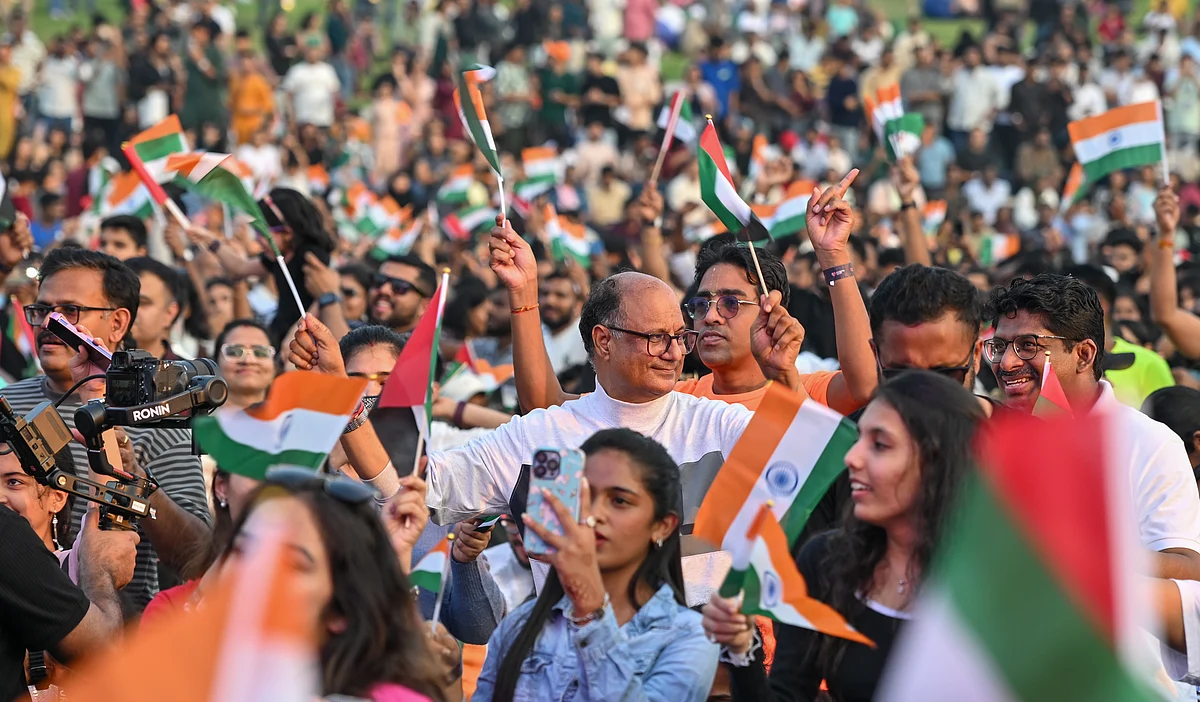
(MENAFN- Khaleej Times) As the UAE and India race toward a $100 billion-plus non-oil trade partnership, a powerful new consumer and retail corridor is emerging between the two economies, reshaping trade flows, supply chains, digital commerce, and cross-border investments across one of the world's fastest-growing consumption markets.
Driven by the UAE's position as a global retail and logistics hub and India's massive consumer base and digital economy boom, businesses are increasingly moving beyond traditional exports to build integrated retail ecosystems spanning the Gulf and South Asia.
Recommended For You Can NRIs carry gold coins, bars duty-free from UAE after India hikes import duty?A new strategic report released by the UAE India Business Council – UAE Chapter and Arthur D. Little says the evolving UAE-India consumer ecosystem could become one of the most consequential retail and consumption corridors globally over the next decade as companies deepen localisation, digital integration, and regional supply-chain partnerships.
Stay up to date with the latest news. Follow KT on WhatsApp Channels.
The report, titled“The India–UAE Corridor: From Access to Advantage – Opportunities for Growth in the Consumer & Retail Sectors,” was launched in Dubai by UAE Minister of Foreign Trade Dr. Thani bin Ahmed Al Zeyoudi, Indian Ambassador to the UAE Dr. Deepak Mittal and Consul General of India in Dubai Satish Kumar Sivan during a high-level UIBC-UC event themed“Strength in Resilience”.
Also present were chairman of UAE India Business Council – UAE Chapter and chairman of KEF Holdings Faizal Kottikollon, incoming chairman of UAE India Business Council – UAE Chapter and chairman of AppCorp Holding Nilesh Ved and managing director of Lulu Financial Holdings Adeeb Ahamed.
The report comes as UAE-India economic relations continue to deepen under the Comprehensive Economic Partnership Agreement (CEPA), which came into force in 2022 and significantly accelerated bilateral trade and investments. Non-oil trade between the UAE and India crossed $83 billion in 2025, putting both countries on course to comfortably exceed their $100 billion target ahead of schedule, according to official estimates.
The UAE is India's third-largest trading partner and second-largest export destination, while India remains among the UAE's top trading partners and one of the biggest contributors to its tourism, retail, real estate, healthcare, and startup sectors.
Analysts say the UAE-India corridor is increasingly becoming a strategic economic bridge connecting Asia, the Middle East, and Africa as businesses seek resilient regional hubs amid shifting global supply chains and geopolitical uncertainty.
The report highlights that India's retail market is projected to exceed $1.5 trillion by 2030, making it one of the world's largest and fastest-growing consumer economies. India's e-commerce sector alone is expected to surpass $350 billion by the end of the decade, supported by rapid urbanisation, rising disposable incomes, smartphone penetration, and digital payments adoption.
India processed more than 220 billion digital payment transactions in 2025 through the Unified Payments Interface (UPI), further cementing its position as one of the world's most digitally connected consumer markets. The UAE has emerged as one of the first countries outside India to integrate UPI-based payment systems across retail, hospitality, and tourism sectors, strengthening consumer connectivity between the two nations.
The UAE, meanwhile, is reinforcing its status as a premium retail and lifestyle hub for global brands. Dubai and Abu Dhabi continue to attract international retailers, luxury brands, and e-commerce operators due to strong purchasing power, tax efficiency, advanced logistics infrastructure, and sustained tourism growth.
Dubai welcomed a record 20 million international visitors in 2025, while the UAE's retail sector continued to benefit from rapid population growth, strong inflows of high-net-worth individuals, and the relocation of global businesses and entrepreneurs to the country.
“The next phase of India-UAE economic collaboration will be shaped by businesses that think beyond exports and invest in building integrated, future-ready ecosystems,” said Kottikollon.
He said consumer and retail sectors are uniquely positioned to drive the next wave of bilateral growth because they combine innovation, digital adoption, evolving supply chains, and changing consumer behaviour.
The report draws insights from senior executives across leading regional and Indian companies including Sharaf Group, Landmark Group, Apparel Group, LuLu Group, Tata Consumer Products, Britannia Industries, Marico, TruNativ and Tanishq.
According to the report, one of the biggest mistakes companies make is treating India as a single market rather than a collection of multiple“micro markets” with different languages, income levels, cultural preferences, and purchasing behaviours.
The UAE, by contrast, operates as a highly competitive and globally benchmarked retail market where consumers expect premium experiences, seamless omnichannel engagement, fast delivery, and international standards in service and quality.
Managing partner for Middle East and India at Arthur D. Little Thomas Kuruvilla said the evolving partnership is far bigger than a traditional bilateral trade relationship.
“What we are witnessing is not merely a strengthening bilateral relationship; it is the formation of one of the most consequential consumer growth axes of the next decade,” he said.
The report identified five strategic drivers shaping future cross-border success - localization, strategic partnerships, omnichannel execution, integrated supply chains, and operational agility.
Businesses that invest in local partnerships, regional manufacturing, digital infrastructure, and customised consumer engagement models are expected to outperform companies relying solely on conventional export-led strategies, it said.
The study also highlighted the growing importance of hybrid regional supply chains that combine sourcing, manufacturing, warehousing, and distribution across multiple markets to improve resilience, speed, flexibility, and cost efficiency.
The UAE's advanced logistics ecosystem - anchored by major operators such as DP World and major trade hubs including Jafza - is playing a crucial role in enabling the transformation of the corridor into a broader regional commerce gateway.
The report urged policymakers to deepen cooperation through harmonized standards, faster regulatory approvals, streamlined customs and logistics systems, and greater digital payment integration to support faster retail and consumer trade flows.
Industry experts say the corridor is likely to gain further momentum as more Indian brands expand aggressively into Gulf markets while UAE-based retail giants continue scaling operations across India's rapidly expanding consumer economy.
With both countries heavily investing in digital commerce, logistics, food security, fintech, and consumer innovation, analysts believe the UAE-India retail corridor is emerging as one of the strongest pillars of the broader strategic partnership between the two nations.
ALSO READ- PM Modi's visit propels UAE-India ties towards $200-billion trade goal UAE emerges as a global luxury retail powerhouse driven by tourism, neutrality and next‐gen wealth Big fat Indian weddings in UAE, films: How Emirates connects with largest expat group

Legal Disclaimer:
MENAFN provides the
information “as is” without warranty of any kind. We do not accept
any responsibility or liability for the accuracy, content, images,
videos, licenses, completeness, legality, or reliability of the information
contained in this article. If you have any complaints or copyright
issues related to this article, kindly contact the provider above.
Most popular stories
Market Research

More Story






Comments
No comment