




403
Sorry!!
Error! We're sorry, but the page you were looking for doesn't exist.
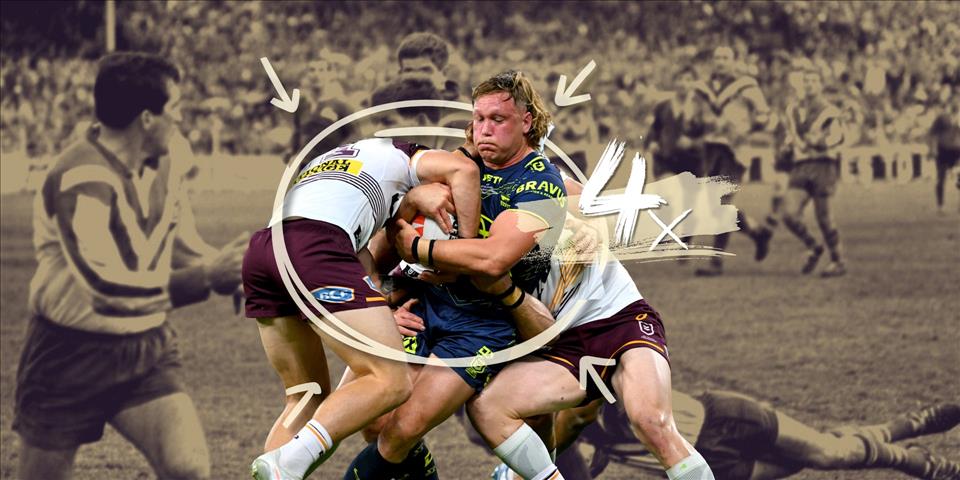
Game Changers: How One Team's Dominance Transformed Rugby League Forever
Author: Wayne Peake
(MENAFN- The Conversation) One championship is an achievement for any sports team and one rightly celebrated by players and fans alike.

Imagine a team winning 11 titles in a row.
That's what St George did in Sydney's rugby league competition from 1956 to 1966.
This incredible dominance, and rival clubs' frustration with it, sparked a radical change in rugby league – the move away from unlimited tackles to the four-tackle rule in 1967.
As well as wanting to make the game faster, authorities hoped moving away from unlimited tackles would make the competition more even.
Sports can change dramatically in the blink of an eye. Sometimes, these moments create immediate shockwaves. Other times, it's not until much later that their impact become obvious. This is the first story in a rolling series that explores key (and sometimes long forgotten) moments in sports history.
The early days: breaking away from rugby unionIn the early 20th century, rugby union was the dominant football code of eastern Australia.
However, planning for a breakaway rugby league competition began in New South Wales in 1907. Then in 1908, rugby league was first played in Australia.
The main factor for the split was the failure of rugby union to properly compensate players for their expenses and time away from work.
The new code streamlined some of the stodgier elements of rugby union:
- moving from 15 to 13 players per side simplifying the scrum doing away with lineouts introducing the hallmark“play the ball” method of restarting play, in which a tackled player stands up and rolls the ball backwards with their foot to a teammate behind them.
After this initial flurry of reform, the game remained largely unchanged for the following 50 years.
Pushback against a dynastyThere was no limit on the number of times a team could be tackled and then play the ball. But towards the tail end of this era, St George became the undisputed master of possession rugby.
Its brand of football was often described as“bash and barge” – retaining and recycling the ball endlessly to gradually wear down the opposition's defence.
Some critics, while conceding its effectiveness, found the style boring. Attendances at some end-of-season games declined in the later years of the St George run.
St George's utter dominance from 1956 to 1966 sparked the move from unlimited tackles to just four for the 1967 season, echoing a similar decision by English rugby league teams in December 1966.
The Sydney Morning Herald, on December 23 1966, stated:
Most observers favoured the change. Influential Sun Herald journalist Alan Clarkson praised it in February 1967, after watching trial matches:
The NSWRL trialled the four-tackle rule during the 1967 pre-season competition, to its satisfaction. It decided to introduce the new rule in the 1967 competition proper.
The new rule received plenty of credit but there remained relentless opponents. Unsurprisingly, St George hated it.
Norm Provan, captain during the club's golden era, said:
Provan even claimed country fans who had regularly attended the finals series told him they stayed home in 1967 because of the new rule.
Outspoken critic Rex Mossop, a former player, asserted it denied the game the“sustained excitement” possible under the old rule.
By coincidence or not, St George's premiership reign ended when it lost the 1967 preliminary final to Canterbury-Bankstown. Some thought it had been slow to adapt to the new rule.
Downsides and further tweaksThe four-tackle rule did not last long: four seasons.
One problem was, if a team picked up a ball dropped by the opposition, it effectively had only three tackles to mount an attack.
Another perceived negative was the limit on tackles caused attackers to panic, throw wild passes and make tactically poor kicks. It was clearly behind the large increase in field goal attempts that were considered by some to be a blight on the game.
By 1969, the once enthusiastic Clarkson had become a harsh critic.
After several trials, the NSWRL went alone in raising the four tackles to six for the 1971 Sydney competition season. It had already reduced the value of a field goal to one point.
The changes led to a greater emphasis on scoring tries. More open, attacking play and ball movement ensued. But the first two tackles were often sacrificed as forwards ran the ball up the field with little intention of passing.
A lasting impactWhile there have been further rule changes since the introduction of limited tackles, the game as played in the 1971 season – with teams now allowed six tackles rather than four – was arguably the first time the game would be fully familiar to today's fans.
The six-tackle rule has had a lasting impact, largely by making rugby league faster and more exciting.
It inspired faster play-the-balls, fewer scrums and a focus on athleticism over raw size when it came to recruiting and player development.
It changed the sport from something like trench warfare to a frenzied skirmish.
Institution:Western Sydney University

Legal Disclaimer:
MENAFN provides the
information “as is” without warranty of any kind. We do not accept
any responsibility or liability for the accuracy, content, images,
videos, licenses, completeness, legality, or reliability of the information
contained in this article. If you have any complaints or copyright
issues related to this article, kindly contact the provider above.
Most popular stories
Market Research

More Story







Comments
No comment