




403
Sorry!!
Error! We're sorry, but the page you were looking for doesn't exist.
Future Big Droughts May Be Worse Than We Think NZ's Past Shows Why
Author: Adam Brown
(MENAFN- The Conversation) For an agricultural nation like New Zealand, severe drought is one of the most ominous consequences of a warming planet.

The Climate Change Commission's latest national risk assessment points to these events becoming more intense over time, particularly in the country's drier northern and eastern regions.
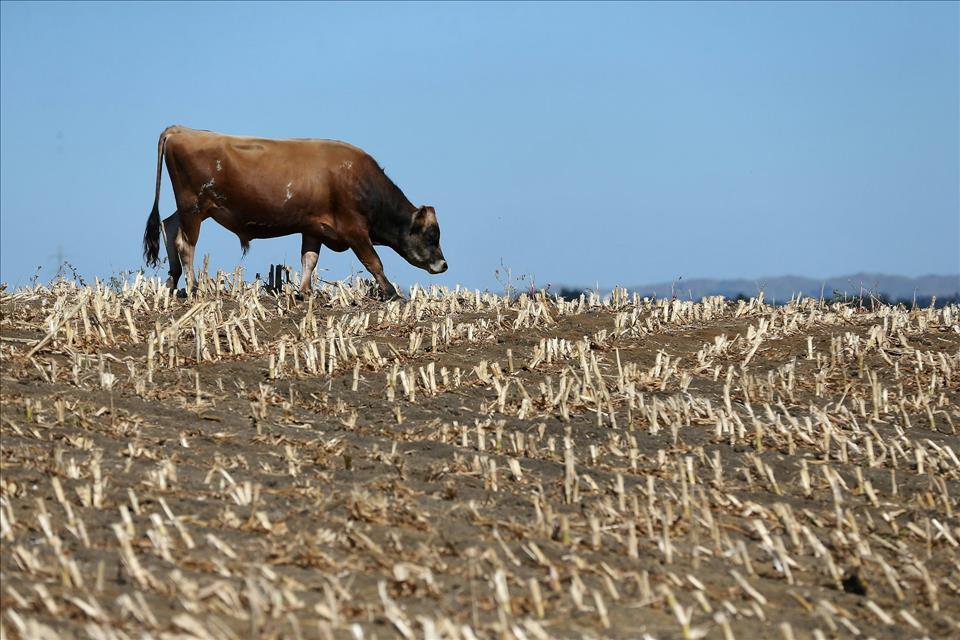
Recent events offer a glimpse of what this can look like: browned paddocks, shrinking reservoirs, dried-out riverbeds and farmers struggling for feed. They have also illustrated the heavy economic toll drought can take.
Feed shortages amid an extended 2007–08 drought, which hit Waikato particularly hard, quadrupled silage prices and cost the national economy several billion dollars.
Another drought four years later, this time covering the entire North Island, was later estimated to have squeezed national economic output by as much as 0.7% of GDP.
The Reserve Bank has since used that 2012–13 event as a plausible worst-case drought scenario in some agricultural lending-risk assessments.
But looking much further back reveals evidence of significantly more severe meteorological droughts – prolonged periods of unusually low rainfall – occurring in the early 20th century.
Our new research suggests some of New Zealand's most extreme drought history has effectively been overlooked in modern policymaking.
Reconstructing NZ's drought pastWhen scientists and planners assess how severe a drought is, they often rely on a dataset called the Virtual Climate Station Network. It uses rainfall, temperature and other weather observations to build a detailed picture of climate conditions across New Zealand.
While this is an invaluable tool, reliable data for many variables only stretches back to the 1970s. That means many modern drought assessment methods are less useful for understanding severe events that occurred earlier in the 20th century.
To build a clearer picture of these earlier droughts, we focused on a single, reliable metric: rainfall deficits. These have been recorded by thousands of rain gauges across New Zealand dating back as far as the 1860s.
Next, we selected weather stations with long and reliable records, including at least 70 years of data and observations dating back before 1914. This produced a network of 97 high-quality stations across the country.
Lastly, we compared historical rainfall data against long-term averages to see how drought conditions built up over weeks, months and longer periods.
Contrary to the idea that New Zealand's worst events have struck in recent decades, the results showed the three most extreme meteorological droughts in the instrumental record all occurred before 1950.
Forgotten big drysThe most widespread and intense drought began in winter 1914 and lasted until at least February 1915. Most weather stations recorded their worst rainfall deficits on record between July and October, with severe shortages continuing across much of the North Island and eastern South Island through summer.
Nationally, no other eight-month period compares. More than half of all stations recorded one of their five driest periods on record, while the following July-to-February period ranked second – pointing to an extraordinary multi-year drought sequence.
New Zealand has experienced similar late-winter drought onset conditions more recently – most notably in 1993, when Auckland's reservoirs fell to about one-third of capacity during the city's water crisis. But a drought on the scale of 1914-15 would likely have produced far more severe impacts.
Looking specifically at summer droughts, November 1907 to February 1908 produced the most widespread extreme rainfall deficits in the historical record.
Many South Island stations recorded their driest conditions on record, and more than twice as many stations recorded extreme deficits compared with the next most severe summer drought in 1945/46.
That 1945–46 drought also stands out in the north and east of the North Island, where many stations recorded their worst rainfall deficits on record. Rainfall shortages in these regions were around 22% greater than during the better-remembered 2012–13 drought.
An underestimated riskThe gap between recent drought experience and these earlier historical extremes is striking – and highlights the importance of looking beyond just the past few decades.
Droughts far more severe than those experienced in recent memory already exist within New Zealand's climate history.
Yet many modern risk assessments still rely heavily on relatively recent events, potentially underestimating the true scale of drought variability the country is capable of experiencing.
Climate change adds another layer of risk, with rising temperatures expected to further parch soils and increase evaporation in prolonged dry spells, worsening the impacts.
All of this means that recent droughts may no longer provide a reliable guide for what is to come.
A warming climate could push New Zealand into drought conditions beyond anything experienced in living memory – something future planning and risk assessments will need to urgently account for.
Institution:University of Canterbury

Legal Disclaimer:
MENAFN provides the
information “as is” without warranty of any kind. We do not accept
any responsibility or liability for the accuracy, content, images,
videos, licenses, completeness, legality, or reliability of the information
contained in this article. If you have any complaints or copyright
issues related to this article, kindly contact the provider above.
Most popular stories
Market Research

More Story





Comments
No comment