



403
Sorry!!
Error! We're sorry, but the page you were looking for doesn't exist.
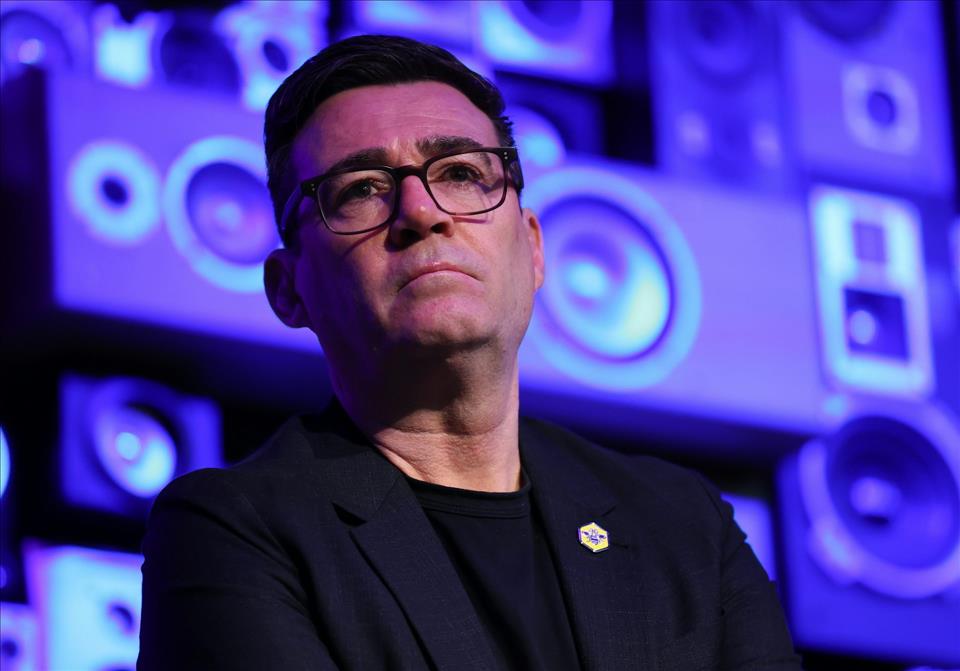
Andy Burnham's Big Challenge: The Route To Succeeding Starmer Is Littered With Obstacles
Author: Eric Shaw
(MENAFN- The Conversation) The polls indicate that of all the candidates vying to succeed Prime Minister Keir Starmer, the most popular is Andy Burnham. But before the current mayor of Greater Manchester can even throw his hat into the ring, there are a series of hurdles he has to overcome.

For a start, a leadership contender has to be an MP. Labour's rules state that before a candidate can be selected, their candidature must be approved by the party's National Executive Committee (NEC).
But only in January, a committee of the NEC voted to block Burnham from standing at the by-election for Gorton and Denton by eight votes to one. The reason given was that Burnham's candidature would force a by-election for the mayoralty.
This, it was argued, would be both costly for the party and would run the risk of Labour losing to Reform or the Greens. But in truth, the key factor was the determination of the pro-Starmer majority to head off a Burnham challenge to the prime minister.
So could the NEC change its mind? Much depends, firstly, on left-wing trade union leaders, such as the heads of the two largest unions, Unite and Unison (Sharon Graham and Andrea Egan). Would they put enough pressure on NEC union representatives – a third of the total – to force a reversal of the earlier decision?
And second, a lot also rests on whether the NEC is prepared to provoke the wrath of many members by blocking Burnham. This could, after all, be considered a misuse of its powers.
Assuming that Burnham is approved, he then has to persuade an accommodating Labour MP to resign his or her seat so that he can run in a by-election. The MP realistically would have to hold a seat in Greater Manchester, Merseyside or south Lancashire.
Burnham is a popular mayor in Greater Manchester, and is also a Liverpool-born Everton fan. Not least, he has been a high-profile supporter of those who campaigned for justice for the 97 Liverpool FC fans who died after a crush at Hillsborough stadium in 1989.
Rumours have abounded that unnamed MPs are willing to resign their seats to make way – but nothing has been confirmed. Others have talked down the rumours.
If a vacancy arises, Burnham would have to be selected by Labour party members in the constituency. This can never be assured, but it seems like the easiest of the hurdles to jump since such data as exists suggests that he is popular among the rank and file.
A messy and unpleasant electionHowever, the original idea was that the seat made available for Burnham would be a safe Labour one. But are there any safe Labour seats left? The May elections revealed major encroachments by Reform and, to a lesser extent, the Greens into Labour territory.
In short, even if selected to contest the seat, Burnham will have a fight on his hands from both the left and the right.
But say he is elected, he would then have to win the nomination of 80 Labour MPs. Of his potential rivals, Angela Rayner and Ed Miliband share his position on the soft left of the party (as opposed to the Corbynite“hard left” and the right, or“centrists”).
It seems likely that they would prefer not to stand against each other. A solid guess is that Rayner and Miliband would give way and rally behind Burnham, in which case he would have no difficulty securing the 81 nominations required.
Let's assume Burnham get this far, takes the plunge and with the nomination in hand precipitates a leadership contest. What will Starmer do then? As I and others have noted, he is a determined and stubborn man – and has said that he will fight any challenges.
Could Starmer be persuaded to go gracefully, perhaps because of cabinet threats of mass resignations or by the Labour equivalent of the Tory “men in grey suits”? Or will he be tempted to appeal to the natural loyalty of party members? Unlike the Tories, Labour has no taste for regicide and no Labour PM has ever been forced from office. If Starmer stands, it could be a messy and very unpleasant election.
Such are the hurdles, but Burnham has some factors working in his favour. In contrast to the PM, he has a friendly and convivial image. He also achieves higher approval ratings than any other Labour figure. He is widely seen as an effective mayor and has gained in stature and political weight after winning three successive terms. With his background as a cabinet minister, he could certainly claim to have the relevant experience.
The commentary has so far focused on the attitudes of Labour MPs. Though their nominations are required, the outcome of any contest will be decided not by them but by party members.
Labour's“soft left”, the group with which Burnham is aligned, is almost certainly the largest in the current party. It is difficult to see either health secretary Wes Streeting or anyone else on the right of the party defeating Burnham: something that will certainly play on the minds of MPs wondering whether to back him – and with an eye on their own careers.
So Burnham's route to Downing Street is strewn with obstacles. Even if he navigates them all, there is no guarantee he can revive Labour's fortunes. But he has the credentials to give the party a fighting chance.
Institution:University of Stirling

Legal Disclaimer:
MENAFN provides the
information “as is” without warranty of any kind. We do not accept
any responsibility or liability for the accuracy, content, images,
videos, licenses, completeness, legality, or reliability of the information
contained in this article. If you have any complaints or copyright
issues related to this article, kindly contact the provider above.
Most popular stories
Market Research

More Story


Comments
No comment