



403
Sorry!!
Error! We're sorry, but the page you were looking for doesn't exist.
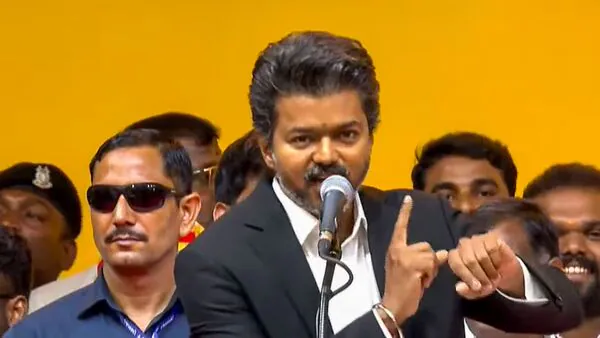
₹1 Trillion: How Much Would Vijay's Pre-Poll Promise Cost Tamil Nadu's State Exchequer In A Fiscal
(MENAFN- Live Mint) Actor-turned-politician has finally taken oath as Tamil Nadu chief minister after a stellar debut in the recently held assembly elections. Vijay's party, Tamilaga Vettri Kazhagam, created history by effectively ending the six-decade-long duopoly of the two major Dravidian parties in the state – the DMK and AIADMK.
Now that Vijay is at the helm, all eyes will be on how his government fulfils his pre-poll promises. The TVK's manifesto focused on what it called 'people-centric' welfare, targeting significant economic support for women, farmers, and youth to secure a 'Vettri Tamil Nadu' (Successful Tamil Nadu).
Also Read | PM Modi congratulates Vijay on taking oath as Tamil Nadu CMThe key promises included ₹2,500 monthly assistance for women, 200 units of free electricity, full farm loan waivers for small farmers, and 75% local hiring.
People also ask
AI powered insights from this story
.5 QUESTIONS1What are the key pre-poll promises made by Vijay's Tamilaga Vettri Kazhagam (TVK) party?⌵TVK's manifesto includes promises such as ₹2,500 monthly assistance for women heads of families, 200 units of free electricity, full farm loan waivers for small farmers, and 75% local hiring. Other promises include six free LPG cylinders annually, gold and silk saree for marriages, and education loans up to ₹20 lakh.
2How much is Vijay's pre-poll promise estimated to cost Tamil Nadu's state exchequer annually?⌵The projected annual expenditure on welfare or freebie spending by the new government is estimated to be close to ₹1 lakh crore. This represents an increase of over 52% from the ₹65,000 crore spent by the previous DMK government on similar schemes.
3What is the financial situation of Tamil Nadu as stated by CM Vijay?⌵CM Vijay stated that the state has been burdened with a debt exceeding ₹10 lakh crore and that the treasury has been completely emptied. He plans to publish a white paper detailing the state's financial position for the 2021-2026 period.
4How has the 'freebie' culture evolved in Tamil Nadu politics?⌵The culture of election promises, or 'freebies,' in Tamil Nadu politics has evolved from social welfare measures like subsidized food to more expansive promises such as free televisions, laptops, bus travel, and cash assistance. Rival parties often compete with such welfare promises.
5What are the Supreme Court's and Chief Election Commissioner's views on 'freebies'?⌵The Supreme Court has expressed concerns that freebies may lead to worklessness among people and are fiscally burdensome. The Chief Election Commissioner has also flagged the need for legal answers to curb the announcement of freebies by political parties during election campaigns.
Soon after taking office, Vijay unveiled five key announcements aimed at implementing his electoral commitments. The first was a scheme offering 200 units of free electricity to domestic consumers in every billing cycle, albeit with conditions attached. Under the scheme, only households consuming up to 500 units during a two-month billing cycle would be eligible for the concession.
The announcement triggered criticism on social media, with detractors alleging that Vijay had promised 200 units of free electricity for all consumers during the campaign, but had now imposed restrictions on eligibility.
'Freebie' culture of Tamil NaduPre-poll promises are not a new thing in India. And in fact, the culture of election promise, also referred to as has evolved over decades into one of the defining features of Tamil Nadu politics, with rival parties competing through expansive welfare promises and consumer giveaways.
What began as social welfare measures such as subsidised food and school meals under MG Ramachandran (AIADMK founder) later expanded into free televisions, mixer-grinders, laptops, bus travel, cash assistance and electricity subsidies under leaders like J Jayalalithaa (AIADMK) and M Karunanidhi (DMK).
Supporters say these schemes improved living standards, boosted access to education and reduced poverty, while critics describe them as fiscally burdensome populism designed to secure votes.
Supreme Court comments on freebiesThe debate even reached Supreme Court. Last year in February, the Supreme Court took a dig at freebie culture and said people were unwilling to work as they were getting free ration and money. The top court said that providing freebies leads to worklessness among people and there should be an attempt to integrate homeless persons into the mainstream society so that they're able to contribute and work.
“Unfortunately, because of these freebies... the people are not willing to work. They are getting free rations. They are getting amounts without doing any work,” a Bench of Justice BR Gavai and Justice AG Masih said while hearing a petition on the right to shelter homeless persons in urban areas.
In January the same year, Chief Election Commissioner (CEC) Rajiv Kumar flagged the need for“accepted and legal answers” to curb the announcing of“freebies” by political parties during election campaigns.
“Our proforma is on our website. It is high time it was accepted and legal answers were found but our hands are tied at the moment because the matter is sub-judice,” Kumar said in response to a question while announcing dates of Delhi Assembly Elections 2025.
Also Read | Chief Minister Vijay: TVK government finally takes oath in Tamil NaduEarlier in 2013, the top court had held that freebies promised in poll manifestos vitiated the electoral process and asked the Election Commission to frame guidelines to check it in consultation of political parties.
The debate apart, the Vijay-led government would still need substantial funds to fulfil its promises. How much would it cost the state exchequer?
₹1 lakh crore on welfare budgetingThe new government's projected annual expenditure on welfare or freebie spending would be close to ₹1 lakh crore, as per an analysis by Indian Expres. This would mean an increase of over 52 per cent from the ₹65,000 crore spent by the previous MK Stalin-led DMK government on welfare schemes and subsidies in 2025-26 fiscal.
The TVK's projected expenditure on its welfare schemes equals approximately one-third of Tamil Nadu's total revenue receipts of ₹3.31 lakh crore, as per the 2025-26 state budget, the Indian Express report said.
This would mean a huge burden on the state's budget, which carries a debt of 26% of GSDP.
The TVK manifesto does not elaborate on how its government would generate new revenue.“By reducing the growing debt burden, increasing revenue without imposing any additional tax on the people, ensuring efficient and prudent expenditure, and creating new sources of income, Tamil Nadu will be transformed into a financially self-sufficient state,” reads the manifesto.
Here is a list of major promises made by TVK
Madhippumigu Magalir Thittam: A monthly assistance of ₹2,500 to all women heads of families up to the age of 60. This will exclude families of state and central government employees.
Annapoorani Super Six Scheme: Each family will receive six LPG cylinders per year free of cost.
Annan Seer Thittam: For the marriage of "our sisters", eight grams (one sovereign) of gold and a quality silk saree will be provided as a "brother's gift from the bride's family."
Education Assurance Scheme: Collateral-free education loans of up to ₹20 lakh will be guaranteed for students pursuing studies from post–Class 12 up to PhD.
Unemployment Assistance for Youth: Financial assistance will be provided to job-seeking youth, with ₹4,000 per month for graduates and ₹2,500 per month for diploma holders as part of a youth welfare initiative.
Vettri Skill Training Assurance Scheme: Every year, 5 lakh youth will be provided with stipend-based internship training in collaboration with private companies. Graduates will receive ₹10,000 per month, while ITI and diploma holders will receive ₹8,000 per month, funded by the state government.
-A ₹15,000 crore State Credit Guarantee Fund will be created to revive MSMEs facing financial distress.
-A 35% direct capital subsidy (up to ₹50 lakh per unit) to support the modernisation of industries.

Legal Disclaimer:
MENAFN provides the
information “as is” without warranty of any kind. We do not accept
any responsibility or liability for the accuracy, content, images,
videos, licenses, completeness, legality, or reliability of the information
contained in this article. If you have any complaints or copyright
issues related to this article, kindly contact the provider above.
Most popular stories
Market Research

More Story

Comments
No comment