



403
Sorry!!
Error! We're sorry, but the page you were looking for doesn't exist.
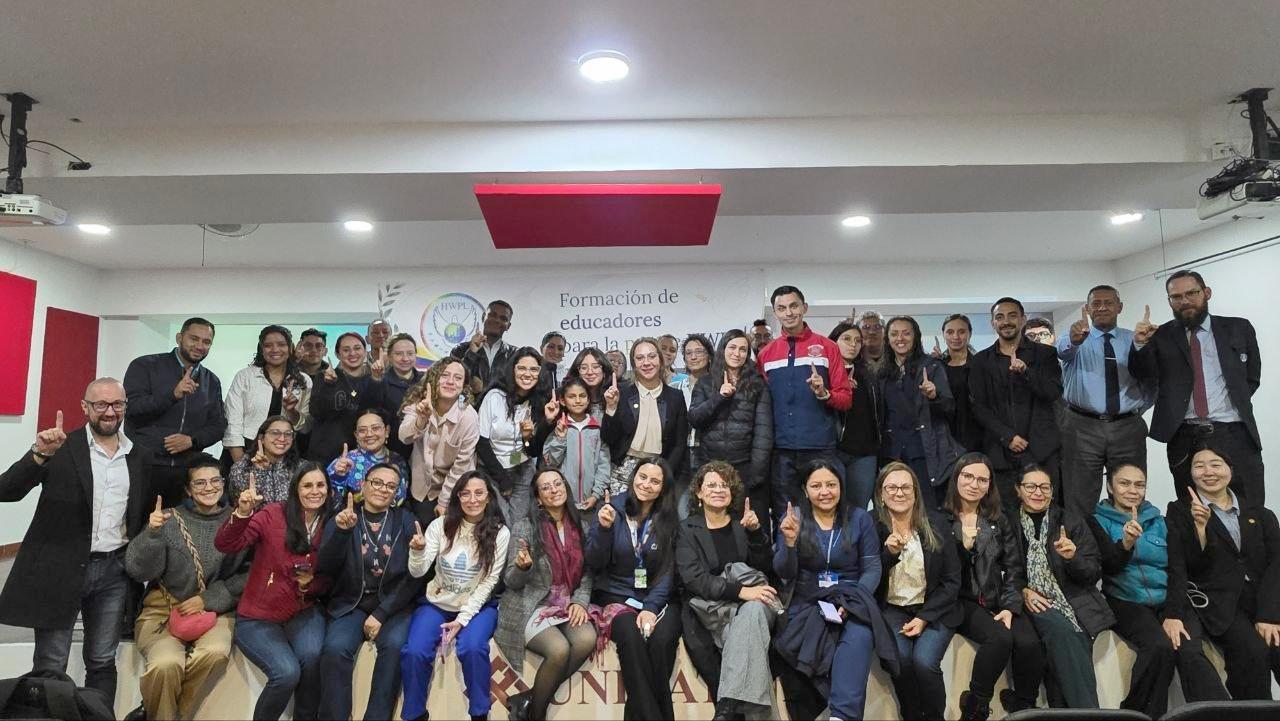
Bogota Education Office and HWPL Launch Peace Educator Training Program as Colombian Teachers Emphasize Classroom-Based Peacebuilding
(MENAFN- HWPL) On May 7, 2026, in Bogotá, Colombia, HWPL (Heavenly Culture, World Peace, Restoration of Light) and the Dirección de Relaciones con el Sector Educativo Privado under Bogotá’s Secretariat of Education (SED) jointly conducted the first session of the “Educators for Peace” training program at Colegio Unilatina. The program was organized to provide private school teachers with practical approaches to peace education that can be applied directly in classrooms and to strengthen teacher-led peace culture initiatives within schools.
Colombia has experienced decades of armed conflict and social violence, and in recent years the role of education in conflict prevention and community restoration has become an increasingly important issue. In this context, the official collaboration between HWPL and an institution under Bogotá’s education authority is being viewed as a sign that HWPL’s peace education curriculum has gained a level of credibility and practical relevance within the local education sector. During the session, HWPL’s “Order of Nature” and “Peace DNA” materials were introduced, and participating teachers responded that the content translated abstract ideas about peace into tools that could be immediately applied in educational settings.
Teachers from private schools across Bogotá attended the first session and shared perspectives on both the necessity of peace education and its applicability in schools. Participants noted that helping students recognize their roles within a community and develop nonviolent conflict resolution skills reflects the type of educational approach currently needed in Colombian society. Discussions also focused on the role of teachers not only as instructors, but as figures who shape relationships among students and influence broader school culture.
Nicole, a social studies teacher at Magdalena Bilingual School, said in a interview, “What stood out to me most was the emphasis on helping students recognize their own value and understand their role within the community.” She added, “I believe peace is built through everyday interactions with students, not through abstract concepts, and I want to begin applying these ideas in my classroom immediately.”
The peace educator training program will continue over four consecutive weeks, with additional sessions scheduled for May 14, 21, and 28. HWPL plans to conduct quizzes and feedback sessions after each class to assess participants’ understanding and responses, while also encouraging teachers to apply the lessons directly in their own classrooms throughout the training period. HWPL intends to maintain an ongoing school-based peace education network centered on participating educators.
Colombia has experienced decades of armed conflict and social violence, and in recent years the role of education in conflict prevention and community restoration has become an increasingly important issue. In this context, the official collaboration between HWPL and an institution under Bogotá’s education authority is being viewed as a sign that HWPL’s peace education curriculum has gained a level of credibility and practical relevance within the local education sector. During the session, HWPL’s “Order of Nature” and “Peace DNA” materials were introduced, and participating teachers responded that the content translated abstract ideas about peace into tools that could be immediately applied in educational settings.
Teachers from private schools across Bogotá attended the first session and shared perspectives on both the necessity of peace education and its applicability in schools. Participants noted that helping students recognize their roles within a community and develop nonviolent conflict resolution skills reflects the type of educational approach currently needed in Colombian society. Discussions also focused on the role of teachers not only as instructors, but as figures who shape relationships among students and influence broader school culture.
Nicole, a social studies teacher at Magdalena Bilingual School, said in a interview, “What stood out to me most was the emphasis on helping students recognize their own value and understand their role within the community.” She added, “I believe peace is built through everyday interactions with students, not through abstract concepts, and I want to begin applying these ideas in my classroom immediately.”
The peace educator training program will continue over four consecutive weeks, with additional sessions scheduled for May 14, 21, and 28. HWPL plans to conduct quizzes and feedback sessions after each class to assess participants’ understanding and responses, while also encouraging teachers to apply the lessons directly in their own classrooms throughout the training period. HWPL intends to maintain an ongoing school-based peace education network centered on participating educators.

Legal Disclaimer:
MENAFN provides the
information “as is” without warranty of any kind. We do not accept
any responsibility or liability for the accuracy, content, images,
videos, licenses, completeness, legality, or reliability of the information
contained in this article. If you have any complaints or copyright
issues related to this article, kindly contact the provider above.
Most popular stories
Market Research

More Story


Comments
No comment