


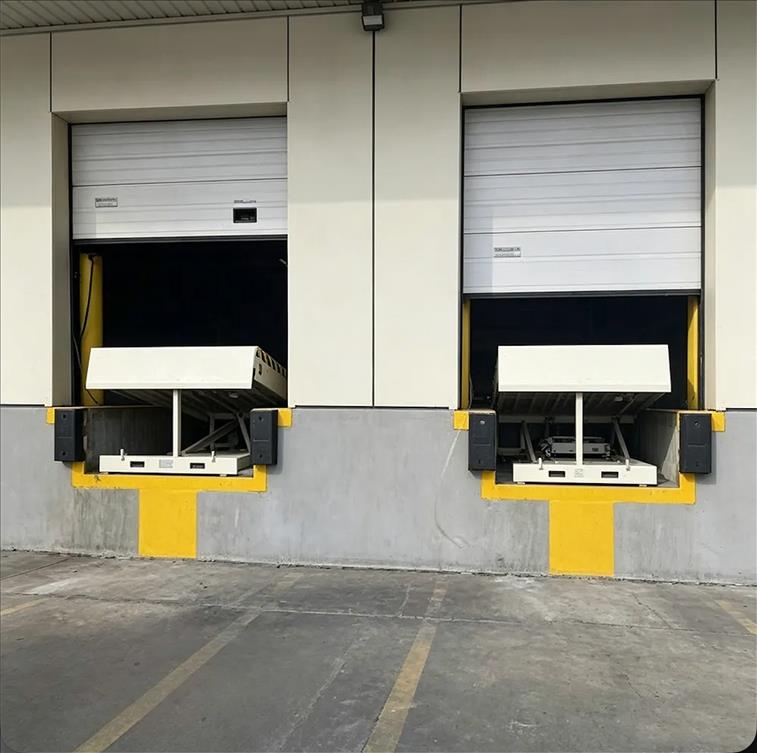
Hydraulic Dock Leveler Working Principle, System Design and Field Maintenance Experience


(MENAFN- MENAFNEditorial) In my years of working on logistics loading equipment maintenance, the most common system I deal with is not forklifts or conveyors, but the fixed dock leveler system. It acts as a dynamic bridge between warehouse docks and truck beds. On the surface, it looks like a steel platform, but in reality, it is a fully functional load compensation and height adjustment system.
In typical industrial fixed dock leveler applications such as e-commerce warehouses, cold chain facilities, and third-party logistics centers, it solves two core problems: height differences between dock and truck bed, and dynamic impact loads during loading and unloading.
A standard configuration usually consists of three parts:
Main load-bearing platform (commonly steel fixed dock leveler)
Hydraulic drive unit (core of hydraulic fixed dock leveler)
Lip plate and hinge mechanism
Many sites misunderstand it as a simple lifting device. In fact, it is a complete fixed dock leveler system with pressure control logic, sequence valves, and safety circuits. If attention is only given to fixed dock leveler price without considering working conditions, failures tend to appear later in concentrated form.
Core Working Principle of Hydraulic Dock Levelers (Hydraulic Logic Perspective)
From a maintenance point of view, a hydraulic dock leveler is essentially a system combining a hydraulic circuit and a mechanical hinge structure.
A standard hydraulic fixed dock leveler includes a hydraulic power unit, main lifting cylinder, lip cylinder, solenoid valve group, and control box.
The operating logic is relatively straightforward:
After activation, the motor drives the pump to build pressure
The main cylinder lifts the platform
Once a preset height is reached, a sequence valve switches the hydraulic flow
The lip cylinder extends the lip plate
The platform enters a “floating contact” state to adapt to truck height variations
A key point: this “floating” behavior is not a defect but a designed buffer zone in the fixed dock leveler design, intended to absorb truck movement during loading.
Compared with this, a mechanical fixed dock leveler relies on springs or manual operation and lacks hydraulic cushioning, making it more prone to fatigue in high-frequency applications.
Real Maintenance Case (Shanghai Songjiang Logistics Center)
This case occurred in June 2024 in a cross-border e-commerce warehouse in Songjiang, Shanghai.
The equipment was a heavy-duty heavy duty fixed dock leveler with a rated fixed dock leveler capacity of 15 tons, operating at around 180 cycles per day.
The issue was typical: the platform could rise but struggled to return smoothly, and the lip extension was inconsistent. Forklifts also showed slight “nose-dive” behavior when entering the platform.
My diagnostic process was:
Checked system pressure—fluctuation observed but not complete failure
Disassembled solenoid valve block—found sludge clogging in sequence valve
Inspected hydraulic cylinders—minor internal leakage but not the root cause
The core issue was system contamination caused by extended maintenance intervals, affecting the entire fixed dock leveler system control stability.
The solution included replacing hydraulic oil, cleaning the valve block, replacing the sequence valve seal kit, and recalibrating relief pressure to 18 MPa.
After repair, performance stabilized with lifting time restored to about 8–10 seconds, and impact issues eliminated.
Total maintenance cost ranged around 3,800–5,200 RMB, showing that the hidden cost of fixed dock leveler cost often lies in maintenance rather than initial purchase.
Comparison of Different Dock Leveler Types (Practical Differences)
TypeDrive MethodMaintenance LevelLoad StabilityApplication Scenario
hydraulic fixed dock levelerHydraulic automatic controlLowHighHigh-frequency logistics centers
mechanical fixed dock levelerSpring/manual systemHighMediumLow-frequency warehouses
industrial fixed dock levelerReinforced industrial structureMediumHighHeavy manufacturing & warehousing
From long-term operational experience, hydraulic fixed dock leveler systems have higher upfront costs, but significantly lower downtime losses in high-frequency environments.
Key Parameters and Common Selection Mistakes
In real-world selection, I rarely start with price. I first evaluate structural compatibility.
Key parameters include:
fixed dock leveler capacity (must include at least 20% safety margin)
fixed dock leveler dimensions matching pit structure
Hydraulic system pressure range and cycle frequency
Platform structure compatibility with forklift axle load
Many failures originate from improper fixed dock leveler installation, especially when pit design is not prepared in advance, leading to costly on-site modifications.
Another common mistake is focusing only on fixed dock leveler price, ignoring system-level design differences, which results in premature fatigue under heavy-duty operation.
Installation and Maintenance Field Experience
During installation, the most critical factor is foundation accuracy. Level deviation between dock and pit must be controlled within millimeters to avoid uneven stress distribution.
Typical installation steps:
Level calibration of pit foundation
Anti-corrosion treatment of embedded parts
Hydraulic pipeline pressure testing
Independent grounding of electrical control system
Maintenance-wise, the most common failure points are:
Hydraulic oil contamination
Solenoid valve sticking
Water accumulation in pit causing corrosion
These issues do not cause immediate failure but gradually reduce responsiveness and stability of the entire fixed dock leveler system.
Supplier vs Manufacturer Selection Logic
In procurement practice, there is a clear difference between a fixed dock leveler manufacturer and a fixed dock leveler supplier.
Manufacturers focus more on structural design and hydraulic system integration, while suppliers focus more on delivery and spare parts support.
From experience, key evaluation factors include:
Capability in fixed dock leveler design customization
Availability of hydraulic system pressure data and technical documentation
Local maintenance and response capability
Without these, maintenance costs can escalate quickly once the system enters high-load operation.
Field Summary and Practical Conclusion
A hydraulic dock leveler is not a standalone device but a system integrating structural load-bearing and hydraulic control. Long-term stability depends not on price, but on design matching and maintenance execution.
Many operational issues can actually be prevented during the selection stage, but are often overlooked in practice.
In typical industrial fixed dock leveler applications such as e-commerce warehouses, cold chain facilities, and third-party logistics centers, it solves two core problems: height differences between dock and truck bed, and dynamic impact loads during loading and unloading.
A standard configuration usually consists of three parts:
Main load-bearing platform (commonly steel fixed dock leveler)
Hydraulic drive unit (core of hydraulic fixed dock leveler)
Lip plate and hinge mechanism
Many sites misunderstand it as a simple lifting device. In fact, it is a complete fixed dock leveler system with pressure control logic, sequence valves, and safety circuits. If attention is only given to fixed dock leveler price without considering working conditions, failures tend to appear later in concentrated form.
Core Working Principle of Hydraulic Dock Levelers (Hydraulic Logic Perspective)
From a maintenance point of view, a hydraulic dock leveler is essentially a system combining a hydraulic circuit and a mechanical hinge structure.
A standard hydraulic fixed dock leveler includes a hydraulic power unit, main lifting cylinder, lip cylinder, solenoid valve group, and control box.
The operating logic is relatively straightforward:
After activation, the motor drives the pump to build pressure
The main cylinder lifts the platform
Once a preset height is reached, a sequence valve switches the hydraulic flow
The lip cylinder extends the lip plate
The platform enters a “floating contact” state to adapt to truck height variations
A key point: this “floating” behavior is not a defect but a designed buffer zone in the fixed dock leveler design, intended to absorb truck movement during loading.
Compared with this, a mechanical fixed dock leveler relies on springs or manual operation and lacks hydraulic cushioning, making it more prone to fatigue in high-frequency applications.
Real Maintenance Case (Shanghai Songjiang Logistics Center)
This case occurred in June 2024 in a cross-border e-commerce warehouse in Songjiang, Shanghai.
The equipment was a heavy-duty heavy duty fixed dock leveler with a rated fixed dock leveler capacity of 15 tons, operating at around 180 cycles per day.
The issue was typical: the platform could rise but struggled to return smoothly, and the lip extension was inconsistent. Forklifts also showed slight “nose-dive” behavior when entering the platform.
My diagnostic process was:
Checked system pressure—fluctuation observed but not complete failure
Disassembled solenoid valve block—found sludge clogging in sequence valve
Inspected hydraulic cylinders—minor internal leakage but not the root cause
The core issue was system contamination caused by extended maintenance intervals, affecting the entire fixed dock leveler system control stability.
The solution included replacing hydraulic oil, cleaning the valve block, replacing the sequence valve seal kit, and recalibrating relief pressure to 18 MPa.
After repair, performance stabilized with lifting time restored to about 8–10 seconds, and impact issues eliminated.
Total maintenance cost ranged around 3,800–5,200 RMB, showing that the hidden cost of fixed dock leveler cost often lies in maintenance rather than initial purchase.
Comparison of Different Dock Leveler Types (Practical Differences)
TypeDrive MethodMaintenance LevelLoad StabilityApplication Scenario
hydraulic fixed dock levelerHydraulic automatic controlLowHighHigh-frequency logistics centers
mechanical fixed dock levelerSpring/manual systemHighMediumLow-frequency warehouses
industrial fixed dock levelerReinforced industrial structureMediumHighHeavy manufacturing & warehousing
From long-term operational experience, hydraulic fixed dock leveler systems have higher upfront costs, but significantly lower downtime losses in high-frequency environments.
Key Parameters and Common Selection Mistakes
In real-world selection, I rarely start with price. I first evaluate structural compatibility.
Key parameters include:
fixed dock leveler capacity (must include at least 20% safety margin)
fixed dock leveler dimensions matching pit structure
Hydraulic system pressure range and cycle frequency
Platform structure compatibility with forklift axle load
Many failures originate from improper fixed dock leveler installation, especially when pit design is not prepared in advance, leading to costly on-site modifications.
Another common mistake is focusing only on fixed dock leveler price, ignoring system-level design differences, which results in premature fatigue under heavy-duty operation.
Installation and Maintenance Field Experience
During installation, the most critical factor is foundation accuracy. Level deviation between dock and pit must be controlled within millimeters to avoid uneven stress distribution.
Typical installation steps:
Level calibration of pit foundation
Anti-corrosion treatment of embedded parts
Hydraulic pipeline pressure testing
Independent grounding of electrical control system
Maintenance-wise, the most common failure points are:
Hydraulic oil contamination
Solenoid valve sticking
Water accumulation in pit causing corrosion
These issues do not cause immediate failure but gradually reduce responsiveness and stability of the entire fixed dock leveler system.
Supplier vs Manufacturer Selection Logic
In procurement practice, there is a clear difference between a fixed dock leveler manufacturer and a fixed dock leveler supplier.
Manufacturers focus more on structural design and hydraulic system integration, while suppliers focus more on delivery and spare parts support.
From experience, key evaluation factors include:
Capability in fixed dock leveler design customization
Availability of hydraulic system pressure data and technical documentation
Local maintenance and response capability
Without these, maintenance costs can escalate quickly once the system enters high-load operation.
Field Summary and Practical Conclusion
A hydraulic dock leveler is not a standalone device but a system integrating structural load-bearing and hydraulic control. Long-term stability depends not on price, but on design matching and maintenance execution.
Many operational issues can actually be prevented during the selection stage, but are often overlooked in practice.

Legal Disclaimer:
MENAFN provides the
information “as is” without warranty of any kind. We do not accept
any responsibility or liability for the accuracy, content, images,
videos, licenses, completeness, legality, or reliability of the information
contained in this article. If you have any complaints or copyright
issues related to this article, kindly contact the provider above.


Comments
No comment