



403
Sorry!!
Error! We're sorry, but the page you were looking for doesn't exist.
Nepal Greenlights Record-Breaking 492 Everest Climbing Permits
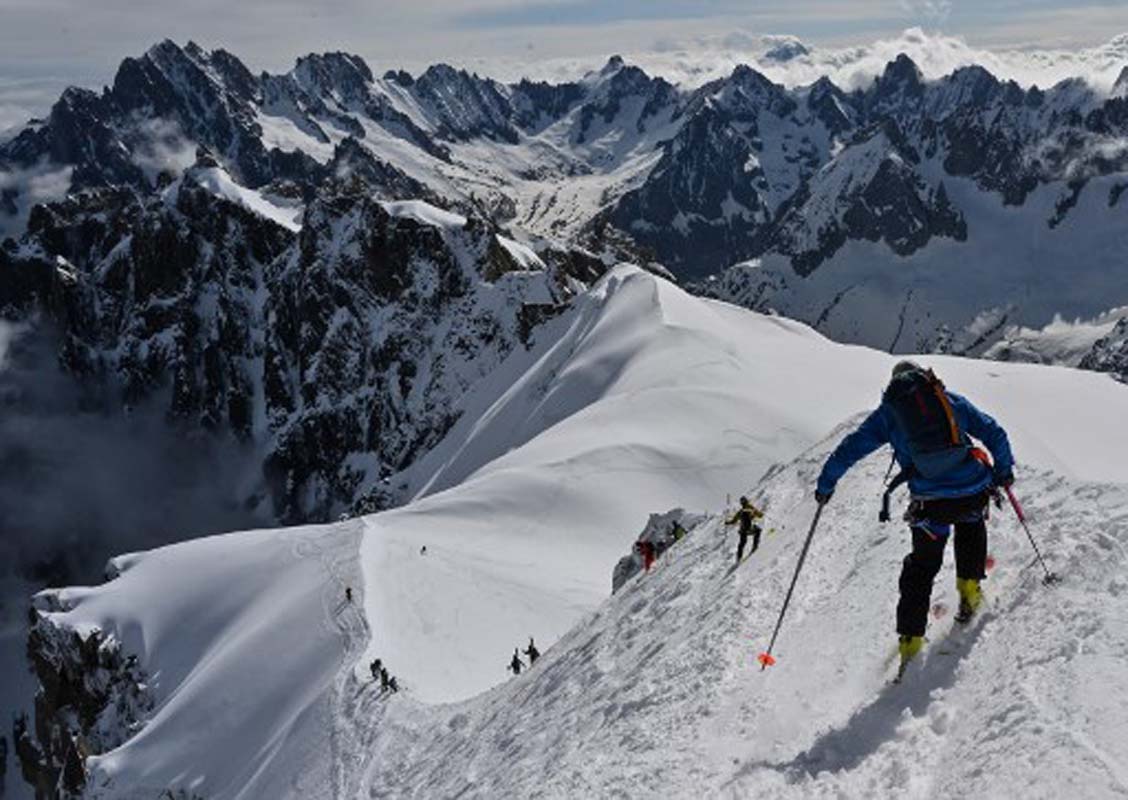
(MENAFN) Nepal has greenlit a record-breaking 492 climbing permits for Mount Everest's 2026 spring season, shattering previous highs even as the government's steep fee increase failed to cool surging demand, officials confirmed.
Nepal's Department of Tourism spokesperson Himal Gautam made no effort to conceal his enthusiasm over the milestone.
"Records are to be broken! Highest ever climber permits are issued for Sagarmatha (Mount Everest)," he declared.
In a bid to rein in dangerous overcrowding along the world's highest summit corridor, Kathmandu raised the foreign climber royalty fee by approximately 36% — from $11,000 to $15,000 — ahead of this season. The measure has proven ineffective, with demand surging well past what the new pricing was designed to discourage.
The numbers tell a stark story: the Department of Tourism recorded 290 permits in 2018, rising to 381 in 2019, then 408 in 2021, 325 in 2022, 479 in 2023, 421 in 2024, and 456 in 2025. The 2020 season was cancelled entirely due to the COVID-19 pandemic. This year's 492 permits eclipse every prior figure on record.
The record tally may not yet be final. Department of Tourism official Gopal Bhandari indicated the window remains open.
"An expedition group consisting of 11 climbers is in process of obtaining climbing permits. Few more could be added into the list as the permit issue process hasn't yet come to an end," he told media.
Nepal opens its permit application process each year in early March, accepting submissions through late May. Veteran mountaineers frequently time their arrivals toward the end of the window, opting to push for the summit without prolonged acclimatization periods.
The flood of climbers has amplified long-standing alarm over waste accumulation and ecological degradation in one of the planet's most sensitive alpine environments. Authorities and conservation organizations warn that the proliferation of advanced expedition gear — from high-performance tents to pressurized cooking equipment — combined with aggressive commercialization, is inflicting lasting damage on the fragile Himalayan ecosystem. Repeated cleanup drives have failed to keep pace with the refuse accumulating across the mountain's upper camps.
On the ground, climbers are already gathering at Everest Base Camp, conducting acclimatization rotations before pushing toward higher elevations once summit ropes are secured in place. Under a long-established protocol, the Expedition Operators Association of Nepal oversees rope-fixing operations from Camp II to the summit, while the Sagarmatha Pollution Control Committee manages the route from base camp up to Camp II.
This season's preparations have not been without setbacks.
"This year's rope-fixing operations were delayed by two weeks after a massive serac -- a large unstable block of glacier ice -- collapsed on the route to Camp I."
Sherpa teams were forced to stand down and wait for the unstable ice formation to recede before they could install the ladder systems spanning the crevasse fields on the approach to Camp I. Both Everest-bound climbers and those targeting Lhotse — the world's fourth-highest peak — share the same treacherous icefall passage.
Base camp officials confirmed ropes are now anchored as high as the South Col at 7,906 meters, with crews continuing to push the line toward the summit despite deteriorating weather.
Nepal's Department of Tourism spokesperson Himal Gautam made no effort to conceal his enthusiasm over the milestone.
"Records are to be broken! Highest ever climber permits are issued for Sagarmatha (Mount Everest)," he declared.
In a bid to rein in dangerous overcrowding along the world's highest summit corridor, Kathmandu raised the foreign climber royalty fee by approximately 36% — from $11,000 to $15,000 — ahead of this season. The measure has proven ineffective, with demand surging well past what the new pricing was designed to discourage.
The numbers tell a stark story: the Department of Tourism recorded 290 permits in 2018, rising to 381 in 2019, then 408 in 2021, 325 in 2022, 479 in 2023, 421 in 2024, and 456 in 2025. The 2020 season was cancelled entirely due to the COVID-19 pandemic. This year's 492 permits eclipse every prior figure on record.
The record tally may not yet be final. Department of Tourism official Gopal Bhandari indicated the window remains open.
"An expedition group consisting of 11 climbers is in process of obtaining climbing permits. Few more could be added into the list as the permit issue process hasn't yet come to an end," he told media.
Nepal opens its permit application process each year in early March, accepting submissions through late May. Veteran mountaineers frequently time their arrivals toward the end of the window, opting to push for the summit without prolonged acclimatization periods.
The flood of climbers has amplified long-standing alarm over waste accumulation and ecological degradation in one of the planet's most sensitive alpine environments. Authorities and conservation organizations warn that the proliferation of advanced expedition gear — from high-performance tents to pressurized cooking equipment — combined with aggressive commercialization, is inflicting lasting damage on the fragile Himalayan ecosystem. Repeated cleanup drives have failed to keep pace with the refuse accumulating across the mountain's upper camps.
On the ground, climbers are already gathering at Everest Base Camp, conducting acclimatization rotations before pushing toward higher elevations once summit ropes are secured in place. Under a long-established protocol, the Expedition Operators Association of Nepal oversees rope-fixing operations from Camp II to the summit, while the Sagarmatha Pollution Control Committee manages the route from base camp up to Camp II.
This season's preparations have not been without setbacks.
"This year's rope-fixing operations were delayed by two weeks after a massive serac -- a large unstable block of glacier ice -- collapsed on the route to Camp I."
Sherpa teams were forced to stand down and wait for the unstable ice formation to recede before they could install the ladder systems spanning the crevasse fields on the approach to Camp I. Both Everest-bound climbers and those targeting Lhotse — the world's fourth-highest peak — share the same treacherous icefall passage.
Base camp officials confirmed ropes are now anchored as high as the South Col at 7,906 meters, with crews continuing to push the line toward the summit despite deteriorating weather.

Legal Disclaimer:
MENAFN provides the
information “as is” without warranty of any kind. We do not accept
any responsibility or liability for the accuracy, content, images,
videos, licenses, completeness, legality, or reliability of the information
contained in this article. If you have any complaints or copyright
issues related to this article, kindly contact the provider above.
Most popular stories
Market Research

More Story





Comments
No comment