

Israel, Hizbollah Trade Accusations Over Lebanon Truce Violations


The accusations came as the foes said they carried out fresh attacks in southern Lebanon, with AFP correspondents reporting residents in heavy traffic heading north to flee an Israeli warning and strikes, while Israel's army reported one soldier killed.
Tehran-backed Hizbollah drew Lebanon into the Middle East war on March 2 by firing rockets at Israel to avenge the death of Iran's supreme leader Ali Khamenei in US-Israeli strikes, with Israel responding with strikes and a ground invasion.
But claims that both sides have breached a 10-day ceasefire agreed earlier this month have continued even after US President Donald Trump announced its extension for three weeks on Thursday.
Hizbollah released several statements on Sunday saying its fighters targeted Israeli troops and positions in response to Israeli ceasefire violations and attacks on Lebanese villages, vowing to keep up the attacks.
"The enemy's continued ceasefire violations... and above all its continued occupation of Lebanese territory and violations of its sovereignty will be met with a response and a resistance... to defend its land and people," it said in a statement.
Israel's military said Sunday evening that one of its soldiers was killed "during combat" in southern Lebanon, and six were wounded, four of them severely.
Earlier, the Israeli military issued evacuation orders for residents of seven villages in south Lebanon, pledging "decisive action" following what it called Hizbollah violations.
Shortly afterwards, Israeli warplanes "launched a strike" in Kfar Tibnit -- one of the villages -- causing casualties, Lebanon's National News Agency said.
An Israeli strike on Zawtar Al Sharqiyah, another of the flagged villages, destroyed a mosque and another religious building, the news agency said.
It had earlier said an Israeli "drone hit a motorcycle" there.
Shelling was also reported in several border villages, it said.
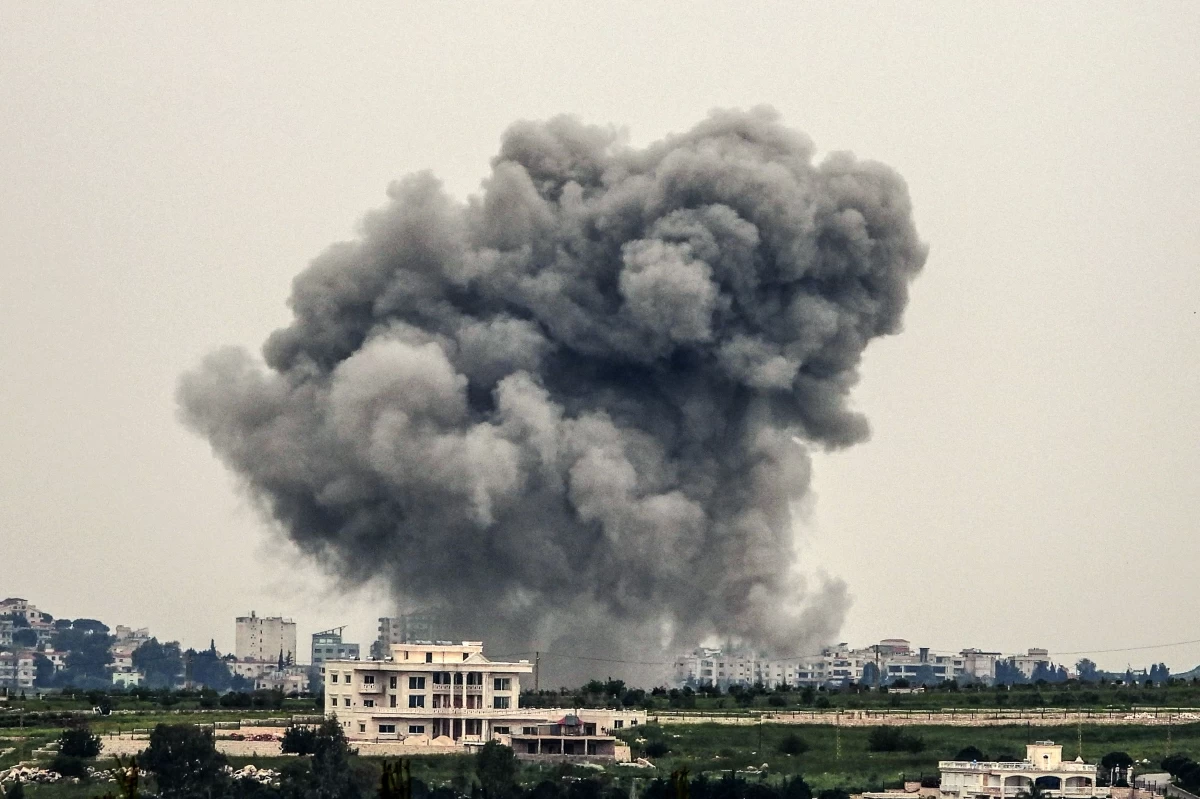
Elsewhere, AFP correspondents saw clouds of grey smoke rise over Nabatieh Al Fawqa and several other locations after the Israeli strikes.
The Israeli military said in Sunday's operations, it had struck "rocket-launching terrorist cells and weapons storage facilities".
Earlier it had conducted "artillery and aerial strikes targeting terrorists and military infrastructure sites" used by Hezbollah "north of the forward defence line" -- the so-called yellow line.
Shortly after Netanyahu's remarks, the military said it had intercepted three drones heading for Israeli territory.
Under the terms of the truce, which was recently extended, Israel reserves the right to respond to "planned, imminent or ongoing attacks" and has been striking targets in south Lebanon almost every day.
"This means freedom of action not only to respond to attacks... but also to pre-empt immediate threats and even emerging threats," Netanyahu said.
Lebanon's health ministry has raised the toll in Israeli attacks since the war erupted on March 2 to 2,509 dead and 7,755 wounded.
The United Nations' UNIFIL peacekeeping force said it held a memorial in Beirut for an Indonesian peacekeeper who died on Friday after being wounded in a blast in south Lebanon last month.
A preliminary UN investigation found that an Israeli tank shell caused the explosion.

Legal Disclaimer:
MENAFN provides the
information “as is” without warranty of any kind. We do not accept any
responsibility or liability for the accuracy, content, images, videos,
licenses, completeness, legality, or reliability of the information
contained in this article. If you have any complaints or copyright issues
related to this article, kindly contact the provider above.
Comments
No comment