







403
Sorry!!
Error! We're sorry, but the page you were looking for doesn't exist.
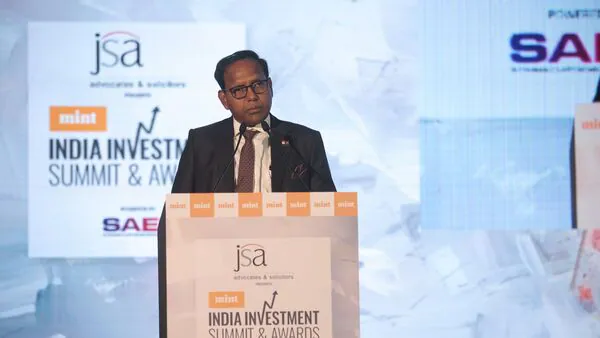
Mythos Is A Threat And Opportunity For The Fintech Ecosystem, Says DFS Secretary M. Nagaraju
(MENAFN- Live Mint) Emerging AI systems such as Claude Mythos present both risks and opportunities for the financial sector, said M. Nagaraju, the secretary of the Department of Financial Services (DFS), on Thursday, underlining the need for responsible adoption of technology alongside stronger safeguards for cybersecurity and data privacy.
“Mythos is a threat and opportunity for the fintech ecosystem,” he said while addressing the PICUP Fintech Conference & Awards 2026 in New Delhi, indicating that the Centre and regulators are closely studying the technology and its implications for finance.
He said India's financial sector is undergoing one of the most profound transformations in its history, with a structural shift in how services are accessed, delivered and experienced by citizens. According to him, the next phase of growth will require balancing innovation with resilience and inclusion.
Also Read | Why RBI did not upgrade Ujjivan to a universal bankHe said that despite global headwinds such as geopolitical conflicts, supply-chain realignments, elevated interest rates and uncertainty, India continues to remain a bright spot in the global economy.
The country is advancing towards its goal of becoming a $5 trillion economy, supported by strong macroeconomic fundamentals, infrastructure growth, an expanding manufacturing base and diversified supply chains, he added.
Citing economic indicators, Nagaraju said real gross domestic product (GDP) growth for 2025-26 is estimated at 7.6%, higher than 7.1% in 2024-25. Private Final Consumption Expenditure grew 7% in 2025-26 to 61.5% of GDP, the highest since 2012, while Gross Fixed Capital Formation increased 7.8%, with its share steady at 30% of GDP.
He also highlighted the improved health of the banking sector. The gross non-performing asset (NPA) ratio of scheduled commercial banks stood at 2.2% in September 2025, while the net NPA ratio was at a record low of 0.5%. Outstanding bank credit growth rose 14.5% year-on-year as of 31 December 2025, compared with 11.2% a year ago.
On financial inclusion, he said that India has emerged as a global benchmark over the past decade. Nearly 580 million accounts have been opened under the Pradhan Mantri Jan Dhan Yojana, with more than half held by women. Deposits exceed ₹3 trillion, and over 400 million RuPay cards have been issued.
Also Read | India's IPO pipeline growing despite volatility: IIFL's investment banking headHe added that Pradhan Mantri Jeevan Jyoti Bima Yojana and Pradhan Mantri Suraksha Bima Yojana together have enrolled more than 840 million beneficiaries, while the Pradhan Mantri MUDRA Yojana has sanctioned over 570 million loans worth ₹39 trillion. The Stand-Up India scheme has disbursed over ₹41,000 crore.
Nagaraju said India's Digital Public Infrastructure-led by Aadhaar, Unified Payments Interface (UPI) and the Account Aggregator framework-has become a foundational driver of growth and inclusion. UPI processed over 22 billion transactions in March, with total value exceeding ₹29 trillion. Moreover, it accounted for 81% of retail digital payment transactions in 2024-25.
On artificial intelligence, he said AI-driven underwriting can assess creditworthiness using alternative data such as digital transaction histories, goods and services tax (GST) records, telecom data and Account Aggregator information.“AI has the potential to make financial inclusion not just socially desirable, but commercially sustainable” he said.
Also Read | Trai's AI enforcer plan sparks digital economy rowHe, however, cautioned that cybersecurity threats, data privacy concerns, trust deficits, market volatility and geopolitical uncertainties must be actively managed.“The next phase will test our ability to integrate advanced technologies responsibly, secure systems against evolving threats, protect citizen data, and expand access while maintaining stability,” he said.

Legal Disclaimer:
MENAFN provides the
information “as is” without warranty of any kind. We do not accept
any responsibility or liability for the accuracy, content, images,
videos, licenses, completeness, legality, or reliability of the information
contained in this article. If you have any complaints or copyright
issues related to this article, kindly contact the provider above.
Most popular stories
Market Research

More Story






Comments
No comment