




403
Sorry!!
Error! We're sorry, but the page you were looking for doesn't exist.
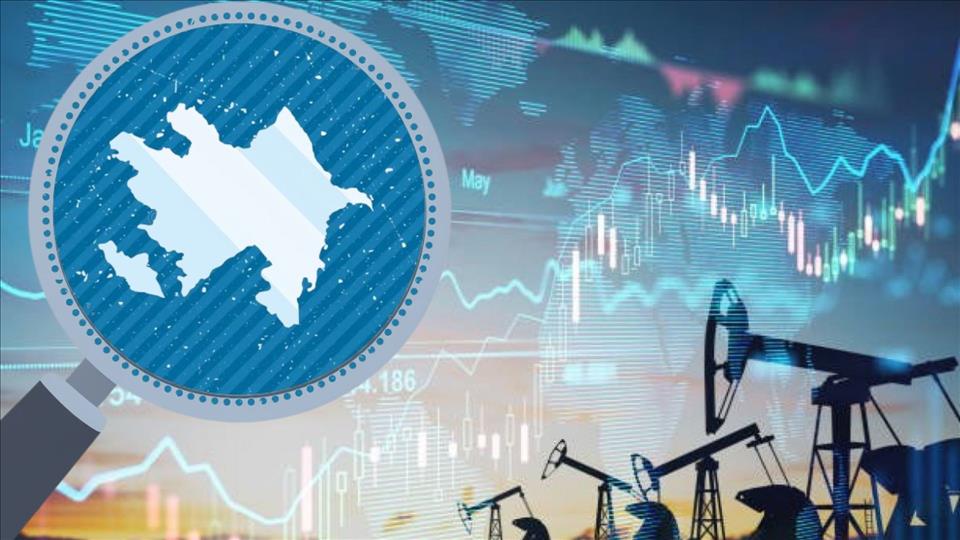
Azerbaijan's Non-Oil Surge Offers Hope For Bigger Economy
| Country | Visitors | Tourism revenue | GDP approx. |
| Azerbaijan | 2.57 million |
Revenues are between $1.9bn - 2.1bn calc on 2024 numbers) |
~$75bn |
| Georgia | 7.8mln (2025) | $4.7bn | ~$30bn |
| Armenia | 2.26mn (2025) | est. $2.5bn | ~$22bn |
With only 40% of the GDP compared to Azerbaijan's, Georgia generates almost three times more tourism revenue. Revenue per tourist is the key factor to look at, and Azerbaijan is lagging behind its neighbors by a large margin. Oliver Wyman's 10-12 million tourists goal by 2035 is technically possible – like what India did with its aviation liberalization and event-based tourism strategies, but it needs proper policies about airspace use, visa procedures, and hotel infrastructure quality, all of which have been under discussion for years and are yet to materialize.
The only believable piece of the $150 billion story is its non-oil segment, and the proof is already evident. The share of the non-oil GDP exceeded 52.7% of total production, rising at an impressive 8.6% rate when the oil industry fell 7.3% in 2025. In January-November 2025, non-oil exports grew 7.3%, reaching $3.3 billion. Agricultural exports showed a tremendous surge in the form of sugar exports +54.4%, chemical products +39%, fruits & vegetables +24.3%. The merger of KOBIA and AZPROMO into one SME & export development body took place in early 2026. These figures are factual.
The logistics and transit performance are also quite real. As of 2025, Azerbaijan Railways moved over 390 block trains with containers along the China-Europe route, seeing a yearly increase of 40.8% in container throughput at Alat Port. The Iran war, oddly enough, serves to accelerate this trend, as transit via Iran is being rerouted to the north, with Azerbaijan located at the only existing 190 km route that circumvents both Russia and Iran. It is hard to reproduce such an advantage in structure.
As per Oliver Wyman Group, there is nothing speculative about reaching $150 billion GDP by 2035 – it is a well-thought-out transformation based on Azerbaijan's inherent advantages.
So what needs to change?
The IMF Article IV consultation mission in February 2026, while broadly supportive of Azerbaijan's diversification efforts, noted four structural shortcomings that stand between current trends and the Oliver Wyman scenario: informality in the labor market, reducing efficiency and taxes; an extensive role for the state, where a handful of public holding companies monopolize key industries; shallow capital markets that restrict access to funding; and poor quality governance, including corruption, rule of law, and judicial transparency, which according to the 2024 U.S. State Department investment climate report, remains behind peer nations in the region. None of this is impossible to overcome. But all of this represents context that no amount of consulting enthusiasm can replace. The success stories referenced by Oliver Wyman, Ireland, and Singapore, for example, have succeeded in part through the implementation of radical institutional reform.
The math behind achieving double-digit growth in GDP within a decade: It will require an average annual GDP growth rate of 7.2% in real terms to achieve GDP of $150 billion from the current level of $75 billion in a decade. Over the past decade, Azerbaijan has managed to achieve an average GDP growth rate of 1.5%. This means that the non-oil sector must achieve a growth rate of about 10–12% per year while expanding to become a larger component of the economy.
These four elements together amount to a formidable basis for success – $85 billion worth of sovereign assets, a geographical position that is getting more strategically important every day as Middle Eastern transport links become unreliable, a peace deal with Armenia that will open up new transport routes, and an economy outside oil that is actually growing faster than the country's economic growth rate overall. A goal of $150 billion is indeed ambitious, and could even be counted as optimistic per se, but it is not out of the blue. If Azerbaijan is going to reach this number by either 2035 or 2040, it will not be through choosing which industries to focus on – Oliver Wyman has already made its suggestions. It will require carrying out the institutional reforms that have been flagged as necessary by the IMF, the EBRD, and others.

Legal Disclaimer:
MENAFN provides the
information “as is” without warranty of any kind. We do not accept
any responsibility or liability for the accuracy, content, images,
videos, licenses, completeness, legality, or reliability of the information
contained in this article. If you have any complaints or copyright
issues related to this article, kindly contact the provider above.
Most popular stories
Market Research

More Story





Comments
No comment