(MENAFN- ING)
Main ING EMEA FX Forecasts
|
EUR/CZK |
EUR/PLN |
EUR/HUF |
| 1M |
24.35 |
→ |
4.23 |
↓ |
360 |
↓ |
| 3M |
24.25 |
↓ |
4.24 |
↓ |
350 |
↓ |
| 6M |
24.20 |
↓ |
4.22 |
↓ |
365 |
↓ |
| 12M |
24.10 |
↓ |
4.25 |
↓ |
342 |
↓ |
EUR/PLN: The zloty erased most of its losses from March
|
Spot |
One month bias |
1M |
3M |
6M |
12M |
|
EUR/PLN
4.24 |
Neutral |
4.23 |
4.24 |
4.22 |
4.25 |
In March, the EUR/PLN exchange rate touched 4.30, its highest level since April 2025 – the start of the trade war saga – as risk aversion linked to the Middle East conflict spread across global markets. The situation changed in April, as markets became more optimistic about the US-Iran conflict.
The Polish currency was also supported by the outcome of the parliamentary elections in Hungary, as well as a temporary Easter ceasefire between Russia and Ukraine, accompanied by signs of possible progress in peace talks. As a result, the EUR/PLN exchange rate returned towards the 4.24 level.
We remain neutral on the zloty. The domestic fundamentals are supportive for the Polish currency, especially with GDP growth outperforming the CEE region as well as an expected European Union stream of funds to come this year. Current risks are still linked to the geopolitical factors and global risk appetite.
EUR/HUF: We turn fundamentally bullish on HUF
|
Spot |
One month bias |
1M |
3M |
6M |
12M |
|
EUR/HUF
365.00 |
Mildly Bearish |
360.00 |
350.00 |
365.00 |
342.00 |
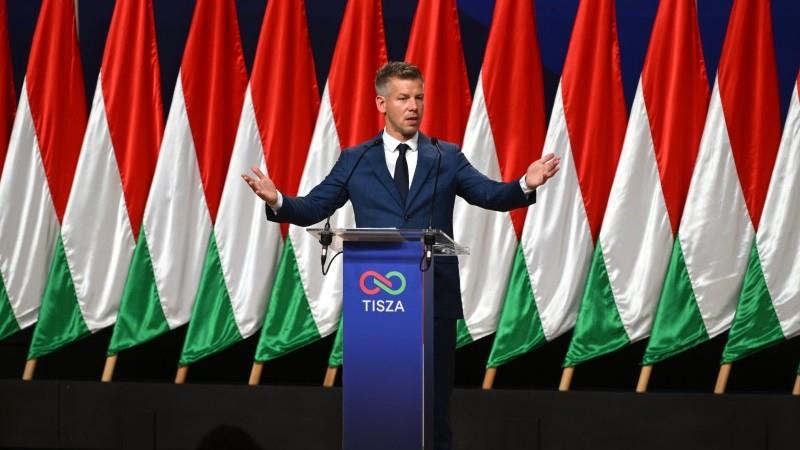
Despite all the geopolitical noises and vulnerabilities, the Hungarian forint strengthened to a level not seen in four years in the post-election market repositioning.
Local and international investors have clearly placed their trust in the new political era. If the incoming government led by Péter Magyar lives up to this trust and does not abuse it, we believe that the HUF could be on track for fundamental strengthening.
Given the significant global uncertainty at present, investors are likely to want to realise profits earlier than usual, leading to higher volatility. However, the HUF will continue to appreciate if there are positive headlines from time to time about EU funds, institutional changes, fiscal policy or foreign policy.
EUR/CZK: Engines of koruna's strength set to prevail
|
Spot |
One month bias |
1M |
3M |
6M |
12M |
|
EUR/CZK
24.34 |
Neutral |
24.35 |
24.25 |
24.20 |
24.10 |
Should the turmoil in the Middle East calm down in light of recent negotiations, and the Brent crude price gradually recede, the impact on Czech inflation and economic performance would be limited. In such a case, the koruna would enter its appreciation trajectory again.
Czech industry set on an upward path at the start of the year, after having stabilised in 2025. The fiscal stance is in decent shape to sustain a time-limited negative supply shock in case the government would support households or businesses. So, despite some pressure on economic activity the outperformance vis-à-vis the eurozone means further tailwinds for the koruna.
If we see another round of escalation unfolding, the koruna is likely to come under pressure, especially if this would imply extensive damage to the global economy. Weak foreign demand is not good news for Czech exporters, and such a scenario would at least temporarily undermine the fundamental drivers of the koruna.
EUR/RSD: National Bank of Serbia grip likely to keep RSD sideways
|
Spot |
One month bias |
1M |
3M |
6M |
12M |
|
EUR/RSD
117.35 |
Neutral |
117.40 |
117.30 |
117.20 |
117.20 |
EUR/RSD has continued to trade mostly sideways, despite persisting political tensions and a still uncertain outcome related to the NIS refinery. The pair sat mostly in a 117.30 – 117.50 range. From a macro imbalances standpoint, Serbia's position continues to remain robust.
Strong investments also continue to provide tailwinds for activity, supporting the fundamentals. On the consumption front, the still-high, double-digit wage growth likely acted as a cushion through most of the recent uncertainties and prevented stronger reactions in household demand.
At its April meeting, the National Bank of Serbia kept the key rate in place at 5.75% - flagging the country's net energy importer status in the context of the ongoing Middle East tensions. We continue to believe that FX stability should remain a key focus ahead – in January-March, the central bank sold EUR1,220m to keep the pair stable.
USD/UAH: Brighter outlook for Ukraine's economy
|
Spot |
One month bias |
1M |
3M |
6M |
12M |
|
USD/UAH
43.83 |
Mildly Bearish |
43.30 |
43.30 |
43.30 |
43.80 |
The conflict in the Middle East triggered a risk‐off shift in market sentiment. The hryvnia weakened to record lows against both the US dollar and the euro. However, in April, as markets turned more positive following the US–Iran ceasefire, the USD/UAH exchange rate reversed most of its earlier move.
The National Bank of Ukraine sought to curb the negative effects of elevated risk aversion. In March, international reserves declined by 5.0%, driven mainly by the NBU's FX interventions. Nevertheless, despite the decrease, reserves remain sufficient to support FX market stability, as they are still close to record highs.
The macroeconomic environment remained challenging. In March, businesses returned to reporting a positive outlook, and – for the first time in nearly a year – improvements were expected across all surveyed sectors. The more optimistic expectations were supported by improvements in the energy sector and a rebound in consumer demand.
USD/KZT: Our view improves on higher oil prices
|
Spot |
One month bias |
1M |
3M |
6M |
12M |
|
USD/KZT
472.00 |
Neutral |
470.00 |
480.00 |
510.00 |
515.00 |
The tenge is one of the key beneficiaries of the tensions in the Middle East, as it has lifted by c.6% since the outbreak – against the backdrop of Brent rallying by c.33% while the US dollar remained virtually flat against the key currencies.
The fresh upward revision to global energy price assumptions led to an improvement of our view on Kazakhstan's external balance: at $89/bbl Brent average in 2026 we expect its current account deficit to halve to 2.0-2.5% of GDP.
We've also slightly improved our view of the tenge's trajectory. We remain constructive about the near-term prospects but continue to see depreciation risks in the longer run on structural features of the balance of payments.
USD/UZS: Resilience confirmed so far
|
Spot |
One month bias |
1M |
3M |
6M |
12M |
|
12165.00 |
Mildly Bearish |
12100.00 |
12000.00 |
12100.00 |
12300.00 |
The Uzbekistani soum remained flat vs the US dollar since the beginning of March, suggesting resilience to volatility in the global risk appetite and c.9% correction in the gold price since the outbreak of tensions in the Middle East.
The 85t of gold Uzbekistan exported in 2025 is significantly lower than the historical high of c.120t in 2023. This suggests that Uzbekistan can boost physical exports to an extent that would allow retaining last year's exports proceeds of $10bn, even if the gold price were to settle at $2,000-2,500/oz.
We maintain our constructive near-term view on UZS, but as with the case of Kazakhstan, see some moderate scope for depreciation in the longer run if the issue of twin deficits and elevated CPI is not resolved.
USD/TRY: Signals of recovery in foreign appetite with the ceasefire
|
Spot |
One month bias |
1M |
3M |
6M |
12M |
|
USD/TRY
44.76 |
Mildly Bullish |
45.10 |
46.60 |
49.10 |
54.00 |
Amid heightened turmoil in the Middle East, the Central Bank of Turkey (CBT) suspended one week repo auctions and allowed the overnight rate to drift toward the upper bound of its interest rate corridor. It also removed certain exemptions tied to TRY credit growth restrictions and resumed FX swap transactions with domestic banks to support reserves.
Since late February, portfolio outflows have reached US$9.6bn, alongside the unwinding of more than US$21bn in carry trade positions. Sustained uncertainty could trigger further outflows. However, the recent ceasefire has eased market concerns, prompting a partial reversal of capital movements.
Foreign investor outflows and lower gold prices have pressured the CBT's FX reserves. Net reserves excluding swaps fell from US$78.6bn to about US$18.3bn by 3 April. Despite reduced FX swaps with local banks in recent days, reserves are gradually recovering, indicating some foreign inflows.
USD/ZAR: Remarkable resilience from South African assets
|
Spot |
One month bias |
1M |
3M |
6M |
12M |
|
USD/ZAR
16.42 |
Mildly Bearish |
16.25 |
16.25 |
16.00 |
15.75 |
So far, the Middle East energy shock has triggered a decent clean out of long South African positions. USD/ZAR rose 10% and local currency ten-year yields rose 150bp through March. However, global investors' 'glass half-full' approach to the global economy post this shock means the rand has been quick to bounce back.
That said, South Africa's terms of trade have net declined on its rise in its energy import bill. And the IMF has cut its 2026 S. Africa GDP forecast to 1.0% from 1.4%. Equally, the local bond story is less attractive now that the South Africa Reserve Bank looks unable to cut rates further.
We are raising our USD/ZAR profile slightly to take account of the energy shock – but the rand should see good demand on dips.
USD/ILS: BoI can't be comfortable with $/ILS sub 3.00
|
Spot |
One month bias |
1M |
3M |
6M |
12M |
|
USD/ILS
2.99 |
Mildly Bullish |
3.10 |
3.10 |
3.10 |
3.05 |
USD/ILS remains very well offered, so much so that the market is starting to price in a 50bp Bank of Israel rate cut for the 25 May meeting. It is not clear what the key factors are driving these ILS gains. Late last year, Israel's current account surplus had shrunk from $23bn per quarter to $8bn per quarter, which was not fully compensated by direct or portfolio investment flows.
And the real, trade-weighted shekel is now at all-time highs and up 12% year-on-year. We doubt the Bank of Israel can be comfortable with the prospect of USD/ILS sub-3.00, even if Washington continues to discourage FX intervention.
Favour USD/ILS holding 3.00 and local interest rates going lower.
MENAFN17042026000222011065ID1110997137
Legal Disclaimer:
MENAFN provides the
information “as is” without warranty of any kind. We do not accept
any responsibility or liability for the accuracy, content, images,
videos, licenses, completeness, legality, or reliability of the information
contained in this article. If you have any complaints or copyright
issues related to this article, kindly contact the provider above.

















Comments
No comment