



403
Sorry!!
Error! We're sorry, but the page you were looking for doesn't exist.
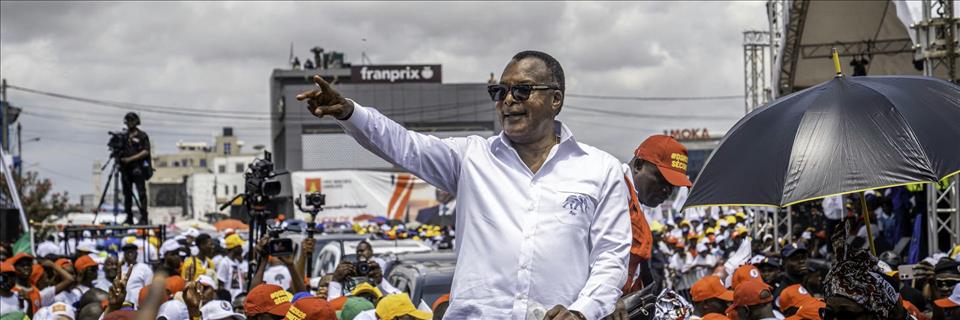
Congo-Brazzaville Election: Boycotts, Blackouts And Growing Dissent But Denis Sassou Nguesso Held On To Power
Author: Ngodi Etanislas
(MENAFN- The Conversation) The 2026 presidential election in Congo-Brazzaville (the Republic of the Congo) returned Denis Sassou Nguesso for a fifth consecutive term, with a definitive 94.90% of the vote.

We asked Ngodi Etanislas, a political scientist who focuses on the central African country, to sum up what happened and why it matters, now that the dust has settled.
What political factors shaped the result?Denis Sassou Nguesso 's huge victory is not the result of an open electoral race. It is, rather, the culmination of a political system built on decades of power consolidation since the end of the 1997 civil war. It was a“Soviet-style” outcome (overwhelming and predetermined) that can be explained by a few key political factors.
First, there is the political longevity of Nguesso, in power since 1979 (with an interruption from 1992 to 1997). This four-decade dominance gives him total control over the country's political, institutional, and security apparatus. It makes political change not only difficult but structurally unlikely.
Furthermore, the rigged electoral process – especially through control of the state apparatus and election management bodies – contributed to this victory.
Electoral campaigning was also deeply unequal. Nguesso's campaign looked like a“national tour”. It was built on a show of strength designed to project the image of a leader close to the people.
Did a divided opposition influence the result?The fragmentation of the political opposition was arguably the most decisive factor behind the landslide. The opposition entered the election divided. They could not agree on a single candidate, which significantly reduced the chances of a democratic transition.
The election was marked by the absence of certain figures in Congolese politics. Some remain imprisoned (Jean-Marie Michel Mokoko and André Okombi Salissa). Others chose to boycott the poll, believing the conditions for a free and transparent election were not met. This stripped the contest of any real stakes. It helped secure a first-round victory for Nguesso. In 2016, he won 60.4% of the vote against a strong opposition.
Read more: Africa's ageing leaders: succession race in Cameroon, Congo and Equatorial Guinea could destabilise the region
For many observers, the six candidates in the race were largely unknown or lacked any real political base. Some appeared to be using the election to gain some visibility, or better yet, political legitimacy ahead of future contests. They were no match for Nguesso. They lacked the financial resources to campaign nationwide and build local support to defend their platforms.
Finally, the digital blackout – including a countrywide shutdown of phone networks and internet on election day – added another layer of opacity of the process. It created an unprecedented information blackout.
This reduced the opposition's ability to organise collectively and deploy its delegates. It also aimed to limit the spread, on social media, of rumours about ballot stuffing, vote buying, and other politically sensitive content. The president was clearly worried about low turnout figures leaking out.
What was the mood among voters?Voting was marked by deep disaffection, fuelled by the opposition's boycott and a sense among many young people that voting was pointless. It also took place in a climate of fear perpetuated by the repressive environment. This included operations carried out early in the year by the General Directorate of Presidential Security, as well as intimidation and crackdowns targeting activists and political opponents.
The issue of voter turnout lies at the heart of the controversy surrounding this election.
Read more: Corrupt, brutal and unprofessional? Africa-wide survey of police finds diverging patterns
Two scenarios can be considered.
The first is turnout orchestrated by the government through political and patronage networks. The goal is to boost participation in order to legitimise the electoral process and bolster the credibility of the results.
The second scenario involves a boycott of the election encouraged by the opposition, aimed at achieving low turnout, which could spark challenges over the election's legitimacy.
Reports highlight a clear gap between official figures and field observations, suggesting a more complex picture of voter turnout than is apparent. The official turnout rate reportedly jumped by nearly 17% – from about 67.57% in 2016, when there were more opposition figures, to 84.65% in 2026, despite a widespread boycott. Yet polling stations across 6,620 booths in 4,011 centres appeared largely empty.
What challenges lie ahead?To escape political and social stagnation, several democratic reforms are urgent:
- Restoring electoral credibility and the independence of institutions is one of the most sensitive issues. The election exposed serious shortcomings in electoral governance – lack of transparency, inclusiveness and fairness.
The reliability of voter rolls, the impartiality of the Independent National Electoral Commission and unequal access to the media pose ongoing problems. All this happened without effective independent oversight. Without sweeping reforms of the electoral system, abstention and disengagement will continue to grow, particularly among young people.
Building a pluralistic political space and a viable opposition is essential for reshaping the Congolese political landscape. Releasing political prisoners and guaranteeing an effective right to opposition would be essential prerequisites for any national reconciliation.Protecting fundamental freedoms and civic space. Human rights violations have been on the rise and there is no political dialogue between the government, the opposition, and civil society.
Succession and transition. The questions of what comes after Nguessou, whether power remains within the presidential majority, or ensuring continuity for a new term in 2031. This may include scenarios of dynastic succession within the presidential family.Turning oil wealth into human development. Nearly half the population lives below the poverty line. The challenge is to convert oil revenues into public services (health, education) and opportunities for young people.
Reconnecting citizen participation, particularly young people, to politics. Young Congolese and civil society need to be brought back into the political process. Citizen participation remains crucial to the legitimacy of the electoral process.Stability rests on fragile foundations. A large part of the population sees the government as lacking legitimacy. Distrust in the electoral system runs deep.
Youth frustration is a particularly worrying indicator.A 2024 survey indicates that young people have little confidence in the political system. Many feel that voting is pointless. Chronic unemployment and lack of economic prospects deepen their frustrations.
Read more: Weaning African leaders off addiction to power is an ongoing struggle
The internal struggle within the ruling party over who comes after Sassou Nguessou could become the main source of instability. The risk grows if no clear widely accepted successor emerges. Internal divisions seen during the party's congress in 2025 show how central succession is. They also show ongoing shifts in power and elite positioning.
The March 2026 presidential election did not resolve any key issues.
Institution:Université Marien Ngouabi

Legal Disclaimer:
MENAFN provides the
information “as is” without warranty of any kind. We do not accept
any responsibility or liability for the accuracy, content, images,
videos, licenses, completeness, legality, or reliability of the information
contained in this article. If you have any complaints or copyright
issues related to this article, kindly contact the provider above.
Most popular stories
Market Research

More Story
Comments
No comment