







403
Sorry!!
Error! We're sorry, but the page you were looking for doesn't exist.
Moroccan Dinosaur's Fearsome Tail Spikes Evolved Much Earlier Than We Thought New Discovery
Author: Kawtar Ech-charay
(MENAFN- The Conversation) In the heart of the Middle Atlas Mountains in central Morocco, a global team of palaeontologists and geologists has discovered new remains of a very unusual dinosaur. It belonged to the group called ankylosaurs, plant eaters whose bodies were covered in bony plates.

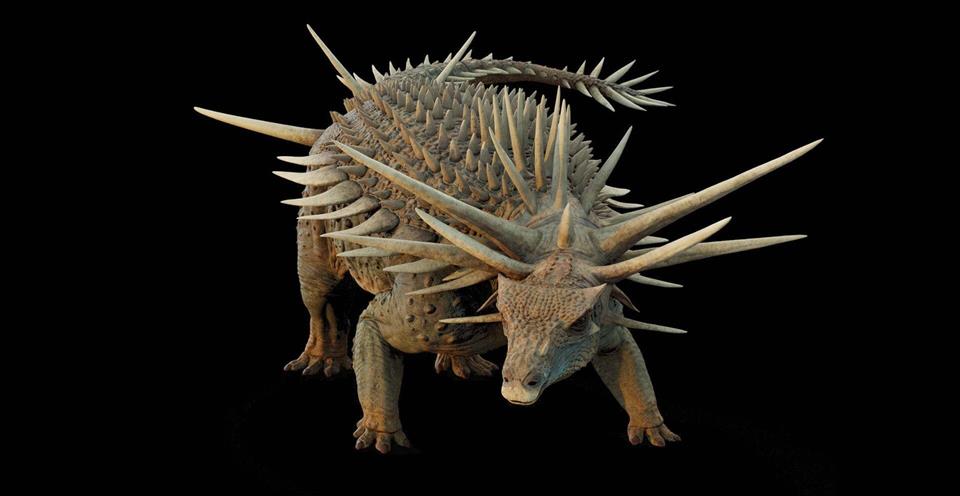
The fossils reveal a heavily armoured dinosaur. It has distinctive outward-pointing spikes along its body. These fossils are now considered to represent the oldest known ankylosaur remains in the world – it lived about 165 million years ago. As geoscientists who were part of the team that discovered and examined them, we had the unique opportunity to study these remarkable specimens firsthand.
This species, named Spicomellus afer, literally meaning a spiky armoured dinosaur from Africa, was first described in 2021 from a single rib discovered at the same site in Morocco. At the time, the discovery was extraordinary because of the rarity of ankylosaur fossils from the Middle Jurassic, around 165 million years ago.
The rib represented the earliest evidence of this dinosaur group, which is otherwise best known from the Late Jurassic and Cretaceous periods, between about 145 million and 66 million years ago. The original rib of Spicomellus afer is housed at the Natural History Museum in London.
The new fossils come from the same Middle Atlas locality and are curated at Sidi Mohamed Ben Abdellah University in Fez.
These additional bones provide new insights into the anatomy of this remarkable dinosaur. Key parts of the new discovery are spiked ribs nearly one metre long, a cervical (neck) half-ring, and parts of the pelvic bones.
These fossils show that this ankylosaur was covered in spikes. These spikes were not just part of the outer covering; some were fused directly to its skeleton. The findings also show that the tail weapons characteristic of ankylosaurs evolved much earlier than scientists had previously believed. The research also suggests that ankylosaur armour may have served a dual purpose early in the group's evolutionary history: as a defensive shield and as a means of display.
The tail: defence and displaySpicomellus had a stiffened tail with fused vertebrae. This likely served as a defensive shield against predators. Its body spikes added protection and made it a formidable target.
These features push back the origin of ankylosaur tail weapons by millions of years. This evidence shows that complex defensive adaptations evolved much earlier than previously thought.
The tail and armour may also have functioned in display or social signalling. So, defence and communication may have shaped its evolution.
Geological contextThe fossils were found in the Jurassic red beds of the Middle Atlas Mountains in Morocco. Red beds are sedimentary rocks, mainly sandstones and mudstones, coloured reddish by iron oxides. They typically form in continental environments such as rivers and floodplains under semi-arid to arid climates.
The Middle Atlas is characterised by high plateaus, forested mountains and many lakes, making it an important ecological region. Geologically, it preserves extensive Jurassic sedimentary successions, including the red beds that record the tectonic and climatic history of the Atlas system.
In this region, a sauropod dinosaur (Cetiosaurus moghrebiensis) was first reported in 1955. More recently, in 2019, our team, led by dinosaur researcher Susannah Maidment, described a stegosaur (Adratiklit boulahfa). We also identified teeth belonging to the oldest known turiasaur and reported remains of the earliest known cerapodan dinosaur.
The sites lie about 150km south of Fez, near Boulemane, at nearly 1,900 metres above sea level. Beyond the town, rough mountain tracks lead to the red sandstone outcrops, and the final approach often requires hiking across steep and rugged slopes. Harsh sun, strong winds and winter snow make fieldwork challenging. So each fossil recovered reflects both its scientific importance and the considerable effort required to reach these remote locations.
The region was once a marginal marine environment, with rivers, floodplains and possibly coastal settings under a warm climate. These conditions shaped both the habitat of the dinosaurs and the preservation of their remains.
Global collaborationThis discovery and its interpretation result from close international collaboration between palaeontologists and geologists from the UK, Morocco and the US.
The fossils were prepared, curated and studied at the Department of Geology in the Faculty of Sciences Dhar El Mahraz in Fez, using equipment provided through the University of Birmingham's Research England International Strategy and Partnership Fund. Additional support was provided by the British Institute of Libyan and Northern African Studies, the Natural History Museum's Science Investment Fund, and the University of Birmingham's International Science Partnerships Fund.
Future work will focus on detailed anatomical (body structure) and histological (tissue) analyses of the material, alongside continued field exploration to identify additional specimens.
These efforts aim to refine our understanding of the early evolution, functional morphology and palaeoecology of armoured dinosaurs in north Africa. We hope to explain why they looked the way they did and how they lived in their ancient environment.
Institution:Université Sidi Mohammed Ben Abdellah

Legal Disclaimer:
MENAFN provides the
information “as is” without warranty of any kind. We do not accept
any responsibility or liability for the accuracy, content, images,
videos, licenses, completeness, legality, or reliability of the information
contained in this article. If you have any complaints or copyright
issues related to this article, kindly contact the provider above.
Most popular stories
Market Research

More Story








Comments
No comment