




403
Sorry!!
Error! We're sorry, but the page you were looking for doesn't exist.
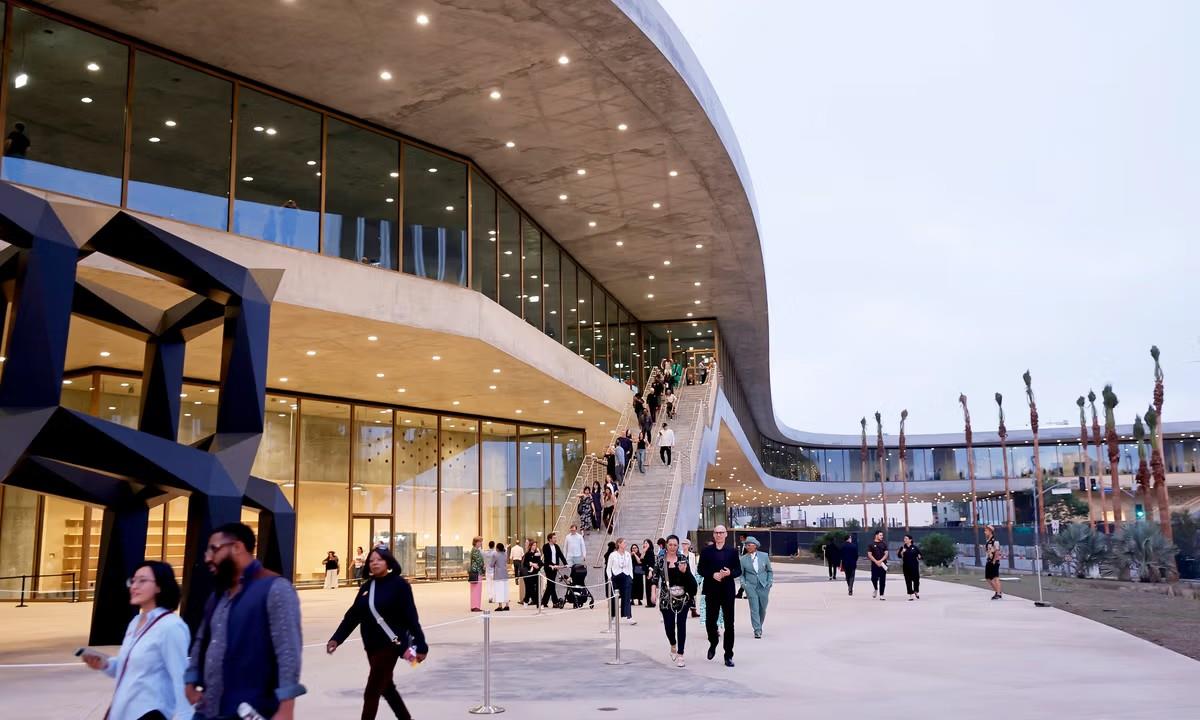
Los Angeles County Museum Of Art's New David Geffen Galleries Reframe 6,000 Years Of History The Art Newspaper International Art News And Events
(MENAFN- USA Art News)
LACMA's new David Geffen Galleries turn a long-awaited expansion into a statement about Los Angeles itself
When the Los Angeles County Museum of Art opens its David Geffen Galleries on April 19, the most striking view may be the one from inside: eastward-facing windows that look toward the La Brea Tar Pits, where prehistoric remains have been preserved for tens of thousands of years. The setting is deliberate. Peter Zumthor's new building places the museum's collection in conversation with the city's deep past, even as it stretches across Wilshire Boulevard and into a new architectural future.
The project is the largest and final phase of a capital campaign that has taken more than 20 years to complete. Costing $720 million, the building will be owned by Los Angeles County and adds 110,000 square feet of gallery space, along with 3.5 acres of public parkland. It also returns LACMA's permanent collection to view after seven years, bringing more than 150,000 objects spanning roughly 6,000 years of human history back into public circulation.
Michael Govan, LACMA's chief executive and Wallis Annenberg director, joined the museum in 2006 with the overhaul already in mind. He has described the project as a rare institutional opportunity, and the scale of the financing reflects that ambition. David Geffen pledged $150 million in 2017, with additional support from donors including Elaine Wynn and Steve Tisch. Genesis, the luxury arm of Hyundai, and Qatar Museums also contributed, underscoring the museum's effort to position Los Angeles as a global art destination rather than a purely regional one.
The building's form is as consequential as its funding. Its undulating concrete mass curves over Wilshire Boulevard, then bends toward and away from the rest of the campus. Works will hang directly on the concrete walls, a choice that gives the galleries a severe, almost geological presence. Govan has argued that concrete is an ancient material suited to old art, and the building's scale makes that claim feel less like a slogan than an organizing principle.
The new campus also extends the museum's public life beyond the galleries. Jeff Koons's 37-foot-tall living sculpture,“Split-Rocker” (2000), will anchor outdoor works in the park, while a planned sound garden will feature readings by eight poets from Southern California. Mariana Castillo Deball's“Feathered Changes,” created in collaboration with Zumthor, further signals the museum's interest in linking architecture, installation, and cross-cultural exchange.
For LACMA, the opening is not simply a matter of adding space. It is an attempt to rethink how a museum can hold together local landscape, global patronage, and a collection that moves across continents and centuries. In a city often defined by speed and spectacle, the new galleries ask for something slower: attention to history, to material, and to the ground beneath the museum itself.

Legal Disclaimer:
MENAFN provides the
information “as is” without warranty of any kind. We do not accept
any responsibility or liability for the accuracy, content, images,
videos, licenses, completeness, legality, or reliability of the information
contained in this article. If you have any complaints or copyright
issues related to this article, kindly contact the provider above.
Most popular stories
Market Research

More Story






Comments
No comment