




403
Sorry!!
Error! We're sorry, but the page you were looking for doesn't exist.
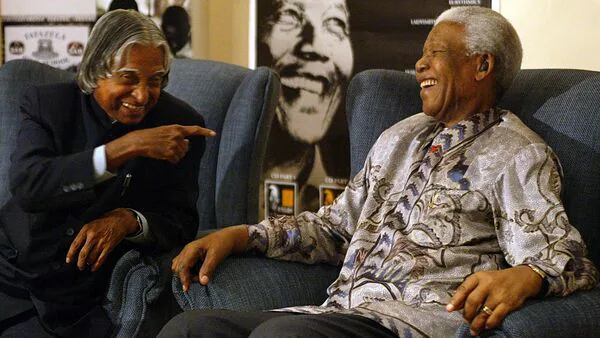
Quote Of The Day: Nelson Mandela On Negotiation- 'If You Want To Make Peace With Your Enemy, You Have To...'
(MENAFN- Live Mint) “If you want to make peace with your enemy, you have to work with your enemy. Then he becomes your partner.” - Nelson Mandela.
Nelson Mandela was a South African anti-apartheid revolutionary, political leader, and philanthropist who played a central role in ending racial segregation, also known as 'apartheid' in South Africa.
He spent 27 years in prison for his activism against apartheid before being released in 1990. After his release, he helped negotiate the end of apartheid and the transition to multi-racial democracy.
What does this quote mean?This quote means that peace requires cooperation rather than isolation, because when two sides remain hostile and separated, the conflict is likely to continue.
Also Read | After Jesus Christ, Trump compares himself to Nelson MandelaWhen former enemies begin working together on shared goals, their relationship can change, and they may start to see each other as partners instead of threats. Direct interaction also helps replace hatred with understanding by reducing fear, misunderstanding, and prejudice. Ultimately, this approach focuses on transformation rather than revenge, building peace by changing the relationship itself instead of punishing or excluding the opponent.
Mandela: A symbol of resistance and peaceIn 1994, Mandela became South Africa's first Black president, serving one term from 1994 to 1999. His leadership focused on reconciliation between racial groups, nation-building, and promoting peace rather than revenge.
Also Read | 'Apartheid, colonialism under Israelism,' alleges Palestinians at UN top courtHe is widely regarded globally as a symbol of resistance, forgiveness, and peace, and received the Nobel Peace Prize in 1993 alongside F.W. de Klerk for their efforts to peacefully dismantle apartheid.
What was Apartheid?Apartheid was a system of institutionalised racial segregation and discrimination that existed in South Africa from 1948 until the early 1990s.
Under apartheid, the government controlled by the white minority enforced strict racial separation and denied most political, economic, and social rights to non-white populations, especially Black South Africans.
Also Read | US Iran War Ceasefire Talks LIVE: Talks failed to reach agreement with IranPeople were classified by race, including White, Black, Coloured, and Indian, and this classification determined where they could live, work, study, and even which public facilities they could use.
Mandela described apartheid as a system that denied human dignity and equality, a structure built on racial injustice and separation.
Books by MandelaLong Walk to Freedom (1994): Mandela's most famous autobiography, covering his early life, political activism, 27 years in prison, and his journey to becoming South Africa's first Black president.
Conversations with Myself (2010): A collection of personal notes, letters, diary entries, and recorded reflections that give deeper insight into his private thoughts and experiences.
No Easy Walk to Freedom (1965): A collection of speeches and writings focused on the struggle against apartheid and the challenges of liberation.
Also Read | Two new books look inside the minds of India's chess prodigies If you want to make peace with your enemy, you have to work with your enemy. Then he becomes your partner.I Am Prepared to Die (1964): Based on his famous Rivonia Trial speech, along with other writings and statements from the period of his imprisonment.
The Struggle Is My Life (1986): A compilation of his speeches and writings during the anti-apartheid movement, showing his political vision and resistance efforts.
Key Takeaways- Peace requires cooperation, not isolation. Direct interaction can transform relationships from hostility to partnership. Understanding and empathy are essential in overcoming prejudice and fear.

Legal Disclaimer:
MENAFN provides the
information “as is” without warranty of any kind. We do not accept
any responsibility or liability for the accuracy, content, images,
videos, licenses, completeness, legality, or reliability of the information
contained in this article. If you have any complaints or copyright
issues related to this article, kindly contact the provider above.
Most popular stories
Market Research

More Story



Comments
No comment