




403
Sorry!!
Error! We're sorry, but the page you were looking for doesn't exist.
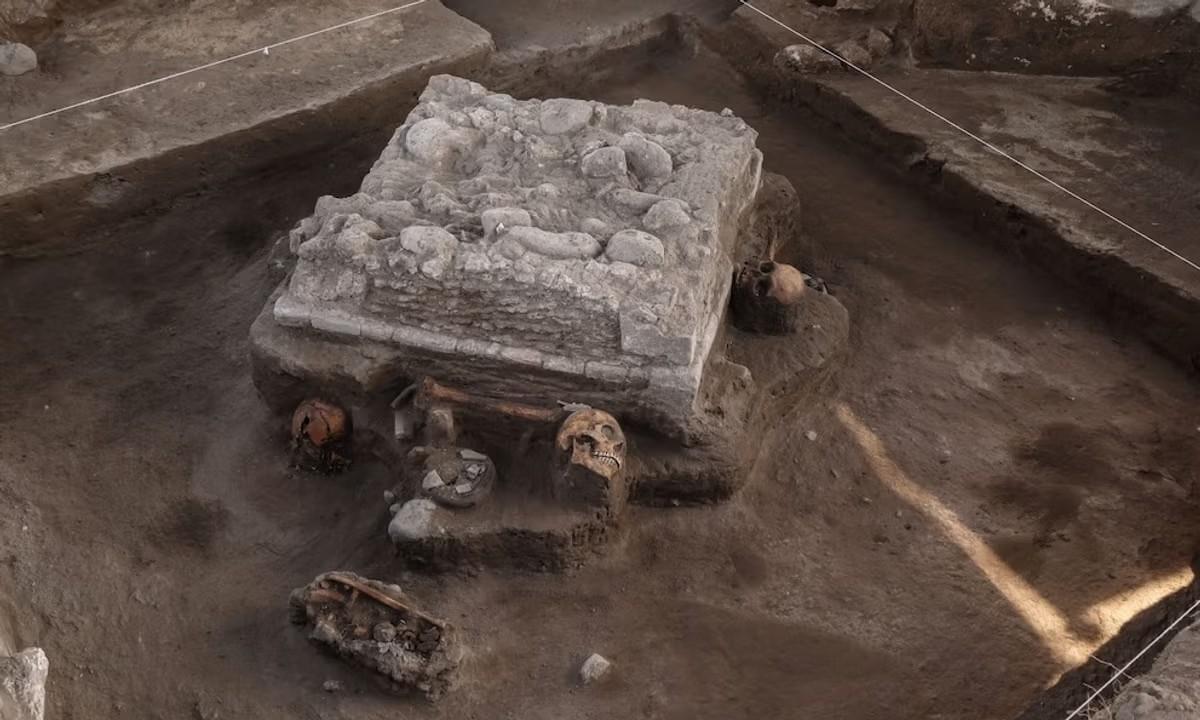
1,000-Year-Old Toltec Altar With Four Human Skulls Found In Mexico The Art Newspaper International Art News And Events
(MENAFN- USA Art News)
Toltec Altar Found Near Mexico Rail Line Could Still Force Route Change
Archaeologists working along the planned Mexico City-Querétaro passenger rail line have uncovered a remarkably intact pre-Hispanic altar near Tula Chico in Hidalgo, adding fresh pressure to a project already shaped by heritage concerns. The discovery was made during salvage archaeology led by Mexico's National Institute of Anthropology and History (INAH), which has been surveying the route since construction began in April 2025.
The find is a three-level momoztli, or altar, measuring about one meter square and built from several kinds of stone. Inside and around the structure, researchers found ceramic objects, obsidian, human remains, four human skulls, and what appear to be leg bones. INAH says the arrangement suggests ritual or sacrificial use. The altar dates to around AD 900–1150, when the Toltec civilization was at its height.
Its location is especially significant. The altar sits roughly 300 meters from the perimeter of Tula Chico and adjacent to Tula Grande, the Toltec world's main ceremonial center. Víctor Francisco Heredia Guillén, INAH's salvage project coordinator, said the discovery is part of a broader pattern along the rail corridor. In preliminary fieldwork, he said, archaeologists have identified 12 areas of interest containing objects and monuments of varying scale.
The region has already altered the rail plan once. In October, petroglyphs found at El Venado near Tula de Allende prompted an 8-kilometer rerouting of the line. Heredia Guillén said the route was adjusted because of the petroglyphs' significance, noting that the site had been known since the 1970s but that the carvings were only recently identified on a steep cliff.
The altar and its contents are now being studied, and the site has been covered for preservation. Still, the final route of the train has not been defined, and the line may yet shift again. Heredia Guillén said heritage preservation and project needs will be weighed once the right of way is established.
For archaeologists, the find reinforces what scholars have long argued about Tula: that the city was far larger and more complex than its surviving ruins suggest. Dan M. Healan, a Toltec specialist and professor emeritus at Tulane University in New Orleans, has noted that earlier surveys indicated a settlement covering more than 16 square kilometers and supporting at least 60,000 people. In that context, the altar is not an isolated object but part of a dense ceremonial landscape still being revealed by modern construction.

Legal Disclaimer:
MENAFN provides the
information “as is” without warranty of any kind. We do not accept
any responsibility or liability for the accuracy, content, images,
videos, licenses, completeness, legality, or reliability of the information
contained in this article. If you have any complaints or copyright
issues related to this article, kindly contact the provider above.
Most popular stories
Market Research

More Story








Comments
No comment