




403
Sorry!!
Error! We're sorry, but the page you were looking for doesn't exist.
Iran Ceasefire Won't Easily Ease Emerging Asia's Pain
(MENAFN- Asia Times)
TOKYO - Global markets are struggling to discern if the US-Iran ceasefire is real or happy talk. Yet emerging-market governments in Asia don't have that luxury as capital outflows accelerate.
Already, outflows to date put developing economies at the center of the collateral damage zone amid war in the Middle East. In March alone, foreign investors pulled US$70.3 billion from emerging market assets. It's the biggest outflow since the pandemic chaos in March 2020, according to the Institute of International Finance.
Asia is taking the brunt of the selling. This is in part thanks to the region's heavy reliance on oil from the Middle East, much of it through the Strait of Hormuz. It marks an“exceptionally large” January inflow and also still-positive February flows, notes IIF economist Jonathan Fortun, representing a“sharp regime break following a major geopolitical shock.”
The outflows continue despite claims that the US and Iran have agreed to a ceasefire in the six-week conflict. This vague framework - one neither side has detailed - already appears to be breaking down.
Tehran claims, for example, Israeli attacks on Lebanon violate the agreement, despite planned talks. And among the things US and Iranian officials are at loggerheads over is Tehran's plan to charge a toll on every tanker passing through the Strait of Hormuz.
The uncertainty factor hardly helps. Six months from now, governments from South Korea to Indonesia aren't sure whether oil will cost $75 per barrel or $150.
“The unfolding shock echoes the 1973-74 crisis, when Arab nations' coordinated production cuts, and quadrupling of crude prices, rocked energy-intensive and import-dependent Asian economies - only this time it's much worse,” says Priyanka Kishore, chief economist at Asia Decoded.
Looking ahead, notes IIF's Fortun, the duration of the Iran war is now the key variable for emerging-market portfolio flows.“If the conflict proves short and the disruption to energy markets begins to ease, March may end up looking like the peak month of liquidation, with the damage remaining concentrated in equities and especially in Asia,” he says.
If, however, the conflict“persists and the shock moves from an initial oil repricing into a more durable energy and input cost regime, the implications for EM become more serious,” Fortun notes.
Higher inflation, delayed easing in global financial conditions, a firmer dollar, and reduced policy flexibility across vulnerable EMs would all make it harder for flows to stabilize quickly, adds Fortun.
In that environment, the next stage of differentiation between economies is likely to be shaped less by the initial market reaction itself and more by which countries retain the monetary credibility, fiscal room, and external buffers needed to absorb a longer conflict.
An added worry: the extent to which developing Asia's increased reliance on non-bank financiers, such as hedge funds, may put the region at even greater risk of a powerful capital flight.
Latest stories America's Soviet moment: Why Trump is looking like Yeltsin CNBC anchor mulls investor 'upside' of Trump civilizational threat With Middle East in flames, Trump eyes 'next conquest'This week, the International Monetary Fund noted that since the 2007-2008 global financial crisis, portfolio flows to emerging markets have increased eightfold, reaching about $4 trillion in cumulative terms. This compares to a more modest increase in bank flows.
Most of these inflows take the form of debt, notes IMF economist Salih Fendoglu. Portfolio debt liabilities now average about 15% of gross domestic product in emerging markets, up from around 9% in 2006. Roughly 80% of this capital is provided by nonbanks, including investment funds, hedge funds, pension funds, and insurance companies, a share twice that seen 20 years ago.
For emerging market borrowers, Fendoglu notes, such capital can make sense. It can lower financing costs, supporting higher investment and stronger productivity growth. It can also help deepen domestic financial systems and support long-term financial development.
Yet, portfolio flows to emerging markets“tend to be more volatile than bank flows and are increasingly sensitive to global risk conditions, as our analysis shows,” Fendoglu adds.“Abrupt retrenchments can intensify external financing pressures, raise borrowing costs, and trigger sharp currency depreciations, leading to financial strains that weigh on economic growth.”
These risks, Fendoglu says,“have come to the fore in the context of the war in the Middle East, as several emerging markets are experiencing a reversal of capital flows from nonresident nonbank investors.”
This has a variety of Asian economies on the front lines of global inflation.“India, Indonesia, Malaysia and Thailand, among others, face fiscal pressures as fuel subsidies help shield consumers and businesses from the pass-through from higher global oil and gas prices,” says Christian de Guzman, economist at Moody's Ratings.
India, for example, is among the globe's biggest net energy importers. This leaves Asia's third-largest economy balancing surging oil and gas costs and fiscal pressures that are already undermining the rupee.
In 2025, the rupee was Asia's worst-performing currency, down 5%. India's currency is taking a fresh beating this year, losing another 3.1% since January 1.
India's chief economic advisor Venkatramanan Anantha Nageswaran argues that the nation faces“considerable downside” risk due to rising energy costs and supply‐chain disruptions. New Delhi's trade deficit, he adds, is likely to“rise significantly” and lead to a“widening of the current account deficit.”
That, in turn, could send 10-year Indian yields above the current 6.9% level and the rupee toward 100 to the dollar from 93 now.
Economist Sonal Bandhan at Bank of Baroda says the“ongoing geopolitical conflict has brought heightened volatility across financial markets. We expect that, given the challenging global environment, the rupee to trade in the range of 93-95 to the dollar in the near term, with downside risks. We also expect India's 10-year yields to trade in the range of 6.9% to 7.10% in the near term, with an upward bias.”
Indonesia also finds itself in harm's way, as evidenced by the rupiah's slide. While Southeast Asia's biggest economy holds some relative advantages over its neighbors, its reliance on imported fuel, especially as energy prices rise, threatens economic growth and the inflation outlook.
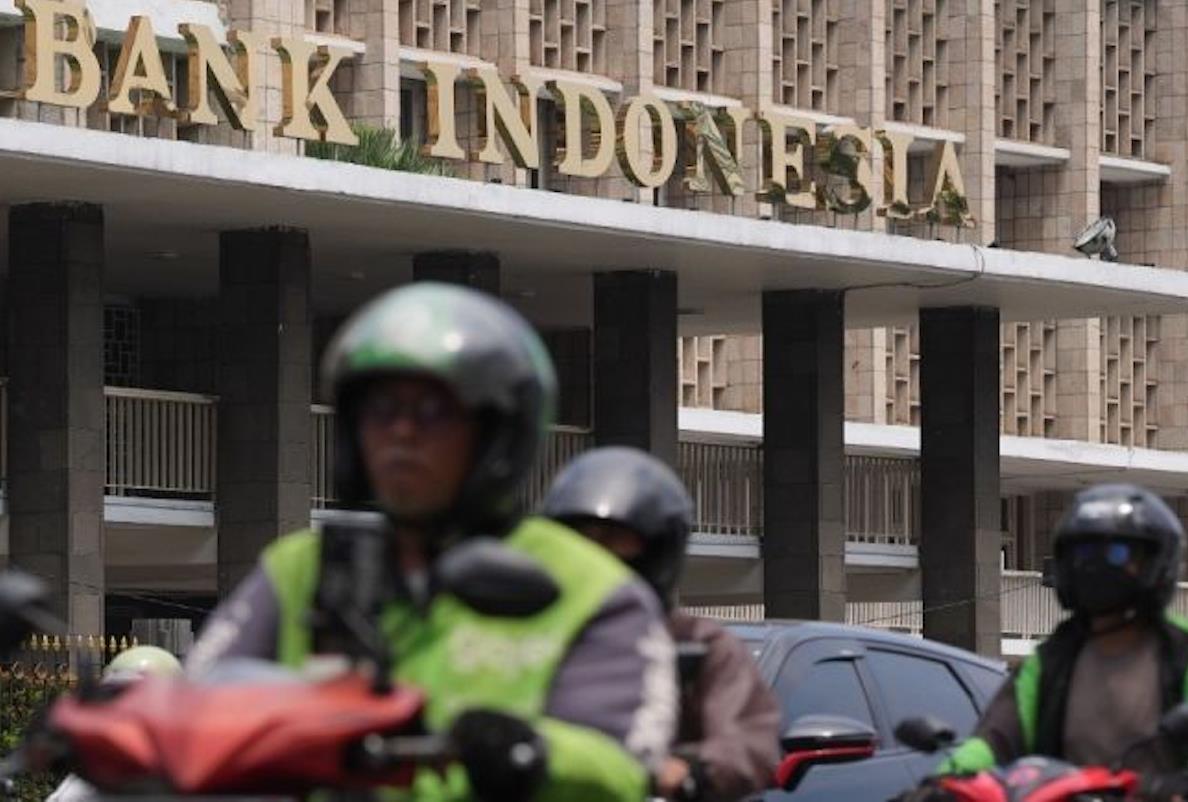
In recent days, Bank Indonesia has been intervening to maintain currency stability and avoid excessive volatility after the rupiah hit a record low against the dollar.
As senior BI Deputy Governor Destry Damayanti tells Reuters:“Stabilizing the rupiah is certainly a top priority for us right now. We will use every tool and policy at our disposal, we will be all out,” she says, noting that pressure on the currency was largely global in nature amid the US-Israeli war on Iran.
Malaysia, by contrast, recently raised its GDP projections despite trade disruptions and higher fuel prices caused by the Middle East conflict. The central bank now expects economic growth of between 4% and 5% this year, revising its forecast slightly upward from 4% to 4.5%, driven by robust household spending.
Still, risks abound. As researcher Wilder Alejandro Sanchez wrote in a Geopolitical Monitor op-ed,“Malaysia has vast energy resources and is a net exporter of liquefied natural gas, but the country imports up to 70% of its crude oil from the Gulf region. Specifically, the Asian nation imports petrol, diesel, liquified petroleum gas and jet fuel.
“In other words,” Sanchez argues,“Malaysia needs those energy imports to keep its economy operational. Hence, it is no surprise that apart from domestic measures, Malaysia's diplomatic corps was put to action to secure oil supplies.”
Bank Negara Malaysia Governor Abdul Rasheed Ghaffour warns that a prolonged war would pose big risks to the outlook.“If things really get bad... of course we will look at this and if there's a need (to) revise the growth forecast,” Ghaffour adds.
In Bangkok, Thailand's new government is stepping up response efforts to limit the economic fallout for the nation's 71 million people. This week, Prime Minister Anutin Charnvirakul announced plans to restructure energy prices, deploy public funds to support the public and roll out a new round of cash handouts and low-interest loans for small businesses and farmers.
“We are facing a global crisis,” Anutin says,“We must accept the reality and adapt together to overcome this crisis.”
Sign up for one of our free newsletters-
The Daily Report
Start your day right with Asia Times' top stories
AT Weekly Report
A weekly roundup of Asia Times' most-read stories
In a report this week, S&P Global notes that Thai banks“face prolonged asset-quality pressure amid an uneven recovery. High exposure to vulnerable borrower segments leaves the sector sensitive to weaker macro conditions.”
S&P's base case assumes that while credit costs are set to stay high, the sector will remain stable supported by strong capital, earnings, and provisioning buffers. But under a severe stress scenario, where Thailand sees an increase in the ratio of non-performing loans to 10%,“the sector remains broadly resilient, with most institutions maintaining capital above regulatory requirements.”
Though the impact would vary, with a few Thai banks more exposed under tougher conditions, S&P concludes,“geopolitical risks could further weigh on borrower repayment capacity. If the Iran war drags on, we anticipate Thailand would be among the worst-hit countries through higher input costs, weaker demand, and supply disruptions. These factors could amplify existing vulnerabilities rather than create new ones.”
The bad news for Asia is that even good news on the Iran war front means an extended period of economic pain. As Louise Loo, head of Asia research at Oxford Economics, explains, shipping backlogs and transit times mean cargoes are weeks away even if the US-Israeli-Iranian truce holds.
“The more durable constraints,” Loos says,“are infrastructure and behavior. Qatar's Ras Laffan LNG facilities damage reportedly carries a three-to-five-year repair horizon, while governments hoarding supplies against the risk of renewed conflict will keep demand tight.”
Also, Loo notes, the policy response across Emerging Asia has tilted toward energy rationing and administrative controls: price caps, mobility restrictions, shortened working weeks.
“This is poorly suited to the economies using this policy playbook,” Loo warns.“High labor market informality results in lost working days and reduced mobility, translating almost immediately into lower cash income and household consumption. Energy conservation may not come from efficiency gains, but rather from demand destruction.”
As the economic costs rise, so do the risks that capital will continue to flow away from Asia.
Follow William Pesek on X at @WilliamPesek
Sign up here to comment on Asia Times stories OrThank you for registering!
-
Share on X (Opens in new window)
Share on LinkedIn (Opens in new window)
LinkedI
Share on Facebook (Opens in new window)
Faceboo
Share on WhatsApp (Opens in new window)
WhatsAp
Share on Reddit (Opens in new window)
Reddi
Email a link to a friend (Opens in new window)
Emai
Print (Opens in new window)
Prin

Legal Disclaimer:
MENAFN provides the
information “as is” without warranty of any kind. We do not accept
any responsibility or liability for the accuracy, content, images,
videos, licenses, completeness, legality, or reliability of the information
contained in this article. If you have any complaints or copyright
issues related to this article, kindly contact the provider above.
Most popular stories
Market Research

More Story





Comments
No comment