




403
Sorry!!
Error! We're sorry, but the page you were looking for doesn't exist.
How Europe Can Reduce Reliance On Imported Gas And What It Means For Business Leaders
(MENAFN- ING)
The EU has several levers it can pull to reduce its exposure to volatile gas markets if the energy crisis were to intensify.
Lowering gas demand is possible, but it comes with significant challenges and sacrifices. For households, further reductions are limited as thermostats are already turned down in the spring and summer – meaning that actions like shorter, less frequent showers may be necessary. In industry, decreased gas consumption is often the result of closures and deindustrialisation, rather than improved efficiency. In the short term, maximising the output of existing hydro, nuclear, and coal power plants offers the most immediate relief for the power sector.
While renewables surged after the 2022 energy crisis, current grid constraints limit their ability to provide a rapid solution. Over the medium term, expanding biogas production presents meaningful potential. Although offshore gas production is naturally declining, there is still an opportunity to extend the use of remaining resources and tap into new fields. This renewed crisis is likely to accelerate efforts to revive the nuclear sector, but such projects require many years to come to fruition. Unlike the energy crisis of the 1970s, which led to France's nuclear expansion, today, renewables are set to become the foundation of Europe's future energy systems.
As a business leader, immediate actions such as reducing gas usage or temporarily substituting gas with coal can help manage short-term supply disruptions. However, these approaches are not without challenges, particularly the potential for higher carbon costs from a gas to coal switch. To address supply risks and cost pressures more sustainably, companies should focus on increasing their reliance on renewable energy, investing in solutions that enhance grid capacity, expanding biogas production and utilisation, and supporting domestic offshore gas projects. These strategies can provide structural resilience against volatile gas markets.
Gas demand down 20% since Russian gas crisis, but further cuts will be harderSince the 2022 energy crunch, European gas consumption has dropped from roughly 540 billion cubic meters (bcm) to 430 bcm, a notable reduction of 110 bcm, or 20%. Despite this progress, Europe still imports about 70% of its gas (just over 300 bcm annually), leaving it exposed to supply risks.
In the building sector, gas use has been structurally reduced by 8%, mainly due to conscious use (lower thermostats), better insulation, and increased adoption of heat pumps. The process of“greening” buildings is ongoing, but there are limited opportunities for rapid change.
Industry has seen gas consumption fall by 26%, but most of this has resulted from plant closures rather than efficiency gains. The chemical sector lost 37 million tons of gas and oil intensive refinery capacity due to shutdowns since 2022, while only seven megatons of new,“greener” capacity has been added, mostly in the battery, biobased, circular value chains and the modernisation of existing plants.
Gas use has been reduced by a fifth since the Russian energy crisisNatural gas use in Europe (EU-27 + UK)
In the power and district heating sector, gas demand has dropped an impressive 30% compared to pre-crisis levels. Although electricity demand fell by just 3%, the power sector managed deeper gas reductions by shifting to renewables.
The question now is how much further Europe can reduce its dependence on imported gas and how that might affect businesses. This is not just an issue of compensation for high gas prices. It is about immediate, short-term measures that can quickly make a difference. We also examine longer-term solutions that could substantially reduce Europe's reliance on imported gas but require policy changes and sustained investments.
Gas diversification helped in 2022, but is tougher in today's multipolar worldAt the onset of the Russia-Ukraine conflict, 40% of EU natural gas came from Russia, but by the end of 2025, this fell to 13%. While some countries were less reliant, Germany sourced over 55% of its gas from Russia before 2022, dropping to zero pipeline imports in 2025.
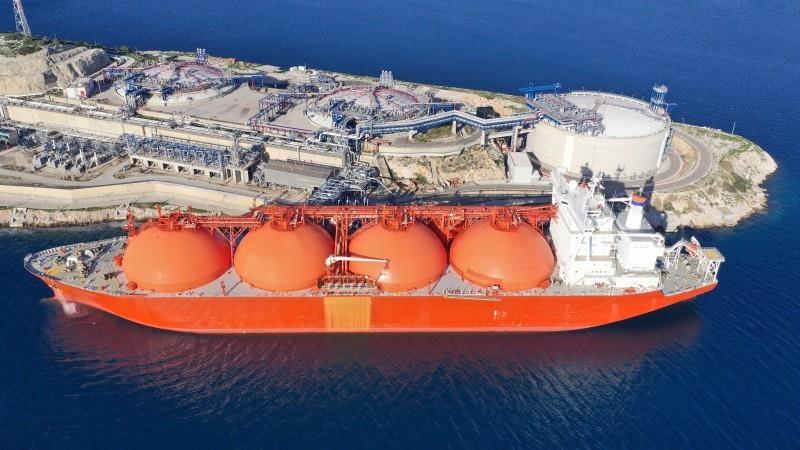
Norway is now the EU's top supplier (31% in 2025, up from 25% in 2020), followed by increased US liquefied natural gas (LNG) (26%, up from 5%). Algeria increased its share to 12%. The UK and Qatar each provide nearly 5% of the EU's total gas imports, underscoring their continued but smaller role in the region's energy mix.
EU has shifted natural gas imports from Russia to Norway and the USGas imports to EU-27 per country of origin 2020-25 (based on volumes)
Europe now relies on a wider range of suppliers, but paradoxically, the new geopolitical situation still leaves Europe vulnerable. If tensions with Russia escalate, Norwegian gas pipelines could face an increased risk of sabotage. And President Trump has used the threat of reduced LNG exports as leverage in trade negotiations, while exports from Azerbaijan and Algeria to the EU can only increase slightly and substantial growth would require new investments which impact gas flows only after 2030. Risk-free diversification is now less feasible than during the 2022 crisis.
Implications for business leaders
Most businesses rely on energy providers for their gas supply, but these providers have limited options to further diversify their procurement strategies. As a result, companies remain exposed to potential gas supply disruptions and the associated price volatility. To manage these risks, business leaders may employ hedging strategies, even when market prices are high, and often attempt to pass increased costs on to their customers.
Coal returns as an immediate but temporary solutionCoal remains the fastest option to replace natural gas in power generation, requiring no new capacity investments. After the Russian invasion of Ukraine, coal's share in Europe's power mix rose from 11% (2020) to 13% (2022).
Although some countries have closed their coal plants, significant capacity remains. In Germany, approximately 28 GW of coal-fired capacity is operational, including both hard coal and lignite units, with some scheduled to run beyond 2030. Poland retains around 27 GW of coal-fired power capacity and, as of mid-2025, has approved the extension of ageing 200 MW coal units for national security reasons. Meanwhile, the Netherlands is home to two of Europe's newest coal plants, with a combined capacity of 2.5 GW.
Until recently, gas-fired plants were more economically attractive than coal-fired plants, resulting in coal capacity being largely underutilised and readily available for rapid production increases. Given Europe's extensive and interconnected power grids, ramping up generation from coal plants could effectively reduce gas usage in power plants across the continent.
A common concern is the increase in carbon emissions. However, both coal and gas power plants operate under the EU Emissions Trading System (ETS), which sets a cap on total emissions regardless of the energy source. Switching to coal boosts demand for carbon allowances and, all else being equal, leads to higher prices for carbon allowance. Yet, in the event of a gas crisis, the additional carbon costs are typically much lower than the sharp rise in gas prices. This is already evident in current markets, where coal is increasingly used as a substitute for gas whenever gas prices surpass €45 per megawatt-hour.
Implications for business leaders
For business leaders, the implications are clear: while coal can provide a buffer against gas supply disruptions, it comes with the risk of increased carbon costs. The trajectory of ETS prices is influenced not only by greater coal usage but also by how much the gas crisis dampens economic activity, particularly in energy-intensive industries that drive demand for carbon allowances. When ETS prices rise, energy procurement costs increase, making exports to countries outside the EU less competitive. Consequently, investment strategies are shifting towards minimising both gas and carbon exposure – such as through energy efficiency initiatives and electrification – rather than depending on short-term fuel substitutions.
Renewables remain the long-term goal, but grid limits slow progressDuring the 2022 energy crisis, lower gas use was largely offset by increased renewable generation while coal played a secondary role. This transition was further impacted by reduced output from hydropower and nuclear plants, which experienced operational disruptions from outages and severe droughts.
Within the power sector, renewable expansion replaced gas, with coal usage rising temporarily before resuming its declineShare of energy source in European power generation mix (2020-2025)
According to DNV's 2026 global energy survey, 71% of senior energy professionals believe that expanding renewables is key to energy security. However, further expansion of renewables is now considerably more challenging compared to 2022 due to grid congestion. For example, in the Netherlands, more than 4,000 companies, including developers of wind and solar projects, are waiting for a grid connection. In Poland, 205 GW of renewable energy and storage projects are queued for grid access.
Although speculative "ghost projects" inflate the numbers, real projects are affected. Since 1 January, Dutch grid operators now prioritise connections for grid-enhancing projects like batteries and demand flexibility, followed by critical needs (defence, hospitals, police, water), then societal services (housing, schools, waste, telecom). Businesses, including developers of renewables, are fast – often facing years-long delays.
So, while renewables are economically attractive, grid congestion delays expansion. Energy professionals now see grid investment as the most effective way to boost security.
What energy professionals think is the best way to improve energy security over the next three yearsPercentage of respondents including the solution as one of their top three
Implications for business leaders
For European businesses, renewables remain the cheapest and most credible route to reducing gas exposure and long‐term power costs. Politicians are also in favour of renewables – even more so in times of crisis – and they are likely to incentivise project developers to build renewables and businesses to use renewable electricity. However, for business leaders, the constraint is no longer renewable economics, but infrastructure. The speed at which they can grow renewables will increasingly depend on access to grid capacity and flexibility solutions, making investments in storage, demand response, on‐site generation and locations with available grid headroom a strategic factor – rather than energy prices alone.
Biogas: Europe's scalable, local, and circular gas solutionBiogas stands out as a medium- and long-term solution for Europe, supporting a resilient system while reducing Europe's dependence on imported gas.
Europe produces about 7 billion cubic meters (bcm) of biogas (1.6% of demand). Forecasts by DNV and BNEF suggest production could triple to over 20 bcm by 2030 and plateau at 30 bcm by 2035 – almost 8% of current demand. While this is substantial growth, it falls short of the EU's 35 bcm REPowerEU target for 2030 that was defined in the wake of the Russian gas crisis.
Even more significantly, biogas has the theoretical capacity to supply up to one-third of Europe's current gas demand. This would require tapping into all available sustainable feedstocks, including manure, agricultural residues, organic waste, and utilising advanced gasification technologies. However, realising this potential depends on strong policy support, rapid technological deployment, and effective management of biomass competition – conditions that are currently far from being met.
Denmark exemplifies biogas success, with 58 plants built in a decade now supplying 40% of national gas demand. With further policies, Denmark could reach 100% biomethane in a few years and even exceed domestic needs if it also pursues policies to reduce domestic gas demand. This would make Denmark's gas system net zero and locally circular, with renewables supplying electricity most of the time, and biogas providing backup at times when it is valued most. Biogas also helps agriculture by reducing manure and nitrogen emissions.
Biogas production costs currently range from €50 to €100 per megawatt-hour. Prior to the recent energy crisis, biogas was considered expensive, especially when compared to gas prices around €20 per megawatt-hour. This presents a difficult choice for both policymakers and business leaders: Should they prioritise the lowest-cost gas, risking increased exposure to volatile international markets, or pursue greater energy independence through locally produced, circular biogas at a higher cost? Historically, the preference has been for cheaper imported gas, but a renewed energy crisis could substantially strengthen the case for investing in biogas. Additionally, increased local biogas production means that Europe spends less on gas imports from countries outside the EU, keeping more of the economic benefits within its own borders.
Implications for business leaders
From a supply perspective, farmers and waste management companies have the ability to scale up biogas production, as long as the business case is attractive. Achieving this requires robust policy support and reliable buyers willing to pay a green premium for biogas. So, for business leaders on the offtake side, investing in biogas is not just about minimising costs; it's a strategic move to reduce exposure to volatile international energy markets and strengthen energy independence. Investing in higher‐priced, locally produced biogas can strengthen energy security, reduce carbon and import exposure, and keep value chains closer to home. As a result, competitiveness will increasingly depend on whether companies integrate energy resilience into investment decisions, rather than optimising solely for short‐term fuel costs.
Offshore gas: Europe's potential bridge as region shifts to low gas demandEurope possesses significant offshore gas resources, with total reserves estimated at around 5,000 billion cubic meters (bcm), primarily located in Norwegian waters. Of this, approximately 2,000 bcm consists of proven (discovered) reserves, while the remaining 3,000 bcm represents potential reserves that could be uncovered through further exploration efforts.
Currently, production from offshore fields in the European Union, UK and Norway is set to fall from about 180 bcm per year today to about 30 bcm by mid-century. This is driven by the geological decline of existing production fields and the prevailing policy trajectory of one of 'managed decline'; gradually reducing production to align with net zero ambitions by 2050. For instance, in November 2025, the UK officially announced it would no longer grant new exploration licenses for offshore oil and gas exploration.
An alternative“maximum extraction and exploration” approach could slow this decline, making Europe less dependent on gas imports, while also reducing the carbon intensity of gas usage as North Sea gas emits up to six times less CO2 than imported LNG from the US and Russia.
It's important to recognise that boosting offshore gas production alone does not shield Europe from high gas prices. As long as the region remains dependent on imported gas, liquefied natural gas (LNG) will continue to dictate market prices. This is why the most effective long-term solution is a comprehensive electrification strategy powered by renewables and nuclear energy, which breaks the link between electricity costs and gas prices. In the interim, increasing offshore gas output can help ease supply challenges, but it does not resolve Europe's vulnerability to global price fluctuations.
Implications for business leaders
For business leaders, there are two key takeaways. Firstly, while Europe possesses substantial gas reserves, current policy decisions mean these resources remain largely untapped. From a commercial standpoint, this is understandably difficult to accept, but unless a prolonged and severe gas crisis occurs, a significant policy reversal is unlikely. Secondly, even if offshore and biogas production are expanded, Europe will continue to face high and unpredictable gas prices as long as it remains dependent on global LNG markets. This highlights the critical need to reduce direct exposure to gas by enhancing energy efficiency, accelerating electrification, and securing long-term power purchase agreements for electricity generated from renewable or nuclear sources.
Nuclear power revival: Europe's ambitious long-term strategyThe 2022 energy crisis reignited interest in nuclear power throughout Europe, which could be further accelerated by today's crisis. Just like the 1973–74 oil crisis spurred France's large-scale nuclear buildout, which now supplies 70% of its electricity, ensuring reliability and low prices.
In March 2026, European Commission President Ursula von der Leyen publicly acknowledged that Europe's shift away from nuclear energy following the Fukushima disaster – most notably Germany's abrupt phase-out – was“a strategic mistake.”
Countries like Spain, Italy, Belgium, Denmark, and Lithuania are reconsidering nuclear bans. The UK made a final investment decision for the 3.3 GW Sizewell plant in 2025 while Hungary and Slovakia are building 1.7 GW of new capacity. And, according to the World Nuclear Association, 27 additional nuclear power plants are currently in the planning stages across the EU, underscoring a strong and growing commitment to nuclear power in Europe's future energy landscape.
Europe's evolving approach to nuclear power: some countries construct their first nuclear plants, others actively reconsider bansStatus of nuclear power in European power markets
Extending the lifecycle of existing and low-cost nuclear power plants is a no regret policy. However, it is likely to take many years before Europe can significantly expand its nuclear power capacity, due to two key challenges.
First, recent attempts to build new nuclear plants in Europe have proven complex and costly. Flagship projects such as Flamanville, Olkiluoto, and Hinkley Point C have faced significant delays and substantial cost overruns, highlighting the considerable hurdles that remain for large-scale nuclear expansion.
Second, while interest in Small Modular Reactors (SMRs) is growing, their deployment is still in the early stages. At present, only two SMRs are operational – one in Russia and one in China – with two additional units under construction in Canada and the US. Furthermore, Europe faces heightened geopolitical risks with SMRs because these reactors rely on advanced nuclear fuel, which is primarily sourced from Russia. This dependence could complicate efforts to adopt SMR technology and increase vulnerability to supply disruptions.
So, despite the nuclear power revival, it is a long-shot strategy for Europe.
Therefore, while Europe is experiencing renewed interest in nuclear power, expanding its nuclear capacity remains a challenging and uncertain long-term endeavour.
Implications for business leaders
The revival of nuclear power in Europe has very different implications depending on where companies sit in the value chain. For business leaders operating in the nuclear value chain, especially those focused on innovation, engineering, design, fuel services, and project development, the evolving policy landscape offers clear support and new opportunities. Conversely, for energy-intensive industries, the outlook is more measured. For most companies, nuclear power remains a high-risk, long-term strategy rather than a practical solution, particularly if it diverts attention from existing technologies that can more readily decrease reliance on natural gas.
As Europe faces the prospect of another energy crisis, the solution should extend beyond simply lowering energy bills for households and businesses. There is an urgent need for technologies and policies that can significantly decrease Europe's future dependence on natural gas. As the energy crisis continues, we can expect significant progress in addressing grid congestion to accelerate renewable integration, ramping up biogas production, and potentially utilising temporary measures such as coal substitution or offshore gas extraction.

Legal Disclaimer:
MENAFN provides the
information “as is” without warranty of any kind. We do not accept
any responsibility or liability for the accuracy, content, images,
videos, licenses, completeness, legality, or reliability of the information
contained in this article. If you have any complaints or copyright
issues related to this article, kindly contact the provider above.
Most popular stories
Market Research

More Story



Comments
No comment