




403
Sorry!!
Error! We're sorry, but the page you were looking for doesn't exist.
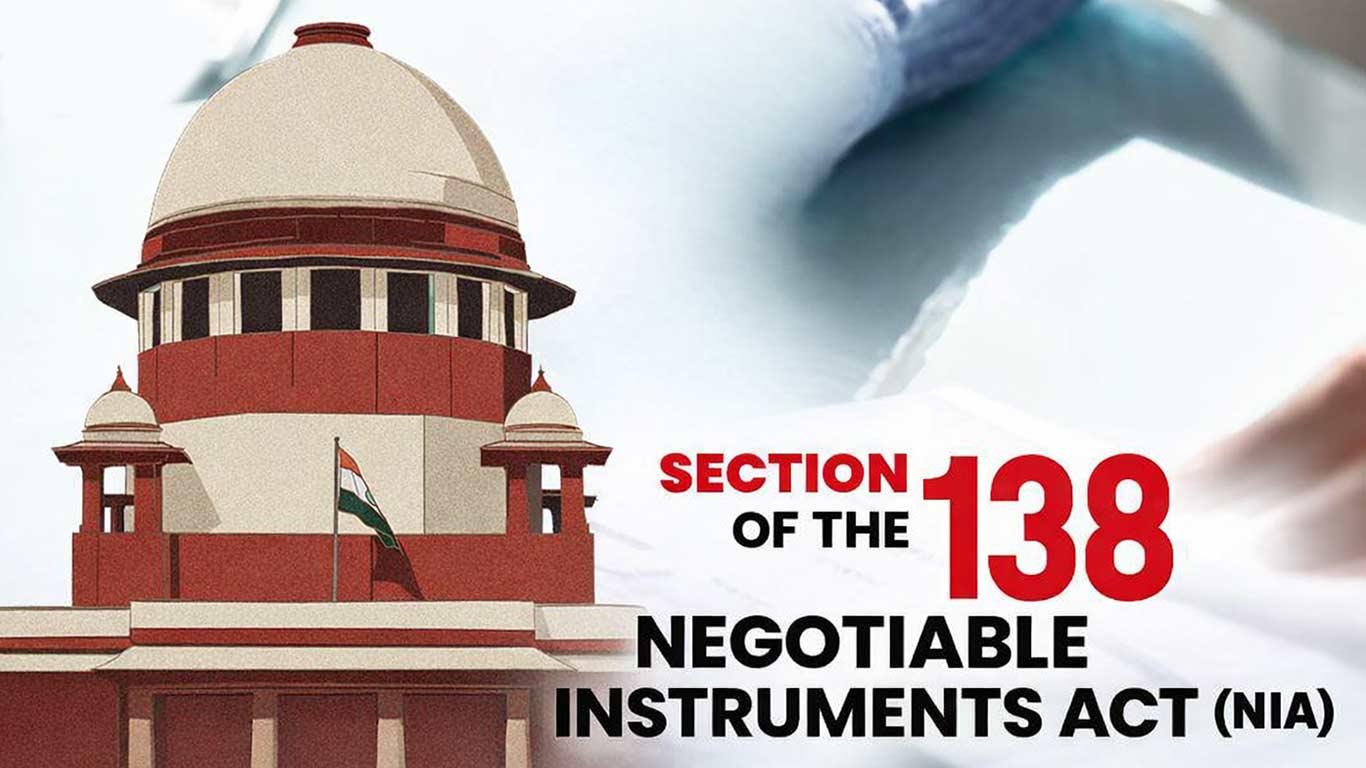
SC: Directors Not Liable For Cheque Bounce Without Active Role In Company Affairs
(MENAFN- KNN India)
New Delhi, Apr 9 (KNN) The Supreme Court of India has held that a director's involvement in the company's daily functioning is not proved by signing a Board Resolution and it cannot justify prosecution under cheque dishonour provisions.
A bench comprising Justices Sanjay Karol and Augustine George Masih allowed an appeal filed by a company director and revoked criminal proceedings initiated against her under Section 138 of the Negotiable Instruments Act.
Director Liability Requires Active Role
The Court observed that for invoking liability under Section 141 of the Act, there must be specific allegations showing that the accused was in charge of and responsible for the conduct of the company's business at the relevant time.
Mere designation as a director or signing of a Board Resolution does not meet this requirement.
The case pertained to dishonour of cheques issued by a company towards payment for iron and steel, where discrepancies in signatures and alterations were cited as reasons. Following a complaint, summons were issued against the company and its directors.
Challenging the proceedings, the appellant argued that there was no material to demonstrate her involvement in the company's day-to-day operations. While the lower courts had relied on her signing of a Board Resolution to infer responsibility, the apex court disagreed.
Clarification On Board Resolutions And Legal Powers
Clarifying the scope of Board Resolutions, the Court stated that such documents typically relate to major policy decisions and do not imply participation in routine business transactions or operational decisions.
The bench further emphasised that criminal liability cannot be imposed in the absence of clear and specific allegations demonstrating active involvement in the conduct of business.
On the procedural aspect, the Court also held that invoking revisional jurisdiction does not bar the use of inherent powers under Section 482 of the Code of Criminal Procedure. It reiterated that such powers remain available to prevent miscarriage of justice.
Impact on MSMEs
The ruling provides relief to directors of MSMEs by limiting liability in cheque dishonour cases to those actively involved in day-to-day operations. It prevents unnecessary prosecution of non-executive or nominal directors, improving ease of doing business.
However, it also places greater responsibility on key managerial personnel to ensure compliance and proper financial management within MSMEs.
(KNN Bureau)

Legal Disclaimer:
MENAFN provides the
information “as is” without warranty of any kind. We do not accept
any responsibility or liability for the accuracy, content, images,
videos, licenses, completeness, legality, or reliability of the information
contained in this article. If you have any complaints or copyright
issues related to this article, kindly contact the provider above.
Most popular stories
Market Research

More Story







Comments
No comment