




403
Sorry!!
Error! We're sorry, but the page you were looking for doesn't exist.
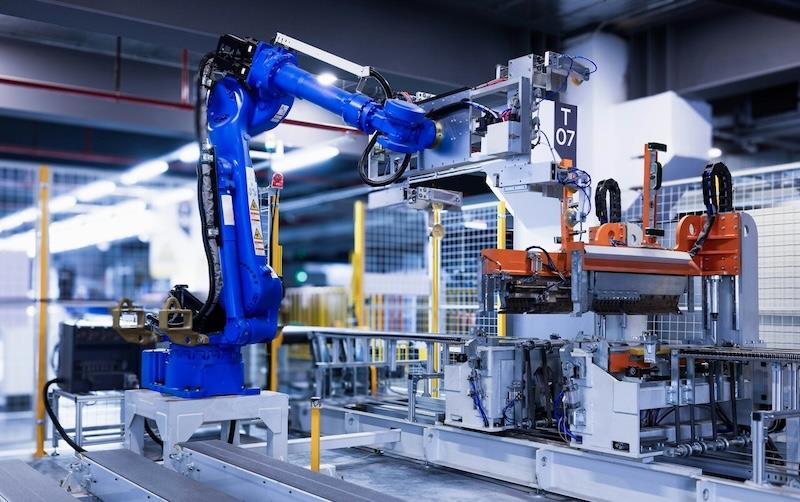
How RFID Is Powering Predictive Maintenance In Industrial Robotics Systems
(MENAFN- Robotics & Automation News) Efficiency in manufacturing is increasingly beholden to the precision of its data. Factories are increasing their investments in industrial robotics, but the management of these assets, be it multi-axis robotic arms or Automated Guided Vehicles (AGVs), can soon become a bottleneck.
Asset tracking once relied on manual checks like optical scanning, but these methods can't keep up with the speed of additional automation – asset tracking must mirror these innovations.
To get the most out of capital investment and maximise uptime, industry leaders are moving away from superficial tracking and towards understanding the benefits of industrial RFID technology.
Transforming physical components into digital identitiesWhen it comes to high-end robotics, an RFID tag should no longer be viewed as just a simple inventory label. It's instead acting as the physical anchor for a component's digital twin. If you put automated component identification in a robotic arm, each part, from its end-effector to its internal servos, has a unique identity that is digitised and machine-readable. No humans needed.
It's a granular traceability that helps create a digital chain of custody. It even changes how manufacturers negotiate their warranties and liability – the data provides irrefutable proof of correct component usage and operational history. It's also useful for the procurement of future equipment.
Barcodes of course require a direct line-of-sight. Not only this, but they can gather industrial grease and dust. RFID instead operates through radio waves, where simultaneous identification of multiple components is possible despite them hidden within a chassis or in awkward joints that are out of reach. Scanning each component would not just be inefficient but unviable.
This digital identity is what helps manufacturers make sure the“as-built” configuration of a robot matches its“as-maintained” status. It gives you a level of visibility that takes out the guesswork from assembly refreshes, turning the robot from a mechanical black box into a transparent and self-documenting logbook of its own engineering specs.
Robotics asset lifecycle managementThe lifecycle of an industrial robot is shortened by its high-intensity usage, but also because of the tolerance for precision calibration. Managing this lifecycle manually can lead to data siloing.
This is where maintenance records become detached from the physical asset themselves. But when using RFID, the asset itself carries its own history – nothing it siloed, and it“knows” its own maintenance schedule.
When an RFID reader is integrated into the workcell, it can query the arm's components to determine things like duty cycles, or the date of the last lubrication. Even the remaining lifespan of a specific motor.
This is where we move to robotics asset lifecycle management, where repairs are reduced thanks to maintenance having more predictive power. It directly impacts the bottom line because it avoids unplanned downtime.
Having these data points embedded directly into the hardware, the asset becomes a decentralized data node. It allows complex edge-computing algorithms (here, black box is okay, such as machine learning algorithms, because what's important are the outcomes) to make repair or replace decisions.
Optimizing AGV workflowsAGVs are a big part of the logistics overhead in smart factories, and a lot of them come down to their ability to autonomously interact with the environment and payload. With a barcode-based system, an AGV will often pause at specific checkpoints to align a scanner with a label – it's known as the barcode bottleneck.
RFID removes this friction entirely because it allows for non-line-of-sight data capture. An AGV can identify its current payload, its destination, its weight parameters, all while maintaining motion.
Instantaneous payload recognition also means AGVs are dynamically recalibrating their power consumption and braking profiles as they go (real-time) based on the each load. This improves battery life and cuts down on carbon footprint of the entire autonomous fleet.
The implementation of passive RFID sensor integration can actually allow the AGV to assess the environment, like temperature or vibration levels of the goods it is transporting, meaning that sensitive components are handled within their required spec all throughout the workplace.
The ROI of automated data integrityMoving to RFID is always going to come down to being an ROI-driven decision. The cost savings can be found in cutting down on manual data entry errors and the search times for misplaced parts or tools, along with less downtime and no barcode bottlenecks.
In broader robotic deployment, the time spent by technicians manually scanning labels or updating spreadsheets is the true hidden labor cost.
The durability of RFID tags means that data integrity is upheld for the entirety of the robot's lifespan, which is often 10 to 15+ years. The tags can handle vibrations, chemical washes, and other industrial abuses.
It's the automation of the data collection process that is in part driving the market growth of 11.70% CAGR. The transparency benefits, too, are increasingly considered for future auditing and safety compliance, both of which are usually expected to tighten, not loosen, over time.

Legal Disclaimer:
MENAFN provides the
information “as is” without warranty of any kind. We do not accept
any responsibility or liability for the accuracy, content, images,
videos, licenses, completeness, legality, or reliability of the information
contained in this article. If you have any complaints or copyright
issues related to this article, kindly contact the provider above.
Most popular stories
Market Research

More Story







Comments
No comment