




403
Sorry!!
Error! We're sorry, but the page you were looking for doesn't exist.
Europe Re-Engages S Caucasus As Lithuania Turns To Baku
(MENAFN- AzerNews)
Elnur Enveroglu
Read more
Lithuania, one of the three Baltic states alongside Latvia and Estonia, has emerged as a dynamic, export-driven economy within the European Union. With a GDP per capita exceeding $25,000, Lithuania has steadily converged towards the EU average, underpinned by macroeconomic discipline and structural reforms since its accession to the bloc.
Exports form the backbone of its economic model, accounting for a significant share of GDP. The country's annual exports surpass $50bn, spanning machinery, chemicals, refined petroleum products, and high-value-added services. Its strategic location has enabled Lithuania to position itself as a logistics and transit hub linking Western Europe with Nordic and Eastern markets.
As part of the Baltic economic cluster, Lithuania benefits from a reputation for digital innovation, fiscal prudence, and resilience against external shocks. Despite challenges stemming from regional security tensions and supply chain disruptions, its medium-term outlook remains positive, driven by EU investment flows, green transition policies, and continued diversification of trade partners.
Relations between Azerbaijan and Lithuania have long been cordial, rooted in the shared experience of post-Soviet state-building and a mutual commitment to sovereignty. But what is unfolding today is less about continuity and more about quiet recalibration.
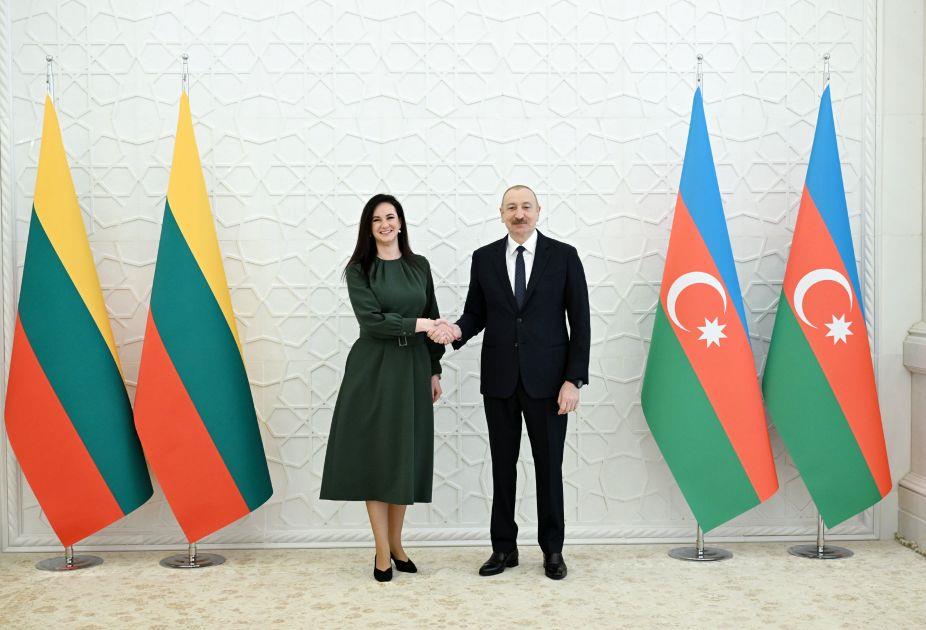
Lithuanian Prime Minister Inga Ruginienė's recent visit to Baku now looks more than a routine diplomacy with another handshake, another communiqué, another carefully staged affirmation of bilateral goodwill. However, such a reading would miss the deeper significance of the moment. In a swiftly changing geopolitical landscape, even seemingly modest engagements can carry disproportionate weight.
Lithuania's outreach to Baku reflects a broader European effort to re-engage with the South Caucasus not as a peripheral theatre of frozen conflicts, but as a region of growing strategic relevance.
This shift is not occurring in a vacuum. Europe's search for energy security, accelerated by the rupture in relations with Russia, has placed Azerbaijan in a new light. Once seen primarily through the prism of conflict and geopolitics, Baku is now increasingly regarded as a pragmatic partner in ensuring stable energy flows and diversifying supply routes. For Lithuania, a country that is acutely sensitive to the vulnerabilities of energy dependence, it is a strategic necessity.
Energy is only part of the story. The visit also underscores the importance of connectivity. Azerbaijan's positioning along emerging transport corridors linking Asia to Europe has transformed it into a critical node in the Middle Corridor. For European states seeking alternatives to traditional routes, cooperation with Baku offers both opportunity and urgency. Lithuania's interest in this space signals an awareness that infrastructure, as much as diplomacy, will define the next phase of regional integration.
There is, too, a political dimension that should not be overlooked. Lithuania has consistently supported Azerbaijan's territorial integrity, a stance that aligns with broader principles of international law. In the aftermath of Azerbaijan's restoration of control over its territories, the conversation is gradually shifting from conflict resolution to post-conflict engagement. Reconstruction, trade and long-term stability are beginning to replace the language of mediation and ceasefires.
And yet, the symbolism of the visit matters precisely because it is understated. In contrast to the grand gestures that often dominate international headlines, Lithuania's approach is measured, almost deliberately low-key. It reflects a recognition that influence in today's world is not always asserted through dramatic interventions but often built through steady, incremental engagement.
For Azerbaijan, the benefits of such partnerships are clear. Diversifying its foreign policy beyond traditional regional frameworks has become a defining feature of Baku's diplomatic strategy. Engagement with European states like Lithuania not only broadens its strategic options but also reinforces its role as a bridge between regions.
Still, caution is warranted. The South Caucasus remains a complex and contested space, where external interests frequently intersect and, at times, collide. For Lithuania, and for Europe more broadly, engagement with Azerbaijan must balance strategic ambition with a nuanced understanding of regional dynamics.
What, then, should be made of this visit? Perhaps its true significance lies not in any single agreement or announcement, but in what it represents: a gradual, almost imperceptible shift in how Europe sees the South Caucasus, and how countries like Lithuania are choosing to act on that perception.

Legal Disclaimer:
MENAFN provides the
information “as is” without warranty of any kind. We do not accept
any responsibility or liability for the accuracy, content, images,
videos, licenses, completeness, legality, or reliability of the information
contained in this article. If you have any complaints or copyright
issues related to this article, kindly contact the provider above.
Most popular stories
Market Research

More Story




Comments
No comment