




403
Sorry!!
Error! We're sorry, but the page you were looking for doesn't exist.
Why Small Discoveries (As Well As Big Ones) Have The Power To Inspire
Author: Rachael Jolley
(MENAFN- The Conversation) This roundup of The Conversation's environment coverage was first published in our award-winning weekly climate action newsletter, Imagine.

In 1968 a photo of the Earth was taken by the crew of Apollo 8 as they orbited the Moon.
It's hard for us to imagine today what that would feel like for both the crew and the public who first saw the shot of Earth snapped from so far away. All those years ago this was a fantastic, and perhaps shocking, picture taken from somewhere many people would never have imagined humans could go.
That Earthrise shot from 1968, the first colour image of the Earth from space, showed our planet from a perspective we had never seen before, from the Moon in the foreground and the globe of the Earth in the distance. And for many people, it seemed more fragile than they had ever realised.
This image from space provoked a massive reaction, and is credited with prompting the creation of Earth Day, and a wave of environmental activism.
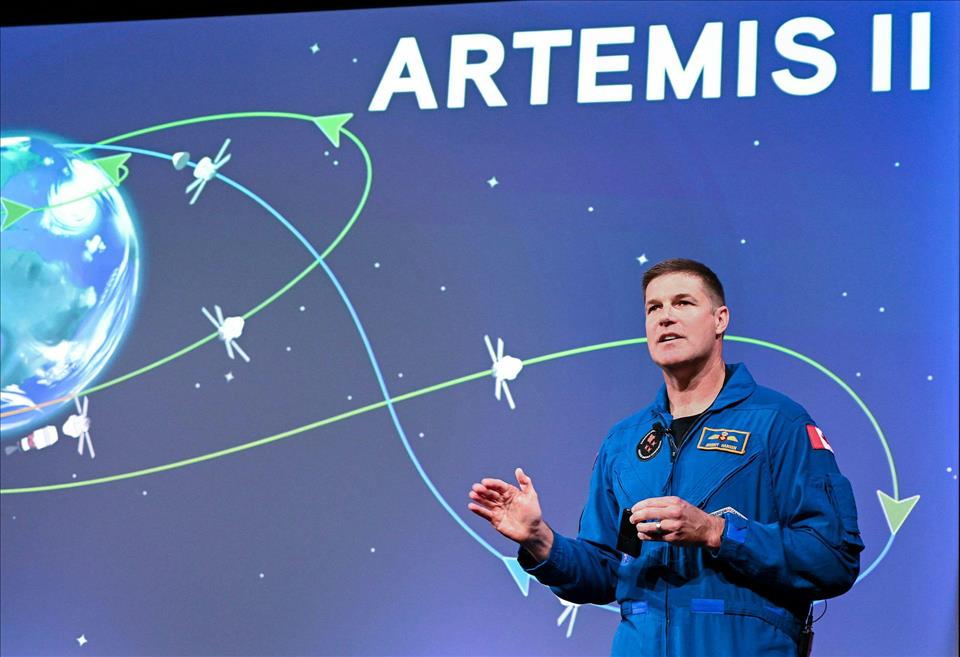
Nearly 60 years later we are inundated with images of space, planets and even AI-generated sci-fi stories. So it came as somewhat of a surprise to find myself caught up in the whirl of excitement and emotion around the Artemis II journey, and drawn into watching and discussing what the astronauts were seeing and saying.
Nick Dunstone, a science fellow at the Met Office, is a big fan of the Earthrise photo. He has had it stuck on his wall for years. The Artemis II mission prompted him to think about how much the climate around the Earth has changed in the decades between the Earthrise photo and the one taken by 2026's astronauts from the dark side of the moon.
He points out that one of the legacies of the 1960s space race is a set of satellite observation platforms which have allowed us to monitor, understand and predict changes to our global climate. Unfortunately, many of these reveal worrying trends. For example, more frequent heatwaves on land and sea, loss of Arctic sea-ice, melting glaciers and sea-level rise.
Read more: Earthrise to Earthset: how the planet's climate has changed since the photo that inspired the environmental movement
It can seem like nothing is getting better in these days of global upheaval and endlessly escalating conflicts. It's easy to despair about whether any small actions that we can take will make any kind of difference.
Bee storiesI ended up in a conversation with my running buddies at the weekend about whether there is anything that can cheer us up. I talked about new research that shows that queen bumblebees can survive underwater. In what seems like a story that could be made into a Pixar film, academics at the universities of Ottawa and Guelph discovered this purely by accident.
Sometimes scientific discoveries are prompted by happenstance. In this case, some tubes were accidentally filled with water and the bees which had been assumed to have died were discovered to be still alive. Queens, it turns out, can stand submersion for up to a week. This matters because climate change is bringing more rain during winters when these bees must survive underground. And the queen's survival is vital, for she must found a new colony the next spring. Without her, there is nothing.
Read more: Queen bumblebees can breathe underwater - for days. We discovered how
Then there's the discovery by Oxford researcher Sophie Lund Rasmussen that hedgehogs can hear. Rasmussen set off to find out if there were any ways to warn hedgehogs of the dangers of crossing the road. With up to 300,000 hedgehogs killed per year on UK roads, and the same situation across Europe, this mammal which has featured fondly in many of our childhood stories, is incredibly threatened.
Rasmussen's research opens the door for ultrasound hedgehog warning systems to be put in place to try and warn hedgehogs away from roads, and potentially save thousands from a messy death.
Read more: Hedgehogs can hear high-frequency ultrasound – that knowledge could help save them
Moss, many people might think, is quite a dull subject. But in the past few weeks, after chatting with University of Limerick's Pedram Vousoughi, I've become the biggest fan of this green stuff that we find on the sides of trees and on our garden paths. As it turns out, moss has almost magical qualities that could be a great help to humanity in the next decades.
For someone who had not paid much attention to this plant in the past, the abilities of this low-to-the-ground greenery was a revelation. Moss can absorb several times its own body weight in water and release it over time. This makes it ideal for helping the world cope with increasing rainfall and flooding, especially along busy roads.
Moss also absorbs air pollution and could play a role in increasing biodiversity along major roads. I'm now boring on about moss in various social situations – and it's making me feel a bit more positive about the world.
Read more: How moss could help roads cope with heavy rain and reduce air pollution
Sun spottingOne of my favourite places is a long pebbly beach on a thin spit of land on the Suffolk coast, where you can watch the sun go down as well as the sun rise (although as a night owl I'm less likely to see the second). I have come to realise the value of sitting somewhere incredibly quiet and just looking at the sea and the sky.
That's why the Dutch trend of dusking – coming together with friends to watch the sun go down – struck a chord with me. As Jenny Hall and Brendan Paddison from York St John University explain, watching the light of the day disappear over the horizon can be a way of connecting with nature's rhythms and disconnecting from your worries, bringing the work day to a natural close. This also links with studies suggesting that focusing on nature can enhance feelings of wellbeing.
In these complex times, recognising small discoveries (as well as large ones) can be vital.
Institution:

Legal Disclaimer:
MENAFN provides the
information “as is” without warranty of any kind. We do not accept
any responsibility or liability for the accuracy, content, images,
videos, licenses, completeness, legality, or reliability of the information
contained in this article. If you have any complaints or copyright
issues related to this article, kindly contact the provider above.
Most popular stories
Market Research

More Story






Comments
No comment