






403
Sorry!!
Error! We're sorry, but the page you were looking for doesn't exist.
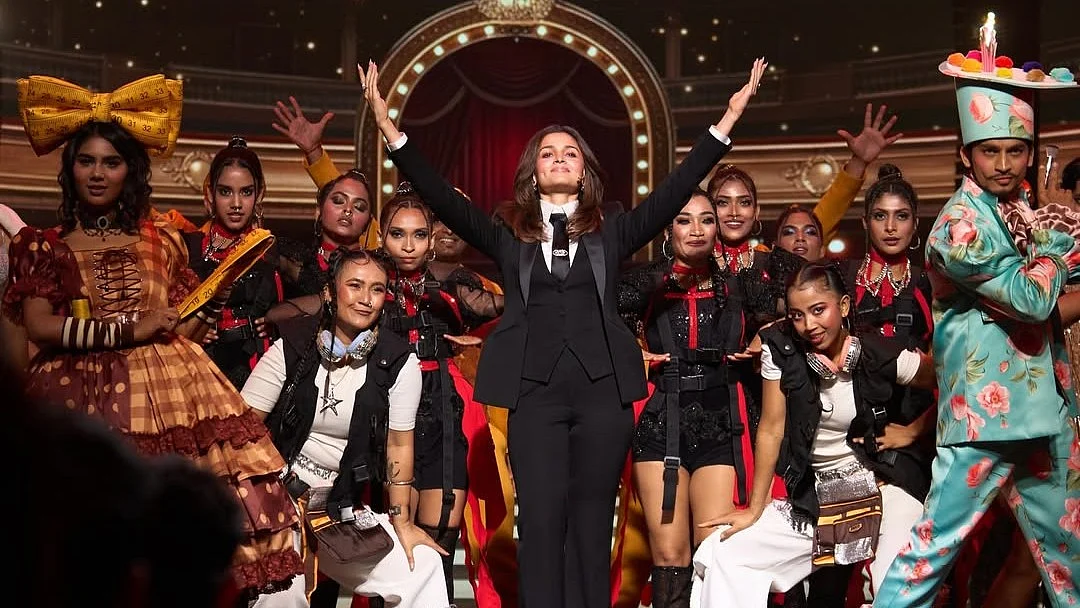
Why Alia Bhatt's 'Cringe' Hosting Debut Clips Miss The Bigger Story
(MENAFN- Khaleej Times) Alia Bhatt's debut as a live award-show host should have been treated for what it was: an actor stepping into a brand-new arena, flanked by comics who do this every weekend for a living.
Instead, the morning after the 2026 Screen Awards, our feeds were flooded with the same words on loop...“cringe”,“second-hand embarrassment”,“overacting”. And all hanging off a few carefully stitched clips from a three-hour show.
Recommended For You UAE engages 19 drones, 14 missiles on April 6; 221 injured since February 28 'Not discipline': Dubai Police advise parents against beating childrenIn those reels, every nervous laughter is magnified, every flat joke replayed, every non-reaction from the audience cut together to amplify awkwardness.
But the full picture looked very different. Here was a top-billed heroine in a power tux, trading lines with comedy heavyweights such as Sunil Grover and Zakir Khan, leaning into the script, taking digs at herself and shouldering a format that is unforgiving even to veterans.
The fact of the matter
Let's be honest:“average” hosting is not a rare phenomenon. We've all sat through award nights where the jokes didn't land, where the banter dragged on forever, where even the most charismatic male stars looked visibly out of depth.
Live hosting is not just reading a teleprompter with a charming smile, but a skill that's honed the hard way. Comedians spend years on small stages, slogging in front of ten people so that one day they can kill it in front of ten thousand people.
So, at a bird's-eye view, this isn't about gender at all, really. But it becomes about gender when we selectively forget that this is hardly the first time a stage host's jokes haven't landed.
When criticism stops being gender-neutralIn fact, in the format of live stage hosting, such moments are not even an exception. There have been plenty of instances of male hosts faltering in similar arenas. But what usually follows is some mild snark, a“last night's show was a snooze” text, maybe a meme or two and then everybody moves on, fully expecting those same men to be rehired next season.
Why does that grace disappear when a woman occupies that same space? With Alia, the conversation in the comments sections of these reels doesn't say,“This script didn't work” or“Live comedy is hard”. It's become about how“she should never host again”,“anchoring is not your cup of tea”,“stick to acting”.
The failure in this instance - or rather, perceived failure, because she, by no stretch of imagination,“failed” at the job - invites personal attacks and is then used as a cautionary tale for every other woman who might dare to try something new. It sends a memo to every other actress considering a similar leap that if she's not absolutely sure she'll nail it, she shouldn't bother.
It is no wonder then that we've only seen Farah Khan as token female representation on Hindi film award stages so far.
Because the way we respond to perceived“failure” isn't always gender neutral.
Men are allowed to fail loudly, repeatedly and still be seen as worthy of opportunity. Whereas a woman first has to fight 10 times as hard to get the opportunity and God forbid she's anything less than stellar - that's it, she's never to dream of it again.
Criticism vs discouragementNone of this is to say Alia's hosting was flawless or above criticism. There is room to say“the script was weak”,“some bits felt forced”,“she looked nervous” and still not weaponise that feedback into a full-blown career analysis.
But the trolling is, by no means, constructive criticism, because it doesn't seem to be aimed at improving the work but discouraging the attempt altogether.
If we truly believe in equality, then equality has to include equal access to the learning curve - the right to be mediocre sometimes, to experiment, to fail, to grow into a craft instead of nailing it in one go. Men have been afforded that right for decades on our screens, our stages, our newsrooms and boardrooms.
Why this moment matteredOn paper, this is just one hosting job. But on screen, it looked like something we still see far too rarely. For once, a heroine wasn't just walking the red carpet and sitting in the front row.
In an industry where most big-ticket stages are helmed by men, that visual alone nudged the needle. A young girl watching at home could, for a second, imagine herself not only winning awards but also hosting the night, calling the shots, taking up noisy, chaotic space.
That matters, especially in a climate where women are constantly told, in a hundred polite ways, to shrink themselves just enough to fit everyone else's scheme of things.
Let women fail, so they can leadAlia Bhatt walked into a notoriously unforgiving arena, alongside professional comics and tried something new. Was every line a winner? No.
But the courage to step outside her comfort zone, to take jokes on her own image, to stand on an otherwise heavily male-dominated stage, is exactly the kind of leap we should be encouraging and cheering for.
If we want more women on stage, we need to allow them to fail first.
- Kiran Rao, Guneet Monga on women's rise in cinema at Power List 2026 Exclusive: Bhumi Pednekar on 'Daldal', imposter syndrome and why she's done being hard on herself Screen Awards 2026 winners: 'Dhurandhar', 'Homebound' bag top honours

Legal Disclaimer:
MENAFN provides the
information “as is” without warranty of any kind. We do not accept
any responsibility or liability for the accuracy, content, images,
videos, licenses, completeness, legality, or reliability of the information
contained in this article. If you have any complaints or copyright
issues related to this article, kindly contact the provider above.
Most popular stories
Market Research

More Story






Comments
No comment