






403
Sorry!!
Error! We're sorry, but the page you were looking for doesn't exist.
100 Masterpieces To See At The Art Institute Of Chicago
(MENAFN- USA Art News)
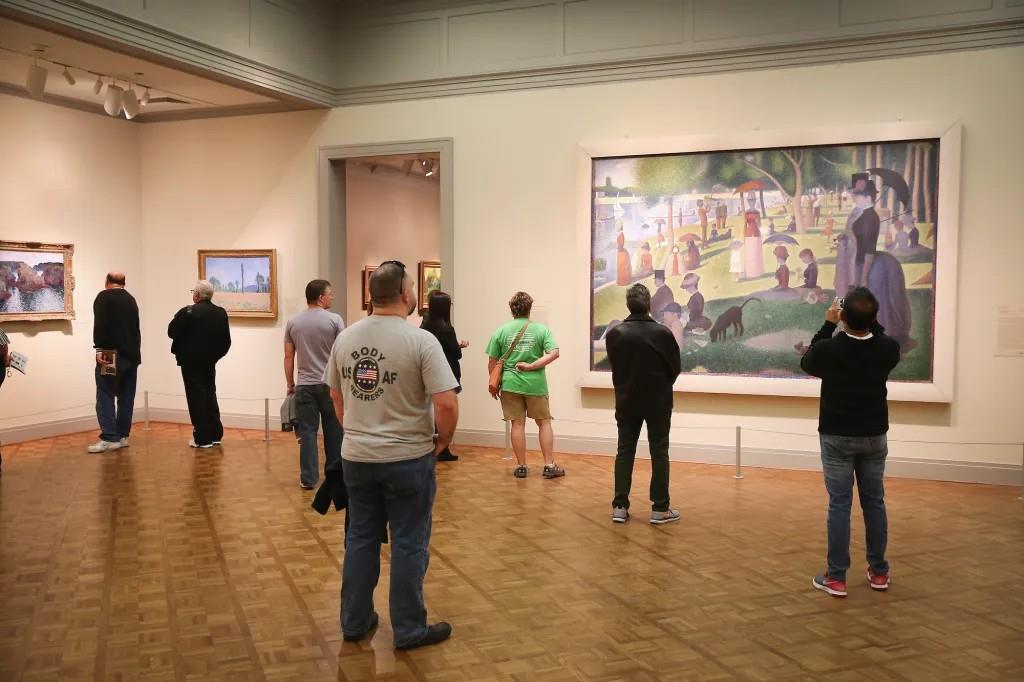
Inside the Art Institute of Chicago, 100 works map a museum that is both vast and unexpectedly intimate
The Art Institute of Chicago, founded in 1879, can feel almost impossibly large on a first visit. Spread across two connected buildings and nearly one million square feet, the museum asks visitors to make choices - and then rewards them with a collection that ranges from ancient sculpture to modernist painting, from Japanese screens to Egyptian funerary objects.
A new selection of 100 standout works underscores that breadth. Rather than ranking the objects by importance, the list organizes them by where they appear in the museum, a practical approach for a place where galleries are frequently rehung and loans regularly shift what is on view. The result is less a canon than a map: a way to move through the institution with a sharper sense of what deserves a pause.
Among the most recognizable landmarks is Edward Kemeys's“Lion,” installed at the Michigan Avenue entrance since the museum opened to the public on December 8, 1893. Weighing more than two tons, the sculpture has remained in place for a simple reason as much as a symbolic one: it is not going anywhere. Kemeys, an animalier who studied animals closely after the Civil War, gave the lion a flowing mane and a taut, alert body that have made it one of the museum's defining images.
Elsewhere, the museum's quieter pleasures reward a slower pace. In a basement gallery, Narcissa Niblack Thorne's miniature interiors offer 68 meticulously built scenes, part of a body of work that eventually reached about 100 examples. Thorne recreated rooms from France, Japan, the United States, and beyond, filling them with tiny furnishings and convincing traces of use. Even a spare Shaker living room, with floorboards dented to suggest wear, carries a remarkable sense of lived-in stillness.
The Egyptian galleries hold some of the museum's most arresting objects, including the coffin and mummy of Pa-ankh-en-Amun, a man who lived around 900 BCE. A 2014 hospital scan revealed that he was middle-aged when he died, adding a modern layer of information to an ancient burial object. Nearby, the Bead Net Funerary Shroud, dated to 664–525 BCE, includes a scarab linked to Khepri, while the Statuette of a Female Figure, from 2600 BCE to 2400 BCE, connects the museum to the Cyclades islands and the deep history of Aegean art.
Taken together, these works show why the Art Institute remains more than a destination for marquee names. It is a museum of scale, certainly, but also of accumulation, where the most memorable encounter may be a lion at the door, a miniature room below ground, or an ancient object that still carries the weight of a human life.

Legal Disclaimer:
MENAFN provides the
information “as is” without warranty of any kind. We do not accept
any responsibility or liability for the accuracy, content, images,
videos, licenses, completeness, legality, or reliability of the information
contained in this article. If you have any complaints or copyright
issues related to this article, kindly contact the provider above.
Most popular stories
Market Research

More Story








Comments
No comment