




403
Sorry!!
Error! We're sorry, but the page you were looking for doesn't exist.
Paul Pfeiffer Will Be Inaugural Artist-In-Residence At Brooklyn's Barclays Center Arena The Art Newspaper International Art News And Events
(MENAFN- USA Art News)
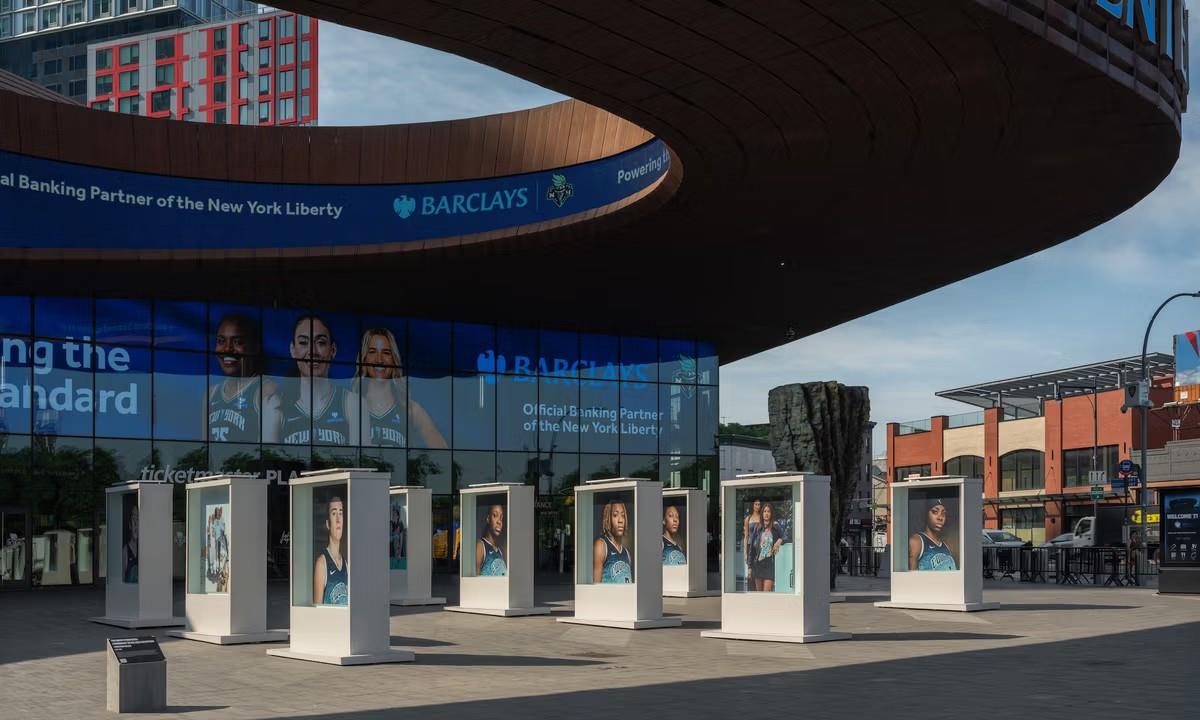
Paul Pfeiffer to Become Barclays Center's First Artist-in-Residence as Arena Expands Public Art Program
What does an artist-in-residence look like inside a major sports and concert arena? Beginning next month, conceptual artist Paul Pfeiffer (Filipino American, b. 1966) will take up the inaugural residency at Brooklyn's Barclays Center, embedding his practice in the building's public spectacle and its behind-the-scenes media machinery.
The residency was announced by Brooklyn Sports & Entertainment, the arena's parent company, alongside a slate of newly installed and specially commissioned works planned for the venue. The program signals an increasingly ambitious approach to commissioning contemporary art in spaces defined by mass audiences: basketball games for the New York Liberty and Brooklyn Nets, a steady calendar of arena-scale concerts, and the constant churn of broadcast and social media.
Pfeiffer is best known for works that reframe the visual language of celebrity, athletics, and entertainment, often through subtle interventions that make familiar images feel strangely unstable. At Barclays Center, that sensibility will be tested against the arena's own systems of image production. The company said Pfeiffer will be“fully embedded” in the complex, working both in public-facing areas and in operational spaces typically hidden from view.
A central component of the residency is a year-long project titled“Exodus,” developed in collaboration with artist Shaun Leonardo and the non-profit Social Justice Fund. The initiative will lead media workshops with youth and adults affected by the criminal-justice system, with an emphasis on skills and exposure to the arena's media ecosystem.
Clara Wu Tsai, co-owner of the Liberty and Nets franchises and vice chair of Brooklyn Sports & Entertainment, described Pfeiffer as a natural fit, noting his long-standing interest in basketball and the arena environment. She also framed the workshops as a pathway toward opportunity, particularly for“system-impacted” young people, aligning the residency with the Social Justice Fund's priorities.
The arena will also launch a new moving-image initiative next month:“Art on the Hour,” a series of 60-second works that will appear at the top of every hour on the large circular digital screen above the main entrance plaza, known as the“oculus.” Scheduled to run through spring 2027, the program will feature a different artist each month; the full roster has not yet been announced.
Wu Tsai positioned the oculus project as an extension of the arena's public-facing commissions, emphasizing the visibility of the plaza for passersby and commuters. The aim, she said, is to place art outside conventional museum settings and create encounters that can briefly interrupt the tempo of the city.
Additional commissions are slated for the autumn, timed to the start of the Brooklyn Nets season and potentially overlapping with a deep New York Liberty WNBA playoff run. A major suspended work by Sarah Sze (American, b. 1969), titled“Wave” (2026), will be installed in the main entrance atrium. The large-scale commission will incorporate more than 250 screens showing animated projections and images, setting what Wu Tsai called the mood at the arena's“front door.”
A new Flatbush Avenue-side entrance, also expected to debut in the autumn, will include“Tina” (2026), a new work by Mark Bradford (American, b. 1961) made from layers of singed paper and silver foil. That entry will also feature“Untitled Anxious Audience” (2019) by Rashid Johnson (American, b. 1977), a large-scale work recently seen in his retrospective at the Solomon R. Guggenheim Museum in Manhattan (2025–26).
Looking further ahead, Brooklyn-born artist Kambui Olujimi (American, b. 1976) is scheduled to unveil a new large-scale commission in May 2027. Olujimi is also set to appear in the central exhibition of this year's Venice Biennale, underscoring the arena's interest in artists with significant institutional visibility.
Taken together, the initiatives suggest a model in which an arena functions not only as a site of entertainment, but as a platform for contemporary art that meets audiences where they already gather. For Pfeiffer, whose work has long examined how images shape belief and desire, the residency offers a rare chance to work inside the apparatus itself - and to invite others into it.

Legal Disclaimer:
MENAFN provides the
information “as is” without warranty of any kind. We do not accept
any responsibility or liability for the accuracy, content, images,
videos, licenses, completeness, legality, or reliability of the information
contained in this article. If you have any complaints or copyright
issues related to this article, kindly contact the provider above.
Most popular stories
Market Research

More Story








Comments
No comment