







403
Sorry!!
Error! We're sorry, but the page you were looking for doesn't exist.
Comprehensive Guide to Box Truck Tail Lift Repair: Expert Insights from Beauway Technicians
(MENAFNEditorial) How to Repair a Box Truck Tail Lift: Practical Insights from an Experienced Technician
As a technician with over eight years of experience in cargo handling equipment maintenance, I handle hundreds of box truck tail lift repair cases every year. Through these real-world cases, I found that around 80% of truck tail lift repair issues can be quickly diagnosed and resolved following a systematic inspection procedure. Today, I want to share my accumulated experience in maintaining and repairing tail lifts with fellow technicians and truck operators.
Core Structure of a Tail Lift System
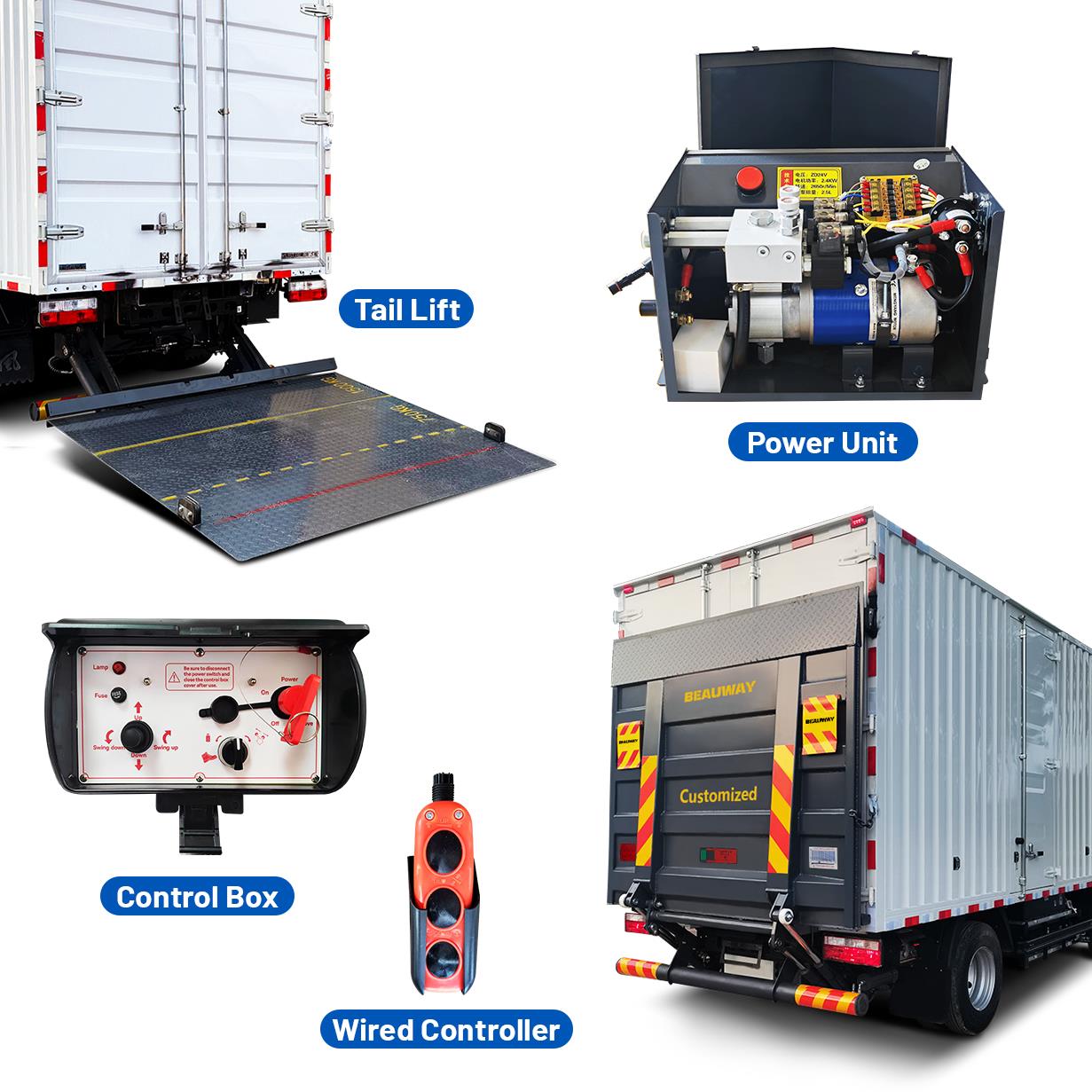
Before starting repairs, it is essential to fully understand the tail lift structure. A complete hydraulic tail lift on a box truck typically consists of six modules:
Loading Platform (Main Plate): Direct contact surface for cargo.
Mechanical Transmission Assembly: Includes lifting cylinders, closing cylinders, booster cylinders, square steel supports, and lifting arms with linkage mechanisms.
Hydraulic Power System: Comprised of motor-pump units, hydraulic reservoir, multi-way directional valve groups, and various control valves.
Electrical Control Unit: Includes fixed control box, handheld wired controller, 24V DC relay set, and safety interlock circuits.
Pipeline System: Hydraulic lines, hoses, and quick connectors.
Power Supply Components: Battery, motor, hydraulic pump, and related control valves.
Different tail lift brands may have variations in cylinder layout. Always request the hydraulic schematic for the specific model before repair—it can save at least 50% of diagnosis time.
Motor Runs but Platform Does Not Move
This is the most frequent hydraulic tail lift troubleshooting issue, usually occurring after 2–3 years of operation. According to my repair records, the three most common causes are:
Solenoid Valve Power Loss or Sticking:
Measure the solenoid coil voltage with a multimeter—it should be DC 24V ±2V. If abnormal, disconnect the power, remove the connector, clean oxidation inside the plug with fine sandpaper, apply conductive grease, and reconnect. If coil resistance exceeds 15Ω, replace the solenoid valve.
Insufficient Battery Power:
In winter, low temperatures often cause battery voltage drop. Tail lift systems draw 15–25mA of static current; one month of idle time can reduce battery voltage below 22V. For voltages between 22–24V, a 2-hour charge is required. Below 22V, battery replacement or jump start is necessary. Normal operation requires voltage above 24.5V.
Low Hydraulic Oil Level:
Oil level should be between 2/3 and full scale in the tank side window. Below 1/2 scale, the pump draws air, reducing system pressure. Use ISO 46 anti-wear hydraulic oil, filling to 5mm below the upper mark. Avoid low-quality oils—they can damage the system.
Motor Continues Running After Button Release
The tail lift motor not stopping issue is extremely dangerous. In 2022, I repaired a case where continuous motor operation burned out the pump, costing over $1,100. Emergency handling steps:
Immediately disconnect the main battery, removing the negative terminal.
Wait ~30 seconds for capacitors to discharge.
Inspect contactor contacts for burn marks; test the button switch with a digital multimeter.
Typical component lifespans:
Contactors: 30,000–50,000 cycles ($17–$25 replacement)
Button switch: 100,000 cycles ($6–$9 replacement)
Safety fuse: depends on overload; replacement cost $2–$4
Even inexpensive components like fuses are critical—they protect the entire electrical system.
Hydraulic Cylinder Leak Analysis
Tail lift hydraulic cylinder leaking accounts for ~35% of all faults. Common leak points:
Piston Rod Seal Aging: Oil film on rod surface. Replace Y-type seal kits: $11 (domestic), $25 (import).
Loose Hose Fittings: Tighten JB/ZQ4465 compression fittings to 45–50 N·m torque. Avoid overtightening to prevent damage.
Cylinder Barrel Deformation or Cracking: Usually caused by long-term overload. Full cylinder replacement costs $165–$345 including labor.
Always adhere to rated load limits—overloading increases long-term repair costs.
System Completely Unresponsive
Tail lift not working fix requires sequential troubleshooting:
Power Circuit Check: Confirm ignition ON, control box input ≥24V, 20A fuse intact, test wired controller button power.
Safety Interlock Test: Inspect safety tube and reed switch. Replace defective tubes (Part SA-1206, $12–$18).
Contactor Function: Short main contacts to check motor operation; coil resistance should be 80–120Ω.
Battery Terminals: Clean oxidation, lubricate with grease, tighten to 18–22 N·m.
Hydraulic Valve Group Maintenance
Hydraulic valve groups (“the brain” of tail lifts) have ~12% fault rate but high repair difficulty. Non-professionals should not disassemble critical valves:
Proportional throttle valves: internal tolerances ≤0.005mm
Relief valves: pressure setting critical; misadjustment can burst pipes
Electro-hydraulic directional valves: coil-valve alignment requires special tools
Maintenance tips: replace filter elements every six months ($8–$15), clean tank breather sponge ($3–$5), clean external quick connectors.
Important: For pressure-setting valves, always contact Beauway or authorized service. Attempting DIY may cost thousands in damage.
Oil Leak Detection
Tail lift oil leak repair is a major concern. If untreated, leaks can reduce system performance by >40% within 3 months. Typical repair times:
Cylinder seal leak: 2–3 hours
Hose fitting leak: 30–60 minutes
Valve block seepage: 4–6 hours
Tank weld crack: requires factory repair
Early inspection prevents expensive repairs.
Seal Selection and Replacement
Truck tail lift seal replacement:
NBR for -20°C to +80°C
FKM for high temperature or oil-resistance
PU for cost-sensitive applications
Measure accurately (rod diameter ±0.1mm), note seal groove dimensions, lubricate seals with hydraulic oil, use installation sleeve tools, perform 5–10 unloaded cycles to purge air.
Electrical System Quick Test
“Three wires, two points” method:
Wires: power, control, ground
Points: load (motor & solenoid), source (battery & fuse box)
Example: 10m 1.5mm² wire caused 6V drop; replacing with 2.5mm² resolved issue.
Preventive Maintenance Recommendations
Daily: visual oil inspection, motor noise, emergency button, smooth platform movement (3–5 min)
Weekly: clean platform & hinges, top oil level, tighten bolts, lubricate pins
Monthly: filter replacement, system pressure 16–18MPa, motor insulation ≥1MΩ, button rebound test
Quarterly: change hydraulic oil, clean solenoid cores, calibrate relief valves, inspect all electrical connections
Results: 50 trucks under this schedule had a 67% reduction in major faults over 3 years, saving ~$385 per vehicle annually.
Emergency Handling in Special Conditions
Carry 12V emergency power, spare fuses, multi-tools
Use manual release valve if system fails (1.5 turns counterclockwise for gravity descent)
Winter: low-temp hydraulic oil, electric heater, AGM battery, preheat 2–3 minutes
Overload: limit to 80% of rated capacity per lift; upgrade cylinder if necessary ($450–$650)
Parts Replacement Guidance
OEM parts: 100% price baseline, 12-month warranty, 3–5 years lifespan
Brand aftermarket: 60–75% price, 6–9 months warranty, 2–3 years lifespan
Generic: 30–45% price, 0–3 months warranty, 6–18 months lifespan
Critical parts (hydraulic cylinder, solenoid valves, proportional valves, sensors, mainboard) should be OEM. Non-critical parts (seals, O-rings, hoses, filters, relays, buttons) can use reputable aftermarket brands.
Conclusion: Importance of Systematic Repair Approach
Through eight years of experience, I realized that a systematic approach is key for truck tail lift repair. Diagnose from electrical to hydraulic circuits, simple to complex, and preventive maintenance drastically reduces fault rates. Choosing proper parts ensures reliability and cost-effectiveness.
For professional technicians, continual learning is essential. For truck drivers, mastering basic inspection and simple troubleshooting can prevent operational delays. For safety-critical components, always contact professionals, especially Beauway for guidance and technical support. Proper understanding and maintenance of tail lift systems make cargo operations smoother and more efficient.
As a technician with over eight years of experience in cargo handling equipment maintenance, I handle hundreds of box truck tail lift repair cases every year. Through these real-world cases, I found that around 80% of truck tail lift repair issues can be quickly diagnosed and resolved following a systematic inspection procedure. Today, I want to share my accumulated experience in maintaining and repairing tail lifts with fellow technicians and truck operators.
Core Structure of a Tail Lift System
Before starting repairs, it is essential to fully understand the tail lift structure. A complete hydraulic tail lift on a box truck typically consists of six modules:
Loading Platform (Main Plate): Direct contact surface for cargo.
Mechanical Transmission Assembly: Includes lifting cylinders, closing cylinders, booster cylinders, square steel supports, and lifting arms with linkage mechanisms.
Hydraulic Power System: Comprised of motor-pump units, hydraulic reservoir, multi-way directional valve groups, and various control valves.
Electrical Control Unit: Includes fixed control box, handheld wired controller, 24V DC relay set, and safety interlock circuits.
Pipeline System: Hydraulic lines, hoses, and quick connectors.
Power Supply Components: Battery, motor, hydraulic pump, and related control valves.
Different tail lift brands may have variations in cylinder layout. Always request the hydraulic schematic for the specific model before repair—it can save at least 50% of diagnosis time.
Motor Runs but Platform Does Not Move
This is the most frequent hydraulic tail lift troubleshooting issue, usually occurring after 2–3 years of operation. According to my repair records, the three most common causes are:
Solenoid Valve Power Loss or Sticking:
Measure the solenoid coil voltage with a multimeter—it should be DC 24V ±2V. If abnormal, disconnect the power, remove the connector, clean oxidation inside the plug with fine sandpaper, apply conductive grease, and reconnect. If coil resistance exceeds 15Ω, replace the solenoid valve.
Insufficient Battery Power:
In winter, low temperatures often cause battery voltage drop. Tail lift systems draw 15–25mA of static current; one month of idle time can reduce battery voltage below 22V. For voltages between 22–24V, a 2-hour charge is required. Below 22V, battery replacement or jump start is necessary. Normal operation requires voltage above 24.5V.
Low Hydraulic Oil Level:
Oil level should be between 2/3 and full scale in the tank side window. Below 1/2 scale, the pump draws air, reducing system pressure. Use ISO 46 anti-wear hydraulic oil, filling to 5mm below the upper mark. Avoid low-quality oils—they can damage the system.
Motor Continues Running After Button Release
The tail lift motor not stopping issue is extremely dangerous. In 2022, I repaired a case where continuous motor operation burned out the pump, costing over $1,100. Emergency handling steps:
Immediately disconnect the main battery, removing the negative terminal.
Wait ~30 seconds for capacitors to discharge.
Inspect contactor contacts for burn marks; test the button switch with a digital multimeter.
Typical component lifespans:
Contactors: 30,000–50,000 cycles ($17–$25 replacement)
Button switch: 100,000 cycles ($6–$9 replacement)
Safety fuse: depends on overload; replacement cost $2–$4
Even inexpensive components like fuses are critical—they protect the entire electrical system.
Hydraulic Cylinder Leak Analysis
Tail lift hydraulic cylinder leaking accounts for ~35% of all faults. Common leak points:
Piston Rod Seal Aging: Oil film on rod surface. Replace Y-type seal kits: $11 (domestic), $25 (import).
Loose Hose Fittings: Tighten JB/ZQ4465 compression fittings to 45–50 N·m torque. Avoid overtightening to prevent damage.
Cylinder Barrel Deformation or Cracking: Usually caused by long-term overload. Full cylinder replacement costs $165–$345 including labor.
Always adhere to rated load limits—overloading increases long-term repair costs.
System Completely Unresponsive
Tail lift not working fix requires sequential troubleshooting:
Power Circuit Check: Confirm ignition ON, control box input ≥24V, 20A fuse intact, test wired controller button power.
Safety Interlock Test: Inspect safety tube and reed switch. Replace defective tubes (Part SA-1206, $12–$18).
Contactor Function: Short main contacts to check motor operation; coil resistance should be 80–120Ω.
Battery Terminals: Clean oxidation, lubricate with grease, tighten to 18–22 N·m.
Hydraulic Valve Group Maintenance
Hydraulic valve groups (“the brain” of tail lifts) have ~12% fault rate but high repair difficulty. Non-professionals should not disassemble critical valves:
Proportional throttle valves: internal tolerances ≤0.005mm
Relief valves: pressure setting critical; misadjustment can burst pipes
Electro-hydraulic directional valves: coil-valve alignment requires special tools
Maintenance tips: replace filter elements every six months ($8–$15), clean tank breather sponge ($3–$5), clean external quick connectors.
Important: For pressure-setting valves, always contact Beauway or authorized service. Attempting DIY may cost thousands in damage.
Oil Leak Detection
Tail lift oil leak repair is a major concern. If untreated, leaks can reduce system performance by >40% within 3 months. Typical repair times:
Cylinder seal leak: 2–3 hours
Hose fitting leak: 30–60 minutes
Valve block seepage: 4–6 hours
Tank weld crack: requires factory repair
Early inspection prevents expensive repairs.
Seal Selection and Replacement
Truck tail lift seal replacement:
NBR for -20°C to +80°C
FKM for high temperature or oil-resistance
PU for cost-sensitive applications
Measure accurately (rod diameter ±0.1mm), note seal groove dimensions, lubricate seals with hydraulic oil, use installation sleeve tools, perform 5–10 unloaded cycles to purge air.
Electrical System Quick Test
“Three wires, two points” method:
Wires: power, control, ground
Points: load (motor & solenoid), source (battery & fuse box)
Example: 10m 1.5mm² wire caused 6V drop; replacing with 2.5mm² resolved issue.
Preventive Maintenance Recommendations
Daily: visual oil inspection, motor noise, emergency button, smooth platform movement (3–5 min)
Weekly: clean platform & hinges, top oil level, tighten bolts, lubricate pins
Monthly: filter replacement, system pressure 16–18MPa, motor insulation ≥1MΩ, button rebound test
Quarterly: change hydraulic oil, clean solenoid cores, calibrate relief valves, inspect all electrical connections
Results: 50 trucks under this schedule had a 67% reduction in major faults over 3 years, saving ~$385 per vehicle annually.
Emergency Handling in Special Conditions
Carry 12V emergency power, spare fuses, multi-tools
Use manual release valve if system fails (1.5 turns counterclockwise for gravity descent)
Winter: low-temp hydraulic oil, electric heater, AGM battery, preheat 2–3 minutes
Overload: limit to 80% of rated capacity per lift; upgrade cylinder if necessary ($450–$650)
Parts Replacement Guidance
OEM parts: 100% price baseline, 12-month warranty, 3–5 years lifespan
Brand aftermarket: 60–75% price, 6–9 months warranty, 2–3 years lifespan
Generic: 30–45% price, 0–3 months warranty, 6–18 months lifespan
Critical parts (hydraulic cylinder, solenoid valves, proportional valves, sensors, mainboard) should be OEM. Non-critical parts (seals, O-rings, hoses, filters, relays, buttons) can use reputable aftermarket brands.
Conclusion: Importance of Systematic Repair Approach
Through eight years of experience, I realized that a systematic approach is key for truck tail lift repair. Diagnose from electrical to hydraulic circuits, simple to complex, and preventive maintenance drastically reduces fault rates. Choosing proper parts ensures reliability and cost-effectiveness.
For professional technicians, continual learning is essential. For truck drivers, mastering basic inspection and simple troubleshooting can prevent operational delays. For safety-critical components, always contact professionals, especially Beauway for guidance and technical support. Proper understanding and maintenance of tail lift systems make cargo operations smoother and more efficient.

Legal Disclaimer:
MENAFN provides the
information “as is” without warranty of any kind. We do not accept
any responsibility or liability for the accuracy, content, images,
videos, licenses, completeness, legality, or reliability of the information
contained in this article. If you have any complaints or copyright
issues related to this article, kindly contact the provider above.
Most popular stories
Market Research









Comments
No comment