




403
Sorry!!
Error! We're sorry, but the page you were looking for doesn't exist.
War Shock Splits Global Economy As GCC Buffers Anchor Steady Growth: IMF
(MENAFN- Khaleej Times) The Middle East war is sending fresh tremors through the global economy, but Gulf heavyweights such as the UAE and Saudi Arabia are emerging as anchors of stability, supported by strong sovereign wealth buffers, resilient non-oil growth and robust external balances even as fuel-importing economies across Asia, Europe and Africa face mounting inflation and widening deficits.
IMF economists say the shock is global but sharply uneven in its transmission, with energy exporters benefiting from stronger fiscal positions while import-dependent economies absorb the brunt of higher fuel and supply-chain costs.
Recommended For You Look: Massive crowds turn out for anti-Trump 'No Kings' rallies across the US“The shock is global, yet asymmetric,” said Jihad Azour, director of the IMF's Middle East and Central Asia Department, noting that“energy importers are more exposed than exporters, poorer countries more than richer ones, and those with meagre buffers more than those with ample reserves.”
That asymmetry is particularly visible across the Gulf. Countries such as the UAE and Saudi Arabia enter the crisis with large sovereign wealth assets, strong banking liquidity and diversified non-oil sectors that now account for more than three-quarters of the UAE's GDP, helping cushion the impact of regional volatility.
Energy remains the main transmission channel of the conflict's economic fallout. Roughly 25–30 per cent of global oil and about 20 per cent of liquefied natural gas flows pass through the Strait of Hormuz, making disruptions there equivalent to a sudden income shock for importing economies.
IMF chief economist Pierre-Olivier Gourinchas warned that the scale of the disruption could reshape global macroeconomic trajectories depending on how long tensions persist.“All roads lead to higher prices and slower growth,” he said, highlighting the risks posed by sustained energy shocks and supply-chain uncertainty.
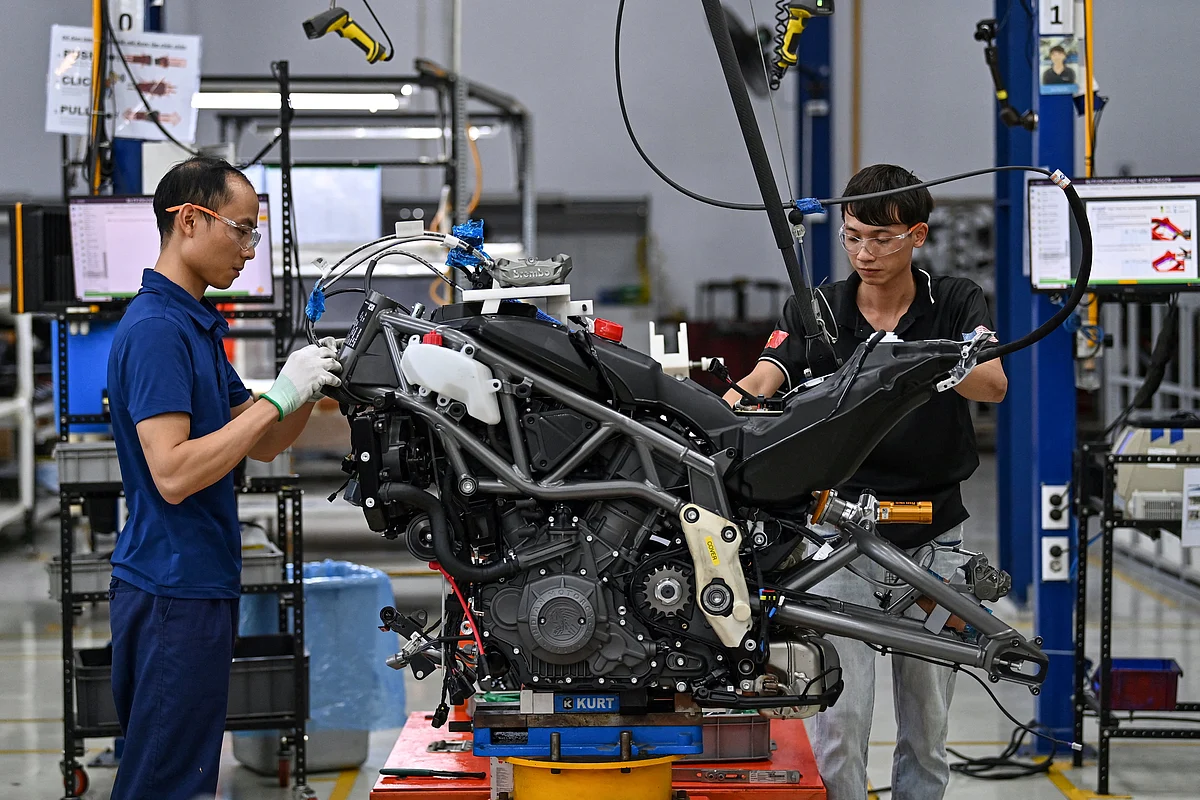
Across Asia's manufacturing economies, higher fuel and electricity costs are already squeezing industrial output and household purchasing power. Several economies are also experiencing balance-of-payments pressure as currencies weaken against a stronger dollar.
Europe faces renewed exposure to gas-price volatility reminiscent of the 2021–22 energy crisis. Countries such as Italy and the United Kingdom remain particularly vulnerable due to reliance on gas-fired power, while France and Spain benefit from greater nuclear and renewable capacity.
In contrast, Gulf exporters retain fiscal flexibility even under stress scenarios. Elevated oil prices strengthen budget balances and external accounts, while sovereign wealth funds provide an additional layer of resilience against capital-market volatility.
Still, the upside is not uniform. IMF economists caution that producers whose exports are constrained by infrastructure risks or shipping disruptions may see less benefit from higher prices.
Beyond energy, supply-chain disruptions are beginning to ripple across global trade.
Rerouted tanker and container traffic is raising freight and insurance costs while extending delivery times.
Around one-third of global fertiliser shipments transit the Strait of Hormuz, raising concerns about agricultural production just as planting season begins across the Northern Hemisphere.
The Gulf also supplies a large share of the world's helium - essential for semiconductors and medical imaging - highlighting how the conflict is increasingly affecting strategic industrial sectors far beyond the region.
Air-traffic disruptions around major Gulf aviation hubs are adding another layer of strain to global logistics networks that had only recently recovered from pandemic-era bottlenecks.
Low-income economies face the greatest risks from these spillovers. Food accounts for roughly 36 per cent of household consumption in poorer countries, compared with about 20 per cent in emerging markets and less than 10 per cent in advanced economies, making price shocks socially destabilising as well as economically damaging.
Financial markets are responding cautiously but clearly. Global equity indices have softened, bond yields have risen across major economies and volatility has increased, tightening financing conditions worldwide.
For emerging markets with limited reserves, higher fuel import bills are widening trade deficits and weakening currencies at a time when public-debt levels remain historically elevated.
By contrast, countries with strong buffers - including the UAE and Saudi Arabia - are better positioned to absorb market stress. Large sovereign assets, deep domestic liquidity and diversified growth engines continue to support investor confidence despite geopolitical uncertainty.
Ultimately, IMF economists say the conflict's economic legacy will depend on its duration and geographic spread. For now, however, the divergence between exporters and importers is already reshaping the global economic map - reinforcing the Gulf's role as a stabilising force in an increasingly fragile world economy.

Legal Disclaimer:
MENAFN provides the
information “as is” without warranty of any kind. We do not accept
any responsibility or liability for the accuracy, content, images,
videos, licenses, completeness, legality, or reliability of the information
contained in this article. If you have any complaints or copyright
issues related to this article, kindly contact the provider above.
Most popular stories
Market Research

More Story





Comments
No comment