




403
Sorry!!
Error! We're sorry, but the page you were looking for doesn't exist.
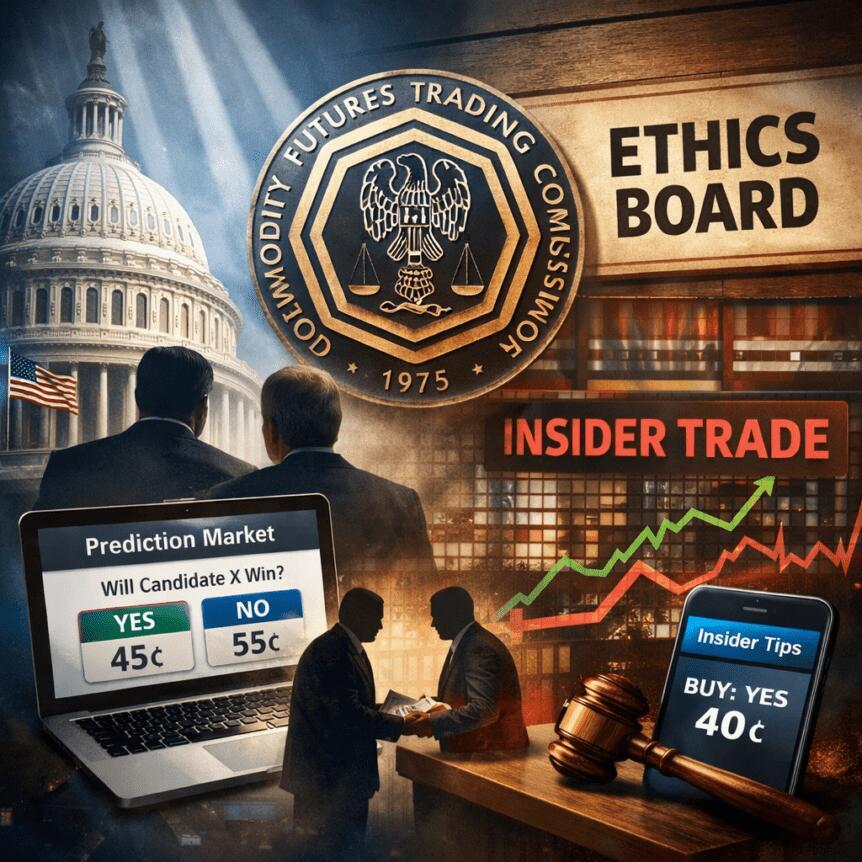
Dems Press CFTC, Ethics Board On Prediction-Market Insider Trades
(MENAFN- Crypto Breaking) A bipartisan push in Congress is pressing federal regulators to curb insider trading risks tied to prediction markets. In a letter addressed to the Commodity Futures Trading Commission (CFTC) Chair Mike Selig and the Office of Government Ethics (OGE), at least 42 Democratic lawmakers urged executive-branch guidance that would require federal employees to refrain from using nonpublic information to trade on prediction-market contracts. The move comes amid heightened scrutiny of platforms like Kalshi and Polymarket, which have faced questions about how their markets could be leveraged for insider information.
The letter, prompted by“multiple incidents” that have sparked speculation about possible insider trading by federal employees in prediction markets, asks the CFTC and OGE to circulate guidance that applies across the entire federal workforce. The request, highlighted in a press release from Senator Elizabeth Warren's office, emphasizes the need for clear rules to prevent government workers from exploiting inside information in these markets. Warren's release notes the concern that such activity could undermine public trust and risk regulatory violations.
Among the incidents cited by the lawmakers are reported trades connected to geopolitical events and political developments, including bets on the capture of Nicolás Maduro and wagers tied to the length of a White House press briefing. The letter also references later reports of suspicious trades related to the invasion of Iran and the death of Ayatollah Khamenei, drawing national-security implications into the debate over how prediction markets operate within federal oversight. The lawmakers describe these events as signaling the need for stronger guardrails and enforcement mechanisms. Related coverage provides context on the broader growth and scrutiny of prediction-market activity.
In their request, the lawmakers ask for a briefing and written responses by April 13, including whether the CFTC has investigated or received reports of federal employees engaging in insider trading on prediction markets and what steps the agency is taking to detect and deter such activity. The push explicitly seeks to understand how regulators plan to monitor and enforce the line between legal participation in markets and improper use of inside information.
Key takeaways- Executive guidance urged to curb insider trading by federal workers: A broad call for a formal, government-wide warning against using confidential information to trade in prediction markets. Incidents cited as catalysts for renewed oversight: Examples range from bets on Maduro's capture to the length of a White House briefing, with later reports alleging suspicious trades tied to geopolitical events and public personnel decisions. Legal framework invoked: STOCK Act and derivatives status: The lawmakers argue the STOCK Act applies to prediction-market activity, given the CFTC's view that event contracts are derivatives with potential financial consequences. Clear deadline and asks for transparency: The group seeks a briefing and written answers by April 13, including any investigations or measures underway to prevent insider trading by federal employees.
The lawmakers' letter leans on the idea that prediction markets, which trade contracts based on future events, sit at the intersection of financial markets and public governance. They point to the Commodity Exchange Act (CEA) framework and the CFTC's characterization of event contracts as derivatives-an interpretation that would bring such activity under the STOCK Act's prohibitions on insider trading by government officials. The STOCK Act, originally signed into law by President Barack Obama in 2012, was designed to clarify that government officials cannot use material, nonpublic information for personal gain. The letter argues that the CFTC's position effectively extends insider-trading prohibitions to prediction-market activity, in line with the spirit of the STOCK Act.
This framing matters because it ties the governance of prediction markets to a long-standing public-integrity regime. If regulators and lawmakers treat event contracts as derivatives under the STOCK Act, federal employees would be barred from participating in these markets when they possess material nonpublic information-regardless of the market's private platform semantics. That reinterpretation could tighten compliance obligations for agencies that use or monitor prediction-market data, while also shaping how future reforms are drafted.
Platform responses and what to watch nextIndustry players have responded to rising scrutiny with efforts to reinforce guardrails. Kalshi and Polymarket, two of the largest prediction-market platforms, have announced steps to curb potential insider-trading exploits by tightening participant restrictions and introducing new safeguards. These moves come amid broader industry discussions about how to separate legitimate trading activity from signals that could reveal sensitive information or enable manipulation. For context, prior reporting has highlighted ongoing debates about insider-trading allegations and the regulatory pathway for prediction markets, including proposals for tighter controls and user bans. Platform guardrails reflect a pragmatic early response to a problem regulators say warrants formal clarification.
The letter's examples underscore why such guardrails are not merely theoretical: incidents involving geopolitical bets, public-safety events, and personnel decisions highlight how quickly prediction markets can become channels for signaling or leakage of sensitive information. Regulators face the challenge of balancing the innovative potential of prediction markets-what they can reveal about collective expectations and risk-with the need to prevent improper disclosures and manipulation. The April 13 deadline for regulator responses will help determine whether more formal guidance, rulemaking, or legislative proposals follow, potentially shaping how these markets operate inside federal ecosystems and beyond.
What this means for investors, users, and buildersFor market participants, there is an evolving risk calculus around prediction-market participation, particularly for individuals connected to or employed by the government. If regulators codify stricter guidance or broaden the STOCK Act's application to prediction markets, investors and traders might see tighter eligibility criteria, more stringent compliance checks, and clearer disclosure expectations. For builders and platform operators, the development signals a growing imperative to implement robust user-verification processes, enhanced surveillance for unusual trading patterns, and transparent communications about governance and risk controls. The growing regulatory clarity could also help align prediction-market ecosystems with traditional derivatives markets, potentially unlocking broader institutional participation while reducing the risk of misuse.
In the near term, market watchers should monitor how the CFTC, the OGE, and lawmakers articulate expectations for insider-trading prevention. The April 13 briefing deadline will likely set the tone for whether regulatory momentum translates into concrete guidance, targeted rulemaking, or even new legislative proposals that further define the boundaries of prediction-market activity for federal actors and private participants alike.
As prediction markets continue to grow in adoption and scale, the tension between rapid experimentation and robust governance remains a defining theme. The coming weeks will reveal whether regulators favor a cautious, clearly defined framework or a more expansive approach that aggressively constrains insider-information dynamics in these markets.
Readers should watch for formal regulator communications and any legislative initiatives that spell out the exact scope of protections for nonpublic information, as well as how platforms implement the guardrails described by lawmakers. The alignment (or misalignment) between enforcement expectations and market incentives will shape how investment and participation in prediction markets evolve in 2026 and beyond.
Risk & affiliate notice: Crypto assets are volatile and capital is at risk. This article may contain affiliate links.
Legal Disclaimer:
MENAFN provides the
information “as is” without warranty of any kind. We do not accept
any responsibility or liability for the accuracy, content, images,
videos, licenses, completeness, legality, or reliability of the information
contained in this article. If you have any complaints or copyright
issues related to this article, kindly contact the provider above.
Most popular stories
Market Research

More Story








Comments
No comment