





403
Sorry!!
Error! We're sorry, but the page you were looking for doesn't exist.
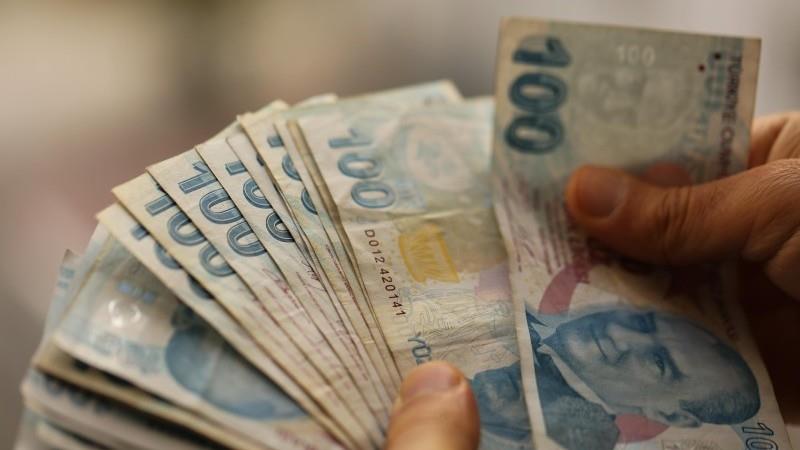
How Turkey's Local Authorities Can Protect The Lira
(MENAFN- ING)
Q: What kind of macro challenges does Turkey face from high energy prices?
A: The geopolitical shock since the start of the war in the Middle East has increased risks to the macro outlook in the near term, with an impact on Turkey's risk premium, inflation and monetary policy, as well as the current account balance.
The reaction in Turkish asset markets has been quite significant, with widening sovereign spreads, higher bond yields erasing all the bond market's gains since mid-2025, significant pressure on equities and a rise in offshore rates. Turkey's CDS risk premium recently exceeded the 300bp level, the highest of the last nine months. An even higher risk premium, were geopolitical uncertainty to extend, would certainly threaten more portfolio outflows.
When it comes to inflation, Turkey has a buffer thanks to the country's significant fiscal prudence last year, and the government has reinstated the sliding scale tariff to limit the pass‐through from higher oil prices. By absorbing roughly 75% of the oil price shock at a manageable fiscal cost, the government is helping to contain first‐round inflationary effects. According to the Central Bank of Turkey, under a scenario where the average Brent oil price is US$70 (over the next 12 months, between March 2026-February 2027) compared with the US$58.8 assumption in the latest inflation report for the same period, and assuming the pass-through from Brent oil to product prices is one-to-one and the sliding scale system is not in use, the upward effect on the annual inflation forecast would be 1.9ppt at the end of the 12-month period. The sliding scale system allows the direct and indirect increases in inflation to come 1.3ppt lower to 0.6%. However, upward pressure from higher oil, natural gas, transport and fertiliser prices – even after accounting for policy buffers – will likely lead to inflation exceeding 25% this year.
On external balances, a US$10 increase in Brent crude oil will likely result in a US$4-5 bn rise in the current account deficit, implying a strong sensitivity to energy prices.
Last year, the current account deficit stood at US$30.1bn, showing more than US$17bn of widening versus 2024, driven by a narrower surplus in the core balance, a wider deficit in the gold balance and primary income – all this despite a narrower gap in the energy balance. We expect the current account deficit to be around US$45bn for 2026, according to ING's baseline scenario, while risks are on the upside.
Growth will likely be under pressure due to tighter financial conditions and the negative contribution from net exports. Accordingly, we have revised our 2026 growth forecast from 4% to 3.4%, while risks remain on the downside.
Q: How have foreigners been positioned in Turkey and what are the size of recent outflows?A: At the end of February, total foreign positioning in equities, TurkGBs and other TRY debt was US$42.8bn, US$21.4bn, and US$2.6bn respectively. Regarding carry-related positions, the CBT estimated the amount increased by about US$18bn from April 2025, totalling around US$40bn just before the crisis.
In March so far, we have seen US$7.3bn outflows in bond and equity markets, plus an unwinding of close to around US$15bn in carry trade positions. Inflows to the equities in the third week are quite encouraging, however.
Portfolio flows (US$ bn, 13w-ma) Q: We know that the domestic audience can be a big driver of USD/TRY. What is this community doing?A: Turkish residents have remained subdued without any meaningful change in FX deposits (after adjusting for gold and EUR/USD price changes). And there has been no big pick-up in demand for FX mutual funds in the first three weeks of March.
This week, USD/TRY and gold in the Grand Bazaar temporarily traded at a premium to the interbank exchange rate, pointing to a pickup in local demand. However, the divergence has narrowed lately and implies a return to normal pricing. We conclude that resident FX demand has remained in check so far, compared to the volatility seen in March/April last year.
Macro prudential policies in the form of regulations targeting the TRY share in bank deposits and reserve requirements have been essential for the CBT in order not to allow an acceleration in dollarisation by local residents. The CBT also relies on loan growth caps to contain volume expansion in times of pressure on current account deficit and inflation. Accordingly, we could see occasional adjustments to the former, e.g., revisions in growth targets for TRY deposit shares, or in the relative cost of FX deposits for banks etc. by the revision of reserve requirements.
Residents' FX deposits (US$ bn, WoW chg on price adj. basis vs stock) Q: How have Turkish authorities accommodated the outflows seen so far?A: Foreign outflows and the lower gold price have been the drivers of the decline in the CBT's FX reserves this month. The central bank's net reserve position (excluding FX swaps) fell from US$78.6bn to around US$24bn by 25 March. We estimate that of the total decline, close to US$15bn stems from the decline in gold prices, while US$38.5bn stems from FX interventions undertaken to maintain currency stability.
Q: Does the CBT have large enough FX reserves – and can it somehow use gold reserves?A: Should pressure remain on the lira such that more FX intervention be required, Bloomberg has reported that the CBT will tap its gold reserves to raise FX for the lira's defence. In fact, bank data reflected that a gold-for-foreign currency swap transaction in the London market has probably already been conducted. Here we saw an increase in FX reserves despite a continuation of FX sales. In the last two weeks, gold reserves dropped by 51.9 tonnes (49.3 tonnes in the last week), translating into close to US$7.8bn, while swapped gold stock stood at US$5.1bn. From this, we can assert that, in addition to gold-for-foreign currency swap transactions, the bank also sold some of the gold reserves in the last two weeks. As a result, the CBT's FX reserves recovered to US$61.3bn from US$55.5bn, while gold reserves stood at US$116.2bn on 19 March.
According to the information disclosed in the bank's 2024 annual report, most of the gold (73.0%) is held with the Borsa Istanbul Precious Metals Market, while 22.7% is held abroad with the Bank of England. The CBT has already swapped some of the gold assets held abroad. Currently, out of the US$116.2bn gold reserves, the (net) gold position of the CBT is US$76.5bn after deducting required gold reserves belonging to domestic and foreign banks as well as the Treasury. The CBT can utilise not only gold assets in the Bank of England but also its domestically held gold reserves for gold FX swap transactions to support the lira if necessary. Additionally, the bank restarted FX swaps with local banks that would also support gross reserves going forward.
CBT international reserves (US$ bn) Q: Apart from FX intervention, what other measures do Turkish authorities have to control the lira?A: As geopolitical uncertainty continues, Turkish policymakers have moved quickly and in a coordinated manner to stabilise markets by: a) providing FX to the system, b) reducing the TRY supply that could go to FX, c) supporting demand for TRY by proactively raising the interbank overnight rate to 40% from 37%, and d) increasing the size of daily securities purchases. In its 2026 policy paper, the CBT announced that it aimed to increase the OMO portfolio to a nominal TRY450bn in 2026, from TRY262bn, up 72%. With recent geopolitical developments, the CBT has also increased the size of daily securities purchases with a total of TRY1174bn in March so far versus TRY78.2bn in the first two months of the year – a move which supports bond yields.
It seems that the CBT is following the same policy playbook during this geopolitical shock as it did during the local political volatility seen last year. While continuing to utilise its FX reserves and allowing a slightly faster pace of TRY depreciation, the CBT can also opt to adjust the policy rate towards the current funding rate. It can also adjust the policy rate corridor structure, as it stated in the March MPC meeting that should there be a significant and persistent deterioration in the inflation outlook – potentially driven by recent geopolitical developments – then the monetary policy stance will be tightened further.
However, a large increase in the upper band of the corridor towards a more asymmetrical structure for flexibility purposes would not be preferred by the policymakers. Here, domestic lending rates are sensitive to the upper band and can further add to the challenges for local corporates should the upper corridor be increased much further. Therefore, if financial stability concerns arise, we think the CBT will prefer tightening de-dollarisation targets first, rather than considering a large rate hike.
Additionally, the possibility of deterioration in external balances and the inflation outlook may lead the CBT to consider further restricting loan growth via macro-prudential measures. In fact, it took a step that could somewhat limit TRY loan growth by removing certain exemptions from the restrictions that apply to TRY credit expansion.
CBT rates vs TL reference rate (%) Q: What's your conclusion?A: Overall, while Turkey is sensitive to energy price movements, the economic implications of recent geopolitical developments will be determined by the extent and duration of the shock. Despite rising challenges in the current environment, policymakers are signalling no significant changes in policy priorities, including price stability, fiscal discipline and a sustainable current account balance.
Since mid-2023, Turkish authorities have relied on a managed currency as an anchor in disinflation efforts. Given the current level of FX reserves, we believe the CBT is well‐positioned to absorb potential capital outflows and limit volatility in the lira. Turkey may experience a more pronounced response to the current shock – both in terms of macroeconomic impact and the policy challenges it faces – but it is now better positioned to weather adverse effects than it was a few years ago.

Legal Disclaimer:
MENAFN provides the
information “as is” without warranty of any kind. We do not accept
any responsibility or liability for the accuracy, content, images,
videos, licenses, completeness, legality, or reliability of the information
contained in this article. If you have any complaints or copyright
issues related to this article, kindly contact the provider above.
Most popular stories
Market Research

More Story








Comments
No comment