




403
Sorry!!
Error! We're sorry, but the page you were looking for doesn't exist.
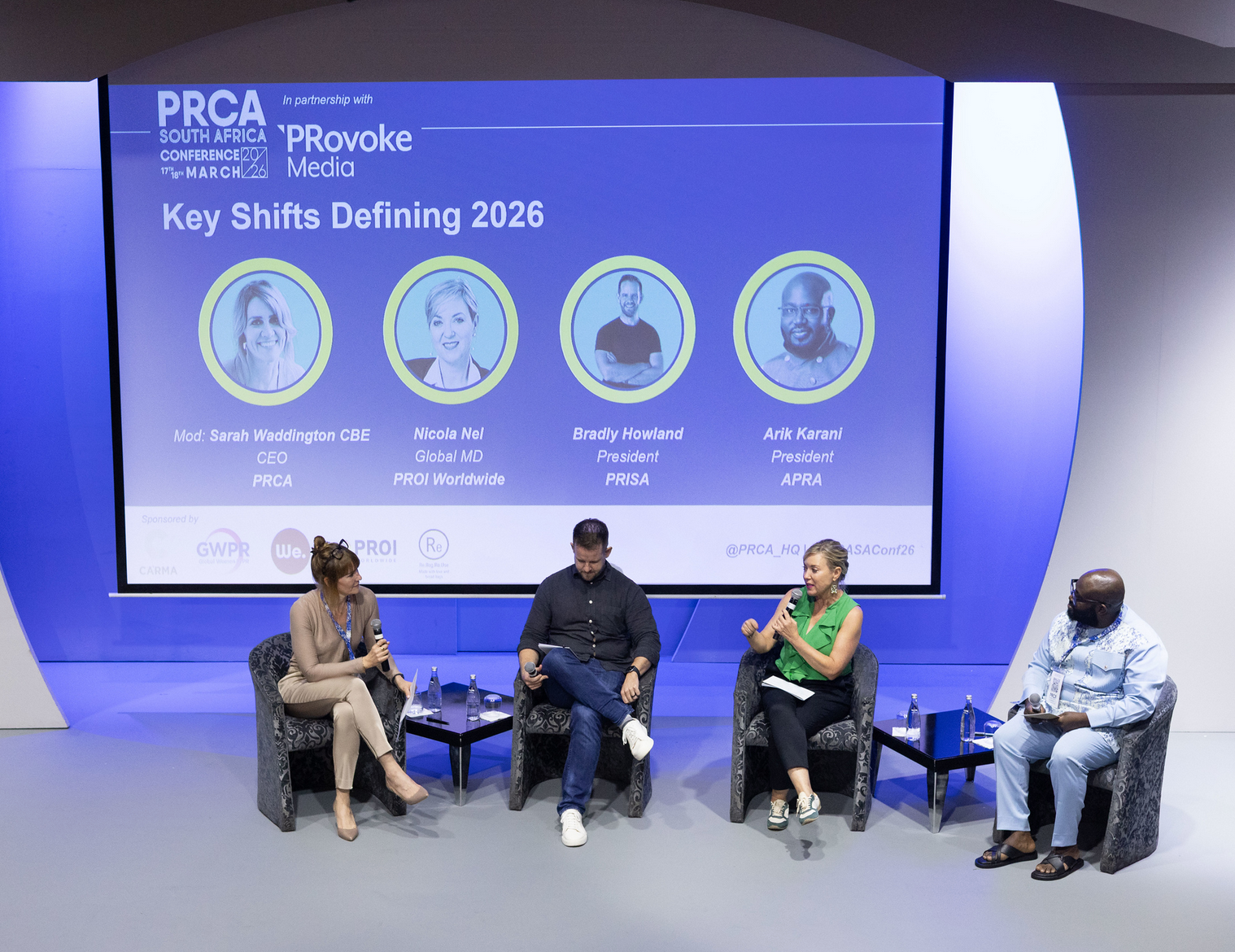
PRCA South Africa: Communications Is Being Asked To Do More And Prove It
(MENAFN- PRovoke)
JOHANNESBURG- From AI's growing influence on reputation to mounting pressure to demonstrate business value, discussions at this month's PRCA South Africa conference in Johannesburg made clear that communications is being reshaped on multiple fronts at once.
Across sessions spanning technology, industry structure, creativity and culture, the message was consistent: the function is being pushed beyond execution toward a more strategic, management-level role, even as the tools, channels and expectations around it continue to shift.
AI is becoming a reputation gatekeeper
Across multiple sessions, AI was positioned not simply as a productivity tool, but as a new layer through which organizations are discovered, summarized and judged, often without their direct involvement.
That shift has significant implications for communications. AI systems are already shaping reputation in real time, raising questions about visibility, accuracy and control. As a result, discussions focused on the need to treat AI as a stakeholder in its own right, with organizations urged to audit how they appear in AI systems and manage that presence as a core reputational risk.
At the same time, sessions highlighted how AI is changing workflows inside communications teams, automating tasks such as content generation and analysis. While this creates efficiency, there were also concerns about the impact on critical thinking, particularly for junior practitioners, if not paired with stronger strategic development.
Communications is under pressure to prove business value
A recurring theme across panels was the need for communications to move beyond outputs and more clearly demonstrate its contribution to organizational performance.
Discussions pointed to measurement as a persistent weakness, with many organizations still focused on activity-based reporting rather than outcomes tied to revenue, risk or stakeholder trust. The emphasis was on reframing communications in management terms - including legal exposure, financial impact and reputational risk - to gain greater influence at the executive level.
This shift also requires stronger management literacy. Sessions emphasized the need for communicators to better understand the pressures facing CEOs and boards, and to position themselves as advisors who help interpret complexity and reduce uncertainty, rather than simply manage messaging.
Media and influence are fragmenting
Sessions also pointed to continued erosion of traditional media models, alongside the rise of independent publishers, creators and brand-owned channels.
As audiences increasingly consume content through social platforms and niche communities, brands are taking on more responsibility for telling their own stories while also competing with a growing number of voices for attention and credibility.
This shift is changing how influence works. Rather than relying on a centralized media system, communicators are operating in a more distributed environment where credibility is shaped across multiple platforms and communities.
Creativity Must Be Engineered, Not Assumed
In a saturated content environment, sessions emphasized that creativity can no longer be treated as an add-on or a function of execution.
With audiences exposed to thousands of messages daily and attention spans increasingly limited, effective campaigns require ideas that are built into strategy from the outset and designed to earn attention organically. Concepts that rely solely on paid media to gain traction were described as increasingly ineffective, while“earned-first” ideas - those that resonate culturally and invite participation - are more likely to succeed.
Discussions also highlighted that creativity should be treated as a disciplined, repeatable process, one that can be engineered through sharper briefs, clearer problem definition and more intentional strategic thinking.
Culture, trust and belonging are strategic levers
Alongside these structural and technological shifts, sessions highlighted the growing importance of human factors in effective communication.
Discussions around cultural intelligence underscored how differences in communication styles, trust-building and decision-making can affect collaboration and outcomes, particularly in global or diverse teams. Understanding those differences rather than making assumptions was positioned as essential to effective leadership and communication.
At the same time, conversations around audience engagement pointed to the role of identity, participation and belonging in shaping how ideas spread. The most effective campaigns were framed not as messages to be delivered, but as ideas that audiences actively join and carry forward.
Across sessions, the message was consistent: communications is being asked to do more - and to do it with greater clarity, credibility and business relevance.

Legal Disclaimer:
MENAFN provides the
information “as is” without warranty of any kind. We do not accept
any responsibility or liability for the accuracy, content, images,
videos, licenses, completeness, legality, or reliability of the information
contained in this article. If you have any complaints or copyright
issues related to this article, kindly contact the provider above.
Most popular stories
Market Research

More Story







Comments
No comment