




403
Sorry!!
Error! We're sorry, but the page you were looking for doesn't exist.
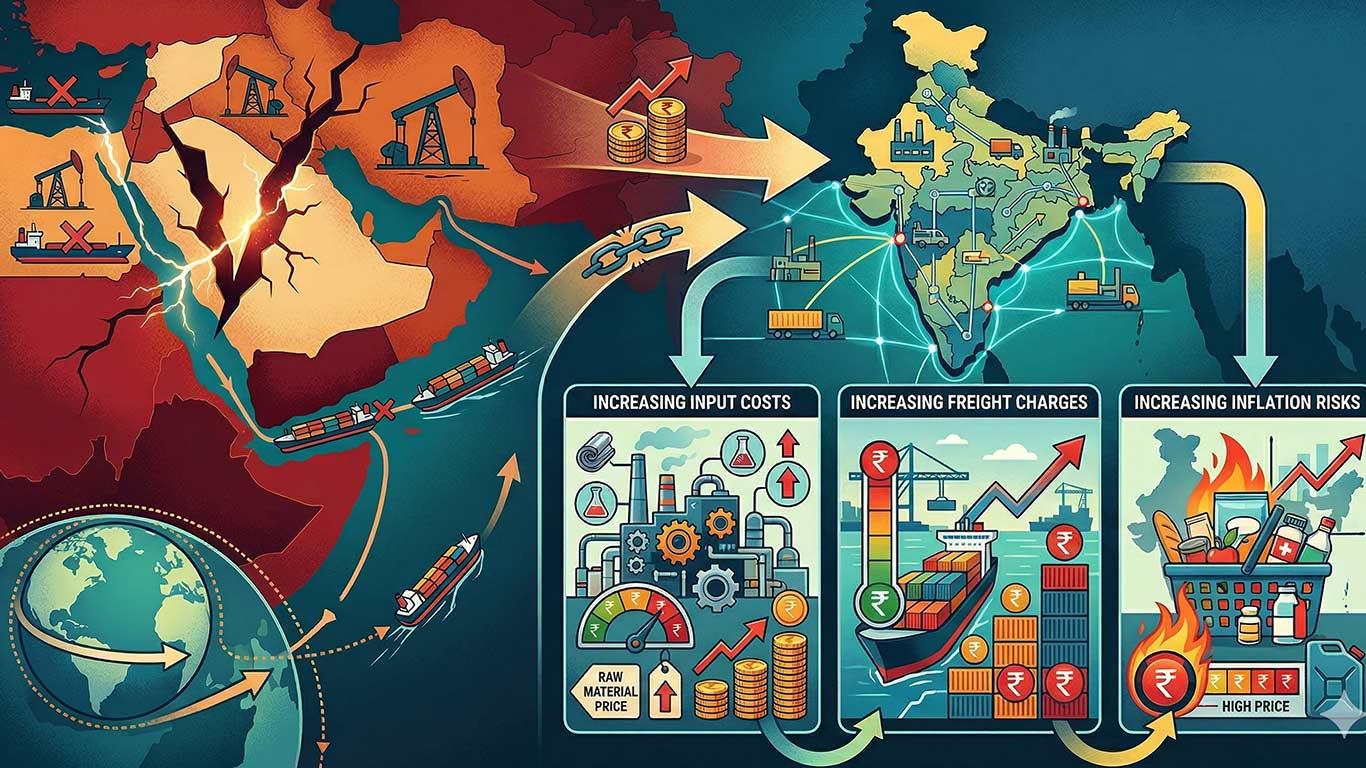
West Asia Tensions Pose Multiple Risks To India's Economic Growth: Finance Ministry
(MENAFN- KNN India)
New Delhi, Mar 30 (KNN) India's economic outlook has turned more uncertain as rising tensions in West Asia disrupt energy supplies and global logistics, increasing input costs, freight charges, and inflation risks, a Finance Ministry report said.
In its Monthly Economic Review for March 2026, the Department of Economic Affairs (DEA), under the Finance Ministry, noted that high-frequency indicators are beginning to show moderation.
The report said the economy remained stable until February 2026, supported by strong demand and public investment-led growth in sectors like steel, cement, and construction. However, rising fuel costs and supply disruptions are now affecting economic momentum.
E-way bill generation declined 5.3 per cent month-on-month (till March 22), indicating slower goods movement, though it remained 9.4 per cent higher year-on-year.
Retail inflation rose to 3.21 per cent in February, driven by food prices, with higher crude oil prices posing further upside risks. The trade deficit has widened due to rising imports and logistics disruptions, although services exports continue to provide some cushion.
Sectors dependent on fuel and imports, especially micro, small and medium enterprises (MSMEs) and industries like glass and ceramics, are facing production cuts due to higher costs and supply shortages.
The report also warned of pressures on the current account, driven by higher oil imports, potential decline in remittances, and reduced exports to West Asia.
While domestic demand remains relatively resilient, the report cautioned that risks are skewed to the downside, underscoring the need for close monitoring and policy support to manage the evolving situation.
(KNN Bureau)

Legal Disclaimer:
MENAFN provides the
information “as is” without warranty of any kind. We do not accept
any responsibility or liability for the accuracy, content, images,
videos, licenses, completeness, legality, or reliability of the information
contained in this article. If you have any complaints or copyright
issues related to this article, kindly contact the provider above.
Most popular stories
Market Research

More Story






Comments
No comment