




403
Sorry!!
Error! We're sorry, but the page you were looking for doesn't exist.
More Evidence Doesn't Mean More Justice: The Limits Of Visual Technologies In Human Rights Cases
Author: Kamari Maxine Clarke
(MENAFN- The Conversation) Editor's note: This story is part of a series of articles from Canada's top social sciences and humanities academics.

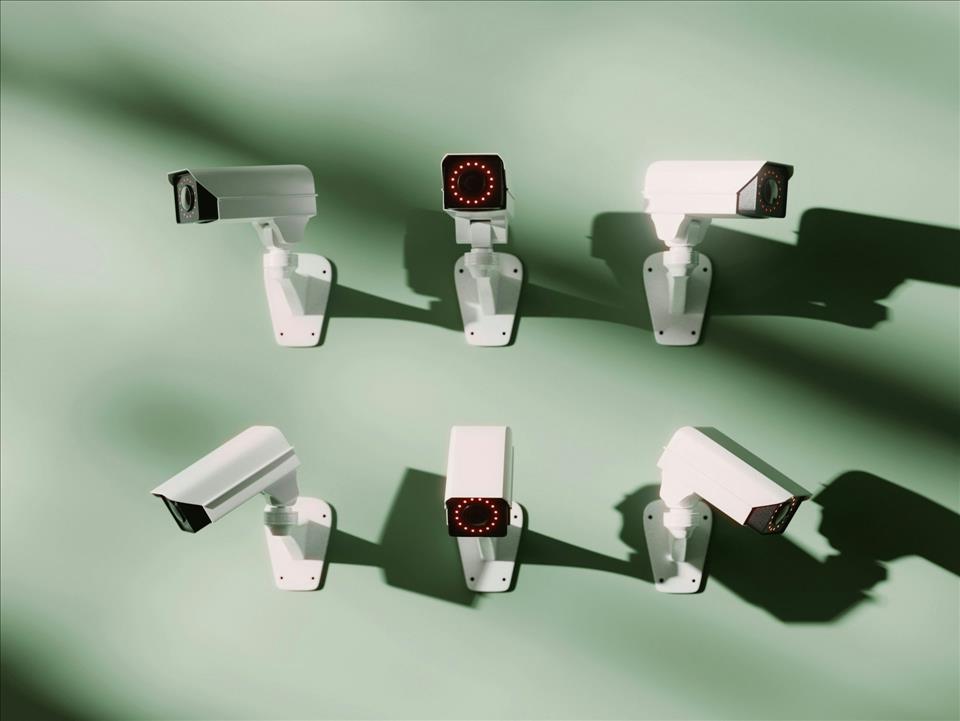
Body cameras, satellites and digital verification tools are generating more evidence of violence than ever before. But the institutions responsible for delivering justice still decide what counts as evidence - and what does not.
Some of the most consequential reporting on state-sanctioned violence concerns disputes over evidence: who controls the video, the metadata and the channels where events are logged in real time.
In Minnesota in January 2026, that meant court fights and public pressure over preserving - and potentially sharing - U.S. Immigration and Customs Enforcement (ICE) body camera footage after the killings of Alex Pretti and Renée Good, alongside wider disputes over federal transparency during immigration enforcement operations.
National outlets have tracked how community members are using encrypted messaging such as Signal to spot and report ICE activity, prompting an FBI investigation that civil liberties experts say tests the boundary between protected observation and alleged“interference.”
Meanwhile, in Canada, the RCMP is rolling out body cameras nationwide, raising questions about how the data collected by state security services might provide a future archive for complaint processes, prosecutions and civil litigation.
What we are witnessing is a“juriscopic regime” - a dense entanglement of scopic technologies (body cameras, satellites, open‐source verification), scientific protocols and legal evidentiary horizons that together govern what can be seen, verified and acted upon as“truth” - defining who counts as an expert and what forms of knowledge are ignored as anecdotal, non-scientific or non-legal.
How communities document violenceCitizens are taking these documentation tools into their own hands.
Families who have experienced violence and the forced disappearance or murder of loved ones are increasingly building grassroots“evidence infrastructures” with these technologies.
In Mexico, for example, colectivos - groups of families searching for their loved ones - have added geolocation mapping, drone surveys and other geospatial tools to identify possible clandestine grave sites and to document searches in real time, both to generate leads and to pressure reluctant institutions into action.
Some groups are experimenting with AI-mediated storytelling, creating“living” videos and other digital interventions to keep cases visible while simultaneously navigating new risks like digital extortion and retaliation that follow from making personal information public.
In Nigeria, families use social media and emerging missing persons portals to widen the radius of who might recognize a face, a name or a location, effectively crowd-sourcing identification and tips when official registries are fragmented or difficult to access.
Across these and many other contexts globally, communities are organizing mutual aid, warning others about threats, preserving data before it disappears and transforming private grief into collective, actionable knowledge.
But visibility is unevenly distributed.
This“evidence revolution” is often treated as if better visibility produces better justice but in practice, courts and legal institutions decide what becomes legible as truth. It is this gatekeeping that distorts what harms are recognized and acted upon, and that narrows the scope of what justice looks like.
The legal limits of digital evidenceHuman rights and international justice professionals are increasingly relying on digital and visual evidence - satellite imagery, crowd-sourced video, geolocation and AI-assisted analysis - to document harm and hold perpetrators to account.
Turning to these technologies may even deepen the distance between those victimized and the evidence meant to help them.
Family members of the missing frequently have extensive knowledge, but their expertise may not be taken seriously.
Law reshapes what“evidence” means, and even the best technology must pass through evidentiary rules and institutional priorities, which narrow what can be acted on - often in opaque ways.
Our recently released research findings show that these systems make certain forms of harm more legible than others. While this is helpful for certain evidentiary processes, disappearances, abductions and many forms of state violence can be virtually impossible to“see” from above.
In Nigeria, for example, those optical biases can also reproduce older hierarchies: communities that align with modern land tenure and fixed settlement patterns may be more legible than nomadic or displaced populations, shaping which harms travel as authoritative evidence.
What we see is that optical and digital technologies don't simply reveal truth; they are translated and authorized through legal institutions and expert hierarchies, sometimes sidelining grassroots knowledge.
At the International Criminal Court (ICC), for example, where mass atrocity and disappearance cases could potentially be heard, the evidentiary rules and institutional priorities of the court - the ways in which it determines admissibility, relevance and probative value - act as obstacles to admitting evidence. In the case of technologically derived evidence, the court relies on a few technical experts to render it legible to judges.
As a result, socially constructed technical judgments govern the production of knowledge. Forensic science makes explicit what the ICC's evidence law often implies: that evidence is not a thing but an inference.
Expanding evidentiary frameworks for justiceWhen a mother in Mexico or a sister in Nigeria searches for a disappeared or killed loved one, she enters an evidence regime long before any court does. Her“evidence” archive begins as a series of data - messages, sightings, scraps, rumours, maps. Forensic science teaches us what must happen with this data in order for it to become viable evidence: Is there a chain of custody? Contamination control? Validated methods? Honest statements of uncertainty?
But the family's need to know the truth of what happened exposes the limits of both forensic science and international courts.
A trace of evidence can be existentially decisive yet institutionally inadmissible; scientifically interpretable yet socially insufficient; legally persuasive yet too late to end the disappearance as a lived everyday condition.
In that gap, the struggle is not only over facts, but over whose knowledge becomes official, and whether truth is treated as a right owed to families rather than a byproduct of prosecution.
We need a more expansive regime of what counts as evidence in courts, moving toward an approach that regards documentation as political, treats law as a constraining optic as much as a solution, insists that accountability projects be regrounded in local knowledge and grassroots priorities and acknowledges that various forms of harm do not neatly convert into evidentiary categories.
We also need to widen the scope of who counts as an expert, include families' vernacular forensic practice and the embodied work of searching, mapping and enduring.
Unless we change what justice looks like, we will continue to miss a lot.
Institution:University at Albany, State University of New York

Legal Disclaimer:
MENAFN provides the
information “as is” without warranty of any kind. We do not accept
any responsibility or liability for the accuracy, content, images,
videos, licenses, completeness, legality, or reliability of the information
contained in this article. If you have any complaints or copyright
issues related to this article, kindly contact the provider above.
Most popular stories
Market Research

More Story





Comments
No comment