


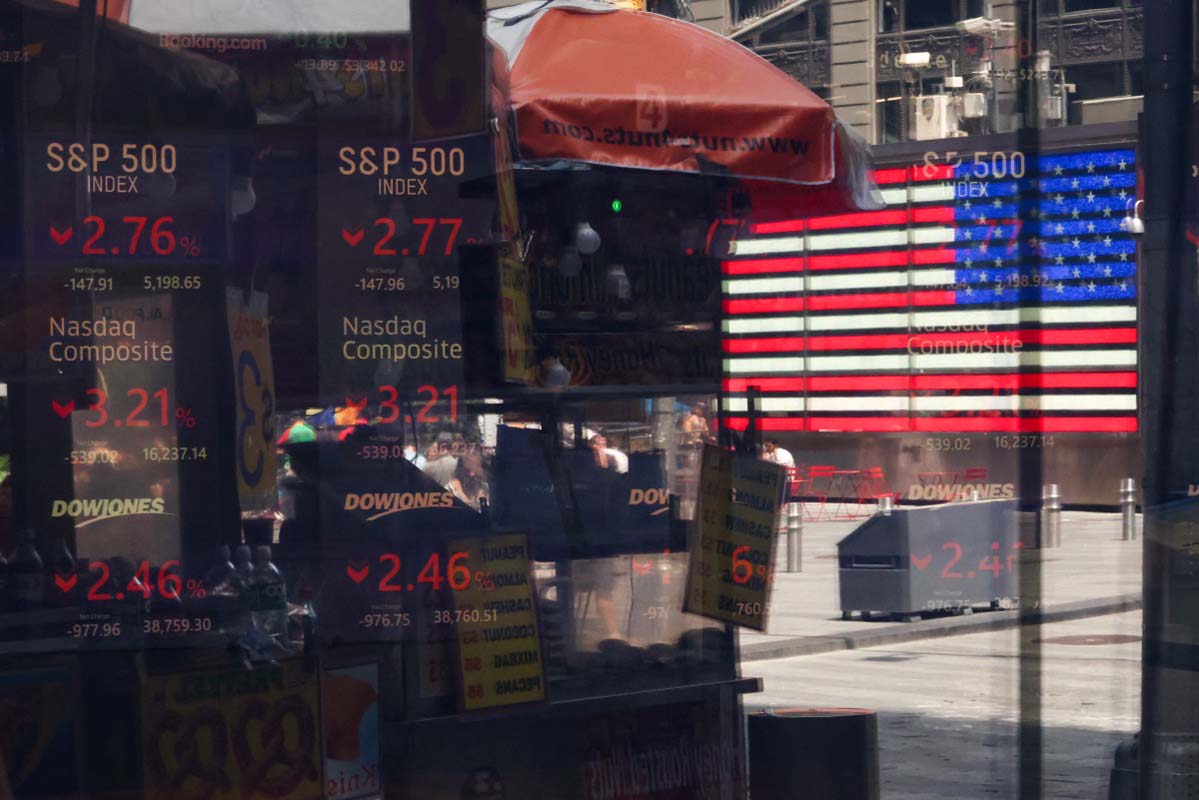
U.S. Stocks Close Week Down


(MENAFN) The New York Stock Exchange ended the week firmly in negative territory on Friday, as mounting concerns over the duration of the Middle East conflict and soaring energy prices continued to weigh heavily on investor sentiment.
The Dow Jones Industrial Average shed 1.73%, or 793.47 points, closing at 45,166.64. The Nasdaq composite dropped 2.15%, or 459.72 points, to settle at 20,948.36, while the S&P 500 declined 1.67%, or 108.31 points, to close at 6,368.85.
The Volatility Index (VIX) — widely known as the market's "fear index" — eased 12.94% to 30.99 as of 2010GMT, suggesting some moderation in near-term panic, even as broader anxiety remained elevated.
Diplomatic Signals Offer Cautious Hope
On the geopolitical front, U.S. President Donald Trump said Thursday that he had suspended plans to strike Iran's power plants until April 6, adding that negotiations were progressing constructively. U.S. Secretary of State Marco Rubio followed on Friday, stating that military operations against Iran are expected to conclude in "weeks, not months", and that Washington could achieve its objectives without the need for ground troops.
Iranian Parliament Speaker Mohammad Baqer Qalibaf, meanwhile, pushed back against market narratives in a social media post, arguing that too many "fake news" stories were being circulated to lower energy prices and that the market had become immune to them, noting that the true prices would eventually emerge.
Oil Surges on Hormuz Fears
Anxiety over potential disruptions to shipping through the Strait of Hormuz continued to propel crude prices upward. Brent crude surged more than 5.5% to $114 per barrel as of 2050GMT, amplifying inflationary pressures across the global economy.
Those concerns spilled into bond markets as well, where sustained selling pressure pushed the U.S. 10-year Treasury yield above 4.48% during Friday's session before it pulled back slightly to settle at 4.43%.
Consumer Confidence Hits Year Low
On the macroeconomic front, the University of Michigan's consumer sentiment index fell to 53.3 in March following a downward revision — marking the lowest reading of the year. Consumers' short-term inflation expectations recorded their steepest monthly jump since April 2025, climbing from 3.4% to 3.8%.
European Markets Also Slip
Across the Atlantic, European equities mirrored Wall Street's downturn. The pan-European Stoxx Europe 600 index slipped 0.95% to close at 575.30 points.
Germany's DAX led regional losses, falling 1.38% to 22,300.75, while France's CAC 40 dropped 0.87% to 7,701.95. Spain's IBEX 35 declined 0.95% to 16,892.50, and Italy's FTSE MIB 30 fell 0.74% to finish at 43,379.10. The UK's FTSE 100 edged marginally lower by just 0.05%, closing at 9,967.35.
The Dow Jones Industrial Average shed 1.73%, or 793.47 points, closing at 45,166.64. The Nasdaq composite dropped 2.15%, or 459.72 points, to settle at 20,948.36, while the S&P 500 declined 1.67%, or 108.31 points, to close at 6,368.85.
The Volatility Index (VIX) — widely known as the market's "fear index" — eased 12.94% to 30.99 as of 2010GMT, suggesting some moderation in near-term panic, even as broader anxiety remained elevated.
Diplomatic Signals Offer Cautious Hope
On the geopolitical front, U.S. President Donald Trump said Thursday that he had suspended plans to strike Iran's power plants until April 6, adding that negotiations were progressing constructively. U.S. Secretary of State Marco Rubio followed on Friday, stating that military operations against Iran are expected to conclude in "weeks, not months", and that Washington could achieve its objectives without the need for ground troops.
Iranian Parliament Speaker Mohammad Baqer Qalibaf, meanwhile, pushed back against market narratives in a social media post, arguing that too many "fake news" stories were being circulated to lower energy prices and that the market had become immune to them, noting that the true prices would eventually emerge.
Oil Surges on Hormuz Fears
Anxiety over potential disruptions to shipping through the Strait of Hormuz continued to propel crude prices upward. Brent crude surged more than 5.5% to $114 per barrel as of 2050GMT, amplifying inflationary pressures across the global economy.
Those concerns spilled into bond markets as well, where sustained selling pressure pushed the U.S. 10-year Treasury yield above 4.48% during Friday's session before it pulled back slightly to settle at 4.43%.
Consumer Confidence Hits Year Low
On the macroeconomic front, the University of Michigan's consumer sentiment index fell to 53.3 in March following a downward revision — marking the lowest reading of the year. Consumers' short-term inflation expectations recorded their steepest monthly jump since April 2025, climbing from 3.4% to 3.8%.
European Markets Also Slip
Across the Atlantic, European equities mirrored Wall Street's downturn. The pan-European Stoxx Europe 600 index slipped 0.95% to close at 575.30 points.
Germany's DAX led regional losses, falling 1.38% to 22,300.75, while France's CAC 40 dropped 0.87% to 7,701.95. Spain's IBEX 35 declined 0.95% to 16,892.50, and Italy's FTSE MIB 30 fell 0.74% to finish at 43,379.10. The UK's FTSE 100 edged marginally lower by just 0.05%, closing at 9,967.35.

Legal Disclaimer:
MENAFN provides the
information “as is” without warranty of any kind. We do not accept
any responsibility or liability for the accuracy, content, images,
videos, licenses, completeness, legality, or reliability of the information
contained in this article. If you have any complaints or copyright
issues related to this article, kindly contact the provider above.


Comments
No comment