




403
Sorry!!
Error! We're sorry, but the page you were looking for doesn't exist.
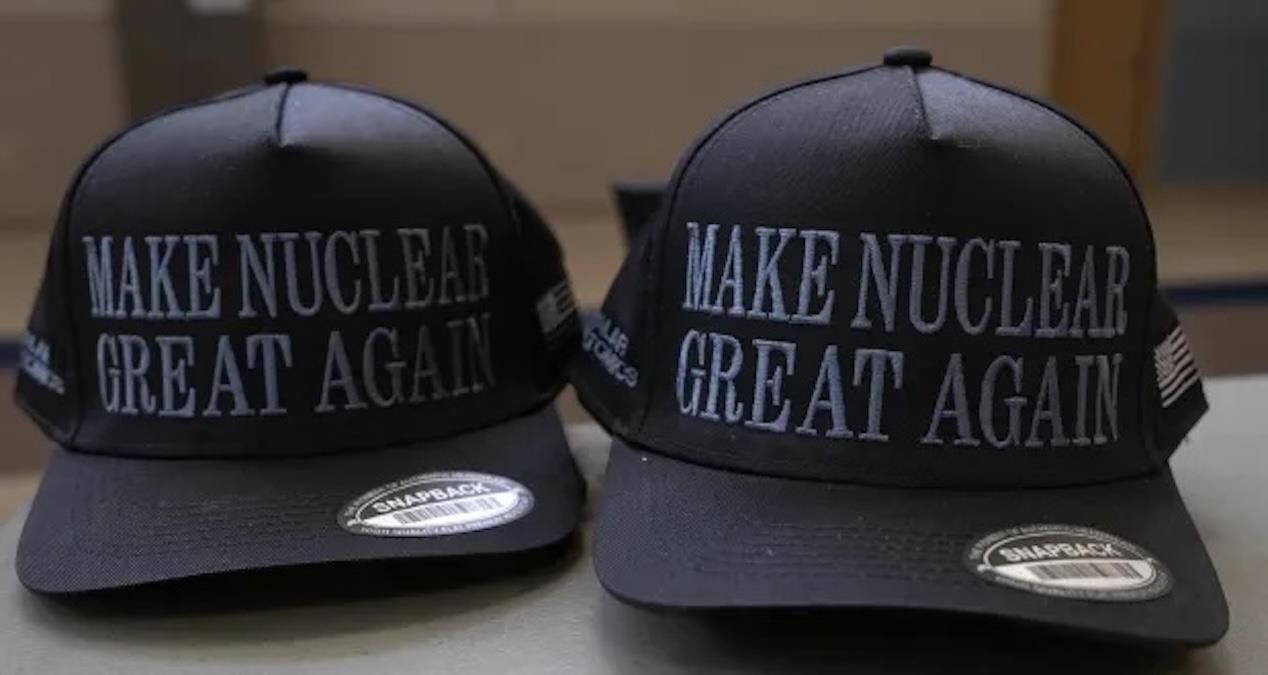
Despite Fukushima Trump Hands Nuclear Regulation To Silicon Valley
(MENAFN- Asia Times)
This article was originally published by ProPublica.
Last summer, a group of officials from the Department of Energy gathered at the Idaho National Laboratory, a sprawling 890-square-mile complex in the eastern desert of Idaho where the US government built its first rudimentary nuclear power plant in 1951 and continues to test cutting-edge technology.
On the agenda that day: the future of nuclear energy in the Trump era. The meeting was convened by 31-year-old lawyer Seth Cohen.
Just five years out of law school, Cohen brought no significant experience in nuclear law or policy; he had just entered government through Elon Musk's Department of Government Efficiency team.
As Cohen led the group through a technical conversation about licensing nuclear reactor designs, he repeatedly downplayed health and safety concerns. When staff brought up the topic of radiation exposure from nuclear test sites, Cohen broke in.
“They are testing in Utah,” he said.“I don't know, like 70 people live there.”
“But... there's lots of babies,” one staffer pushed back. Babies, pregnant women and other vulnerable groups are thought to be potentially more susceptible to cancers brought on by low-level radiation exposure, and they are usually afforded greater protections.
“They've been downwind before,” another staffer joked.
“This is why we don't use AI transcription in meetings,” another added.
ProPublica reviewed records of that meeting, providing a rare look at a dramatic shift underway in one of the most sensitive domains of public policy. The Trump administration is upending the way nuclear energy is regulated, driven by a desire to dramatically increase the amount of energy available to power artificial intelligence.
Career experts have been forced out and thousands of pages of regulations are being rewritten at a sprint. A new generation of nuclear energy companies - flush with Silicon Valley cash and boasting strong political connections - wields increasing influence over policy. Figures like Cohen are forcing a“move fast and break things” Silicon Valley ethos on one of the country's most important regulators.
The Trump administration has been particularly aggressive in its attacks on the Nuclear Regulatory Commission, the bipartisan independent regulator that approves commercial nuclear power plants and monitors their safety. The agency is not a household name. But it's considered the international gold standard, often influencing safety rules around the world.
The NRC has critics, especially in Silicon Valley, where the often-cautious commission is portrayed as an impediment to innovation. In an early salvo, President Donald Trump fired NRC Commissioner Christopher Hanson last June after Hanson spoke out about the importance of agency independence. It was the first time an NRC commissioner had been fired.
During that Idaho meeting, Cohen shot down any notion of NRC independence in the new era.
“Assume the NRC is going to do whatever we tell the NRC to do,” he said, records reviewed by ProPublica show. In November, Cohen was made chief counsel for nuclear policy at the Department of Energy, where he oversees a broad nuclear portfolio.
The aggressive moves have sent shock waves through the nuclear energy world. Many longtime promoters of the industry say they worry recklessness from the Trump administration could discredit responsible nuclear energy initiatives.
“The regulator is no longer an independent regulator - we do not know whose interests it is serving,” warned Allison Macfarlane, who served as NRC chair during the Obama administration.“The safety culture is under threat.”
A ProPublica analysis of staffing data from the NRC and the Office of Personnel Management shows a rush to the exits: Over 400 people have left the agency since Trump took office. The losses are particularly pronounced in the teams that handle reactor and nuclear materials safety and among veteran staffers with 10 or more years of experience. Meanwhile, hiring of new staff has proceeded at a snail's pace, with nearly 60 new arrivals in the first year of the Trump administration compared with nearly 350 in the last year of the Biden administration.
Some nuclear power supporters say the administration is providing a needed level of urgency given the energy demands of AI. They also contend the sweeping changes underway aren't as dangerous or dire as some experts suggest.
“I think the NRC has been frozen in time,” said Brett Rampal, the senior director of nuclear and power strategy at the investment and strategy consultancy Veriten.“It's a great time to get unfrozen and aim to work quickly.”
The White House referred most of ProPublica's questions to the Department of Energy, where, spokesperson Olivia Tinari said the agency is committed to helping build more safe, high-quality nuclear energy facilities.
“Thanks to President Trump's leadership, America's nuclear industry is entering a new era that will provide reliable, abundant power for generations to come,” she wrote. The DOE is“committed to the highest standards of safety for American workers and communities.”
Cohen did not respond to multiple requests for comment. The NRC declined to comment.
Blindsided by DOGEThe US has not had a serious nuclear incident since the Three Mile Island partial meltdown in 1979, a track record many experts attribute to a rigorous regulatory environment and an intense safety culture.
Major nuclear incidents around the world have only strengthened the resolve of past regulators to stay independent from industry and from political winds. A chief cause of Japan's Fukushima accident, investigators found, was the cozy relationship between the country's industry and oversight body, which opened the door for thin safety assessments and inaccurate projections overlooking the possible impact of a major tsunami.
“We knew regulatory capture led directly to Fukushima and to Chernobyl,” said Kathryn Huff, who was assistant secretary for the Office of Nuclear Energy during the Biden administration.
The US has barely built any nuclear power plants in recent decades. Only three new reactors have been completed in the last 25 years, and since 1990 the USS has barely added any net new nuclear electricity to its grid. Though about 20% of US energy is supplied by nuclear power plants, the fleet is aging. Some experts blame the slow build-out on the challenging economics of financing a multibillion-dollar project and the uncertainty of accessing and disposing of nuclear fuels.
But an increasingly vocal group of industry voices and deregulation advocates has blamed the slow build-out on overly cautious and inefficient regulators. Among the most powerful exponents of this view are billionaires Peter Thiel and Marc Andreessen; both venture capitalists have their own investments in the nuclear energy sector and are influential Trump supporters.
Andreessen camped out at Mar-a-Lago, Trump's private club in Florida, after Trump won the 2024 election, helping pick staff for the new administration.
In late 2024, Thiel personally vetted at least one candidate for the Office of Nuclear Energy, according to people familiar with the conversations.
Neither responded to requests for comment.
Four months into his second term, Trump signed a series of executive orders designed to supercharge nuclear power build-out.“It's a hot industry, it's a brilliant industry,” said Trump, flanked by nuclear energy CEOs in the Oval Office. He added:“And it's become very safe.”
Under those orders, the NRC was directed to reduce its workforce, speed up the timeline for approving nuclear reactors and rewrite many of its safety rules. The DOE - which has a vast nuclear portfolio, including waste cleanup sites and government research labs - was tasked with creating a pathway for so-called advanced nuclear companies to test their designs.

Legal Disclaimer:
MENAFN provides the
information “as is” without warranty of any kind. We do not accept
any responsibility or liability for the accuracy, content, images,
videos, licenses, completeness, legality, or reliability of the information
contained in this article. If you have any complaints or copyright
issues related to this article, kindly contact the provider above.
Most popular stories
Market Research

More Story




Comments
No comment