




403
Sorry!!
Error! We're sorry, but the page you were looking for doesn't exist.
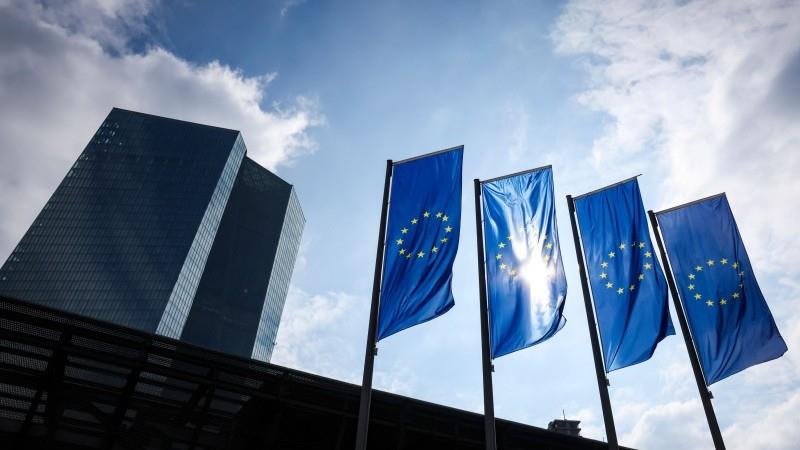
ECB Keeps Rates On Hold And Shifts To High Alert
(MENAFN- ING)
Until a few weeks ago, today's European Central Bank meeting would have seen a more heated debate on possible further rate cuts. The war in the Middle East, however, has changed everything. Instead of rate cuts, it's now rate hikes that might be on the table again. However, judging from the just-announced decision, a rate hike is not imminent. The change in tone and language in the policy announcement points to more uncertainty, but also signalled that – at least for now – the ECB will treat the energy price shock as a one-off, though it'll obviously remain on high alert.
Just for the record – though clearly not really relevant for future policy decisions despite a later cut-off date than usual – the latest round of ECB staff projections has GDP growth coming in at 0.9% in 2026, 1.3% in 2027 and 1.4% in 2028. Inflation is expected to come in at 2.6%, 2.0% and 2.1% over the next few years.
How to react to an oil price shock?Over the last 25 years, the ECB's reaction function to oil price shocks has clearly changed. Some would say evolved. What started with imminent monetary policy reaction became a more subtle focus on second-round effects and, finally, a distinction between supply and demand-driven energy price shocks. The ECB's delayed reaction to the inflation surge in 2022 was not so much based on an incorrect assessment of the energy price shock, but rather the initial ignorance of the fact that a supply-side shock had morphed into a demand-side shock.
At the current juncture, there are clear similarities but also differences with the 2022 situation. First of all, the energy price surge is still shy of what it was in 2022. Back then, Europe had to decouple from an important energy supplier (Russia). Currently, it is not so much energy production but rather transportation that pushes up prices. Needless to say that the longer the situation in the Strait of Hormuz continues, the higher the risk that transportation bottlenecks will also become production bottlenecks. Equally important is that the energy price shock isn't hitting the economy as it's coming out of a lockdown with boosted balance sheets. This time around, stretched financial positions will make it harder to pass on higher costs to customers.
In any case, at least at first glance, the current situation would qualify as a typical supply-side shock – which shouldn't necessitate a monetary policy reaction. As much as we believe in ECB magic, the central bank will not be able to end the war in the Middle East or bring down oil prices, unless they have any secret reserves in the basement of the EuroTower that they could sell to Europeans.
An inflation wave is in the making, from the direct impact of higher gas and oil prices on gasoline prices or retail energy prices next winter, to knock-on effects on transportation services, fertilisers and food prices. However, even one longer inflation wave does not have to be a concern. And, in fact, the only hurdle to calling this a typical supply side shock is the ECB's own institutional memory, its credibility as an inflation fighter and the fact that 'team transitory' turned out to be very wrong in 2022.
Press conference to shed more light on ECB's current thinkingLet's wait for the press conference, starting at 2:45pm CET, to hear what ECB President Christine Lagarde has to say and what the current ECB thinking is. Its 'good place' should be no more. For now, the ECB will instead be sitting in a panic room, waiting to see how the war in the Middle East evolves and whether memories of 2022 will prove to be useful or poor guidance. We expect the central bank to talk like a hawk but not to walk like a hawk – or better, to fly like a hawk. At least for now, that is.

Legal Disclaimer:
MENAFN provides the
information “as is” without warranty of any kind. We do not accept
any responsibility or liability for the accuracy, content, images,
videos, licenses, completeness, legality, or reliability of the information
contained in this article. If you have any complaints or copyright
issues related to this article, kindly contact the provider above.
Most popular stories
Market Research

More Story








Comments
No comment