




403
Sorry!!
Error! We're sorry, but the page you were looking for doesn't exist.
Msmes To Drive Credit Growth, But Structural Financing Gaps Persist: ICRAASSOCHAM Report
(MENAFN- KNN India)
New Delhi, Mar 19 (KNN) Micro, Small and Medium Enterprises (MSMEs) credit demand is likely to remain strong, even as structural constraints in access to finance persist, according to a joint report by ICRA Limited and the Associated Chambers of Commerce and Industry of India (ASSOCHAM).
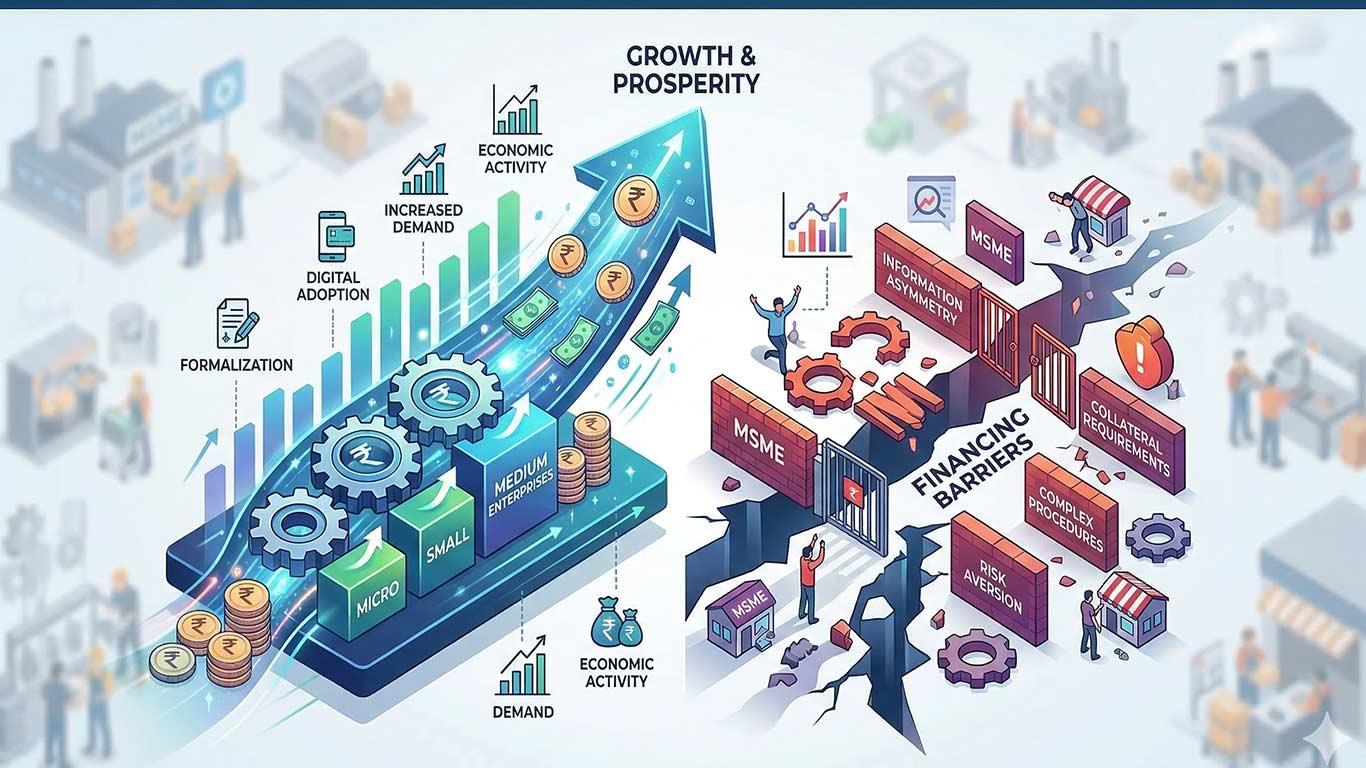
The report projects overall credit expansion at Rs 25.0–26.0 trillion in FY2025-26, reflecting a growth of 13.7–14.3 per cent year-on-year (YoY). MSMEs, along with retail segments, are expected to drive incremental lending, supported by improving economic activity, stronger balance sheets, and continued formalisation.
It notes that MSMEs remain central to India's economic structure, contributing significantly to employment, entrepreneurship, and regional development, while increasingly integrating into formal supply chains.
The report underscored,“MSMEs lie at the centre of India's employment, entrepreneurship, and local value creation ecosystem and foster inclusive growth. Though these units are small at the micro level, they collectively play a disproportionately large role in the economy by generating employment, promoting regional dispersal of growth, and enhancing export competitiveness.”
Saurabh Sanyal, Secretary General, ASSOCHAM, said MSMEs remain critical to employment generation, innovation, and regional growth, highlighting the need to strengthen access to finance for inclusive development.
Improved Visibility, But Persistent Gaps
The report highlights that policy support, revised classification norms, and formalisation efforts have improved credit visibility and borrower assessment. This has enabled lenders to expand access and increase MSMEs' share in incremental lending.
However, it cautions that“a large structural credit gap persists,” driven by“heterogeneous risk profiles, limited collateral and information opacity.” These constraints continue to restrict timely and adequate credit flow, particularly for smaller and less formalised enterprises.
Need for Alternative Financing Models
In light of these structural challenges, the report states that“traditional balance sheet lending alone will not be sufficient” to meet the evolving financing needs of MSMEs, highlighting the growing role of alternative mechanisms such as co-lending, securitisation and partnership-based models to enhance credit access and enable better risk sharing.
K. Ravichandran, Executive Director, ICRA Limited, noted that while the financial system is more resilient, evolving credit dynamics require innovative and partnership-led financing approaches to address MSMEs' diverse funding needs.
Asset Quality Stable, Some Moderation Ahead
On asset quality, the report notes that banking sector indicators remain strong, with gross non-performing assets at a decadal low, supported by steady recoveries and contained slippages.
At the same time, early signs of moderation are visible, with fresh slippages expected to rise and recoveries likely to ease, particularly in MSME and retail portfolios. Despite this, overall asset quality is expected to remain stable, with limited systemic impact.
Outlook
Looking ahead, credit growth is projected to moderate to Rs 23.5–25.0 trillion (11.3–12.0 per cent) in FY2026-27, reflecting normalisation after a high base rather than weakening demand. MSMEs are expected to continue playing a key role in sustaining credit expansion.
(KNN Bureau)

Legal Disclaimer:
MENAFN provides the
information “as is” without warranty of any kind. We do not accept
any responsibility or liability for the accuracy, content, images,
videos, licenses, completeness, legality, or reliability of the information
contained in this article. If you have any complaints or copyright
issues related to this article, kindly contact the provider above.
Most popular stories
Market Research

More Story








Comments
No comment