







403
Sorry!!
Error! We're sorry, but the page you were looking for doesn't exist.
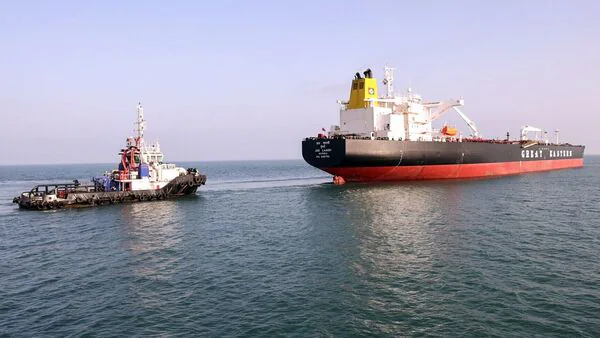
Indian-Flagged Tanker 'Jag Laadki' Reaches Gujarat From War-Zone, Says Adani Ports - Video Emerges
(MENAFN- Live Mint) Indian-flagged tanker 'Jag Laadki', carrying around 80,886 metric tonnes (MT) of crude oil, reached the Mundra Port in Gujarat on Wednesday, officials said. 'Jag Laadki' is the fourth vessel to reach India amid the West Asia conflict, and the second to dock at Adani group's Mundra port.Jag Laadki arrives! WATCH
According to news agency PTI, Adani Ports, which operates Mundra Port, said in a statement that the crude oil carried by Jag Laadki was sourced from the United Arab Emirates (UAE) and loaded at Fujairah Port there.
"Measuring 274.19 metres in length overall and 50.04 metres in beam, the tanker boasts a deadweight tonnage of approximately 164,716 tonnes and a gross tonnage of about 84,735 tonnes," it was quoted as saying.
'The tanker's arrival at the Mundra Port underscores the facility's critical role in handling substantial crude imports," it said.
"This delivery supports major refinery relies on such shipments to maintain operations and bolster India's energy security during supply disruptions in the region," Adani Ports added.
Also Read | Ray Dalio's grim 'final battle' at Strait of Hormuz warning - 'Watch out for...'“The port provided the safe berthing of the vessel and maritime coordination in safeguarding vital energy lifelines of India,” it said.
Fujairah Port in UAE faced drone and missile attacks during the ongoing Israel-US and Iran war.
How many ships have come to India from conflict-hit Middle East so far?There are four Indian-flagged vessels or ships that have safely navigated through the war zone in West Asia or the Middle East.
On Tuesday, Liquefied Petroleum Gas (LPG carrier 'Nanda Devi docked at Vadinar port in Gujarat's Devbhumi Dwarka district, carrying 46,500 metric tonnes of LPG, navigating through the Strait of Hormuz.
On Monday, another vessel - 'Shivalik ' - carrying LPG docked at Mundra Port.
Also Read | India taps Iran for safe passage of six LPG, two oil vessels via Hormuz straitThe two LPG carriers started their journey on March 13 and crossed the Strait of Hormuz early on March 14.
Ministry of External Affairs (MEA) spokesperson Randhir Jaiswal said on March 14 that two Indian ships - Shivalik and Nanda Devi - crossed the Strait of Hormuz.
"Each of the ships is carrying in excess of 46,000 metric tons of LPG, with a cumulative of 92,700 metric tons," Jaiswal had said.
Also Read | Why is US allowing Iran to continue shipping oil through Hormuz? Bessent revealsAnother tanker, Jag Prakash, carrying gasoline from Oman to Africa, had previously safely crossed the strait and is en route to Tanzania, PTI Reported.
According to Marinetraffic, 'JAG PRAKASH' is a Oil/Chemical Tanker, sailing under the flag of INDIA. Her length overall (LOA) is 183 meters and her width is 32.22 meters.
Originally, there were 28 Indian-flagged vessels in the Strait of Hormuz when the war in West Asia broke out following US-Israel attacks on Iran. Of these, 24 were on the west side of the strait and 4 on the east side. In the last one week, two vessels from each side have managed to sail to safety.
Blockade of the Strait of HormuzThe conflict between the US, Israel and Iran has led to a blockade of the Strait of Hormuz, the main transit route for Gulf energy supplies.
The Strait of Hormuz, the narrow waterway that connects the Persian Gulf to the open ocean, has effectively been shut following the US and Israel attack on Iran and Tehran's sweeping retaliation.
Also Read | Strait of Hormuz Closure: 21 global stocks to benefit from US-Iran warWhile India has partly offset crude supply disruptions by sourcing oil from countries including Russia, gas supplies have been curtailed to industrial users and LPG availability to commercial establishments such as hotels and restaurants has been reduced.
India's crude importsIndia, which relies heavily on energy shipments from the region, is the world's fourth-largest buyer of LNG and the second-largest buyer of liquefied petroleum gas (LPG).
Also Read | Australia, Japan snub Trump's Strait of Hormuz coalition planIndia imports about 88 per cent of its crude oil, 50 per cent of natural gas and 60 per cent of LPG needs, ANI reported. Before the US-Israel strikes on Iran on February 28 and Tehran's retaliation, more than half of India's crude imports, about 30 per cent of gas and 85-90 per cent of LPG imports came from Middle East countries such as Saudi Arabia and the UAE.
(With inputs from agencies)

Legal Disclaimer:
MENAFN provides the
information “as is” without warranty of any kind. We do not accept
any responsibility or liability for the accuracy, content, images,
videos, licenses, completeness, legality, or reliability of the information
contained in this article. If you have any complaints or copyright
issues related to this article, kindly contact the provider above.
Most popular stories
Market Research

More Story






Comments
No comment