





403
Sorry!!
Error! We're sorry, but the page you were looking for doesn't exist.
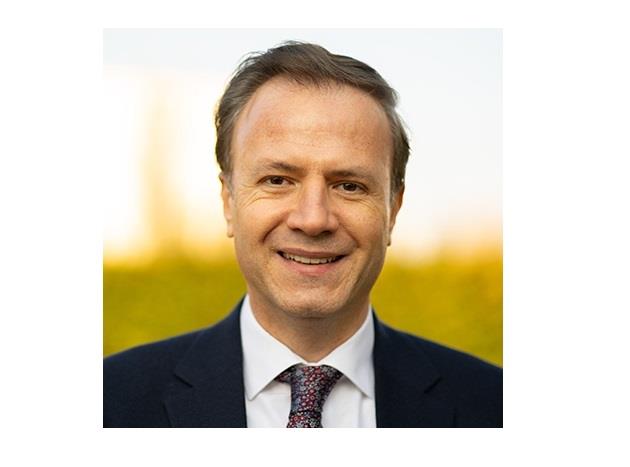
UNEP Spotlights Azerbaijan's Green Growth And Climate Resilience Potential (Exclusive)
(MENAFN- Trend News Agency)
BAKU, Azerbaijan, March 17. Azerbaijan has
significant potential for developing a green economy, including
opportunities in renewable energy, sustainable transport, and
circular economic models, Arnold Kreilhuber, Director of the Europe
Office of the United Nations Environment Programme (UNEP), said in
an interview with Trend.
Kreilhuber noted that Azerbaijan plays a significant role in the wider South Caucasus and Caspian Sea region.
"While hydrocarbons have driven economic growth, Azerbaijan plans to diversify its economy through investments in renewable energy, transport infrastructure, and digitalization, which have the potential to further enhance its strategic geographic position linking Europe and Asia and help generate economic, social, and environmental benefits while supporting long-term development goals," he said.
According to him, several sectors in Azerbaijan show strong potential.
"Renewable energy stands out due to significant solar and wind resources, especially in the Caspian coastal areas. Investments in green transport and logistics, including electrification of corridors and sustainable ports and railways, can also support low-carbon trade," Kreilhuber said.
He noted that generally, there is potential for advancing and incentivizing more circular economic models, impacting waste generation and improving waste management, for example, through recycling systems, plastic reduction, and extended producer responsibility schemes.
"Climate-smart farming, soil restoration, and efficient irrigation are among the sustainable agriculture and land management options that can help reduce land degradation and desertification. Furthermore, ecosystem restoration and nature-based solutions can provide coastal and wetland protection, forest landscape restoration, and climate adaptation, as well as flood and drought risk reduction.
UNEP, as a member of the UN Country Team in Azerbaijan, works in close collaboration with sister UN entities and the government.
In this context, UNEP will help promote ecosystem protection and climate resilience, green growth, and a just transition as a strategic national priority," he added.
He emphasized that in order to realize this plan by 2030, UNEP stands ready to support Azerbaijan, especially in the areas of strengthened national policies and institutional capacities to enhance data-driven preparedness, response, and resilience to climate and environment-related risks and hazards across key sectors.
"Such measures would include strengthening environmental impact assessment and strategic environmental assessment systems, alongside improved industrial emissions monitoring and reporting aligned with international standards.
This, in turn, would help in promoting cleaner production technologies, energy efficiency upgrades, and responsible water stewardship, particularly in extractive and heavy industrial sectors. Pollution control and chemical management, including the tracking of hazardous waste, are also critical. In addition, the inclusion of the private sector in such measures could include corporate environmental disclosure, enhancing environmental, social, and governance practices, and making use of carbon pricing mechanisms or internal carbon accounting. These efforts should be supported by capacity-building for both regulators and industry," Kreilhuber said.
He noted that Azerbaijan, like every other country, needs to choose its own path to sustainability, based on its resources, needs, and vision.
"Building on Azerbaijan's legacy as host of the Climate Change COP29 in 2024, this can include accelerating the deployment of renewable energy through enabling policies and private-sector partnerships, as well as integrating climate and biodiversity objectives into national development strategies. Or the scaling up of green finance instruments, such as green bonds, blended finance, and climate funds, and enhancing data systems for emissions, ecosystems, and pollution could also be considered.
In addition, supporting innovation and small and medium-sized enterprises in clean technologies and promoting public-private partnerships for circular economy solutions can help drive green growth," he noted.
According to him, UNEP proudly supports the littoral States of the Caspian Sea through the Tehran Convention for the protection of the marine environment of the Caspian Sea, and therefore, we would also encourage the continued strengthening of regional cooperation on shared ecosystems.
"Finally, to ensure that the people of Azerbaijan increasingly benefit from inclusive green growth, protected ecosystems, and climate resilience, it is important that national policies are aligned with the long-term sustainability and environmental targets Azerbaijan has set itself, including through its Nationally Determined Contributions under the Paris Agreement and other multilateral environmental agreements Azerbaijan is a party to," Kreilhuber concluded.

Legal Disclaimer:
MENAFN provides the
information “as is” without warranty of any kind. We do not accept
any responsibility or liability for the accuracy, content, images,
videos, licenses, completeness, legality, or reliability of the information
contained in this article. If you have any complaints or copyright
issues related to this article, kindly contact the provider above.
Most popular stories
Market Research

More Story







Comments
No comment