


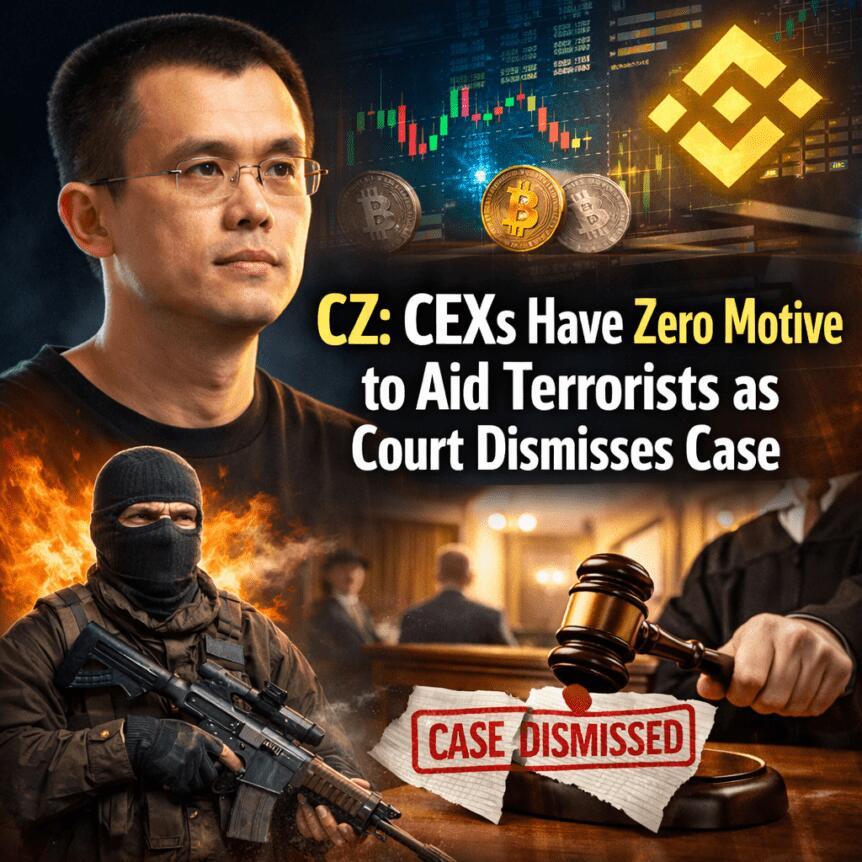
CZ: Cexs Have Zero Motive To Aid Terrorists As Court Dismisses Case


- The Southern District of New York judge dismissed the case at the pleading stage, citing an insufficient link between Binance's operations and the listed attacks. The plaintiffs represented 535 individuals connected to 64 attacks dating from 2016 to 2024, attributed to groups including Hezbollah, Hamas, ISIS, al-Qaeda and Palestinian Islamic Jihad. Changpeng Zhao (CZ) asserted on X that centralized exchanges have“zero motive” to assist terrorists, arguing that such activity would not generate trading revenue and would likely be short-livedDeposits. The court's decision narrows the path for victims pursuing anti-terrorism claims under statutes such as the US Anti-Terrorism Act and the Justice Against Sponsors of Terrorism Act. Binance has faced separate scrutiny over sanctions-related transactions and Iran-linked activity, including pushback against Senate probes and media reports that alleged extensive ties to sanctioned entities.
Sentiment: Neutral
Market context: The ruling arrives amid a broader backdrop of intensified regulatory scrutiny of centralized exchanges, including debates over sanctions enforcement, AML/KYC standards and the role of crypto platforms in cross-border law enforcement efforts. While the decision limits one legal avenue for victims, it does not resolve ongoing questions about how large exchanges respond to illicit activity and geopolitical sanctions.
Why it mattersThe SDNY's dismissal signals that, at least in this case, plaintiffs faced a high bar in proving direct, actionable links between Binance's services and the specific terrorist attacks cited in the complaint. The decision emphasizes the difficulty of proving causation for criminal actions that occur through a broad, permissionless ecosystem where many intermediaries and third parties could be involved. For traders and institutions watching regulatory risk, the ruling reinforces the boundary between platform responsibility and the broader ecosystem in which crypto assets circulate.
From a policy vantage point, the case highlights the tension between victims seeking redress under anti-terrorism statutes and the practical standards courts apply to show that a platform's compliance practices materially facilitated or enabled wrongdoing. The judge's ruling does not absolve Binance of potential wrongdoing in other contexts, but it does illustrate how courts assess linkages between a platform's operations and the crimes alleged. In the process, it preserves the possibility that future amendments to complaints, if sufficiently grounded, could reframe liability questions under different facts or legal theories.
Beyond the courtroom, Binance's public posture remains that it endeavors to operate within regulatory expectations while contesting allegations that rely on incomplete or mischaracterized information. The exchange has repeatedly argued that its internal controls, risk models and cooperation with authorities are designed to prevent illicit activity, and it has asserted that certain allegations-particularly those tied to sanctions evasion-are overstated or unfounded. The recent court decision, while narrow, interacts with a broader narrative about how exchanges balance rapid, global crypto trading with stringent compliance obligations.
What to watch next- Whether plaintiffs pursue an amended complaint within the 60-day window noted by the judge, potentially re framing allegations or adding new evidence to strengthen causation links. Binance's ongoing responses to regulatory inquiries, including statements addressing Senate probes and sanctions-related reporting, and how the company frames its compliance posture in light of evolving rules. Regulatory developments surrounding Iran-related and other sanctions-compliance matters, as policymakers weigh enforcement priorities and the role of major crypto platforms in monitoring cross-border flows. Subsequent court activity, including any appeals or related actions that might test different legal theories or damages frameworks under anti-terrorism statutes.
- U.S. District Court for the Southern District of New York dismissal order (PDF) detailing the court's rationale for ruling at the pleading stage. Original court filing referenced in coverage, including the inclusion of 535 plaintiffs connected to 64 attacks (2016–2024). Changpeng Zhao's X post remarking on the economics of centralized exchanges and their lack of motive to engage with terrorists. Binance's response to Senate inquiries and related reporting discussed in coverage of sanctions and Iran-linked activity.
The decision in the SDNY case marks a notable moment in crypto litigation, illustrating how courts evaluate the relationship between a large exchange's operations and criminal acts pursued by external actors. While the ruling narrows the path for the plaintiffs, it does not preclude other lawsuits or investigations that might pursue different factual or legal avenues. In the immediate aftermath, Binance pressed a cautious but defiant stance on the sanctions-related allegations, reiterating that a February inquiry relied on information the firm described as false and lacking credible substantiation. The exchange emphasized its commitment to compliance and cooperation with authorities while warning against conflation of isolated incidents with systemic failures.
As the industry navigates a landscape of looming regulatory expectations, the case underscores the importance of robust AML/CFT controls, transparent transaction monitoring, and proactive risk management-elements that policymakers argue are essential to preserving the integrity of crypto markets. It also highlights how defendants in high-profile cases must balance public diplomacy with legal strategy, especially when countering narratives that tie crypto platforms to violent acts or sanctioned networks. In this environment, market participants-ranging from retail traders to institutional buyers-will be closely watching how courts interpret platform responsibilities and how regulators adapt their guidance to evolving technologies and use cases.
What to watch next- The 60-day window for an amended complaint, which could shift pleadings and potentially introduce new factual claims. Binance's continued engagement with U.S. lawmakers and regulators as scrutiny around Iranian-linked transactions and broader sanctions compliance persists. Any new court actions related to similar theories of liability, including potential appeals or separate lawsuits that challenge platform practices or risk controls.

Legal Disclaimer:
MENAFN provides the
information “as is” without warranty of any kind. We do not accept
any responsibility or liability for the accuracy, content, images,
videos, licenses, completeness, legality, or reliability of the information
contained in this article. If you have any complaints or copyright
issues related to this article, kindly contact the provider above.


Comments
No comment