



403
Sorry!!
Error! We're sorry, but the page you were looking for doesn't exist.
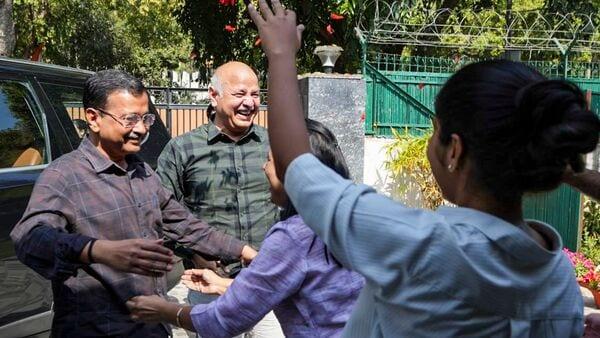
Why Delhi Court Cited A 'Dominican Drug Dealer' Trial In US While Discharging Kejriwal, Others In Liquor Case
(MENAFN- Live Mint) A Delhi court on 27 February, while discharging all 23 accused in the liquor policy case, questioned the Central Bureau of Investigation over 'labelling' a group of alleged liquor businessmen from southern India as the "south group" in its chargesheet.
The court discharged former Delhi chief minister Arvind Kejriwal and his ex-deputy Manish Sisodia, as well as Telangana politician K Kavitha and 20 others, in the high-profile corruption case known as the Delhi Liquor Policy scam.
Also Read | Delhi court discharges Kejriwal, Sisodia in liquor policy caseThe special CBI court, while dismissing the CBI and ED cases in the Delhi liquor policy, questioned the conduct of the two investigating agencies for relying solely on the statements of approvers who had been granted pardons in the cases.
“The Court considers it necessary to place on record its concern with the repeated and deliberate use of the expression 'South Group' by the investigating agency to describe a set of accused persons, ostensibly on the basis of their regional origin or place of residence,” says the order by Special Judge Jitender Singh of the Rouse Avenue Court.
“If the same chargesheet would have been filed in a court in Chennai, it would have been perceived offensive,” the judge observed during the hearing on Friday.
“Such a nomenclature finds no foundation in law, does not correspond to any legally cognisable classification, and is wholly alien to the statutory framework governing criminal liability."
North vs South?The section sub-headed 'Use of the Phrase 'South Group'', said it is equally significant that no comparable regional descriptor has been employed for the remaining accused persons; the prosecution narrative does not speak of any 'North Group' or similar categorisation.
"Region-based labelling carries an avoidable undertone and is capable of creating a prejudicial impression. It detracts from the settled requirement that criminal proceedings must remain dispassionate, evidence-centric, and insulated from extraneous considerations,” it added.
Such reference, the court said in the order, cannot, however, be construed as approval or endorsement of the terminology itself.
Also Read | Watch: Kejriwal breaks down, sobs after discharge in Delhi excise policy case“The continued use of this label, despite the absence of any legally sustainable basis, carries a real risk of colouring perception, causing unintended prejudice, and diverting focus from the evidentiary material," the judge said.
The Dominican drug dealer case referenceThe court cited a 2000 case (States v. Cabrera) wherein the US Court of Appeals for the Seventh Circuit“treated the issue as going to the very root of a fair criminal trial”.
The US court“went so far as to set aside the conviction itself on account of the repeated use of identity-based terminology... where such identity had no bearing on the elements of the offence", the Delhi court order seen by LiveMint said.
'The government's repeated references to the defendants as 'Dominican drug dealers' were improper. The ethnicity or national origin of a defendant is not relevant to proving the elements of a crime. Such references invite the jury to draw impermissible inferences based on nationality rather than evidence, and they risk appealing to bias rather than reason," the US Court order had said as cited by the Delhi court order on Friday.
The term“Dominican drug dealers” is a phrase that has been used in some criminal cases - particularly in the US - to refer to drug trafficking groups involving individuals of Dominican nationality or origin.
What was the 'South Group' or 'South Lobby'?The 'South group" - or“South Lobby”, as referred to in CBI and Enforcement Directorate (ED) documents - was the label given to a cluster of liquor businessmen, largely from southern India, who allegedly had paid kickbacks to key Aam Aadmi Party (AAP) leaders in exchange for favourable treatment under Delhi's 2021-22 excise policy.
Also Read | Posters invoking Kejriwal surface in DelhiThe agencies alleged that funds were routed through hawala transactions and shell companies, ultimately funding the AAP's election campaign in Goa.
K Kavitha, the Telangana politician and daughter of former chief minister K Chandrasekhar Ra, was among those named in connection with this alleged group. She was arrested by the ED in March 2024 and spent months in custody before being granted bail.
The continued use of this label... carries a real risk of colouring perception, causing unintended prejudice, and diverting focus from the evidentiary material.The investigating agencies said the members of the 'South Lobby', which sought to swing the policy in its favour with exorbitant profits for liquor wholesalers, had stayed at the hotel in the national capital from 14 March to 17 in 2021 and used its business centre to make photocopies of some documents.
During their stay, they had allegedly met Vijay Nair, the suspected middleman who was striking the deal with liquor traders to formulate the policy in their favour. The CBI also recovered two suggestions about the policy that were discussed in chats among the South Lobby members, the officials had said.
Nair, an AAP spokesperson, who was arrested in the case, was released on bail in September 2024 by the Supreme Court.
(With agency inputs)

Legal Disclaimer:
MENAFN provides the
information “as is” without warranty of any kind. We do not accept
any responsibility or liability for the accuracy, content, images,
videos, licenses, completeness, legality, or reliability of the information
contained in this article. If you have any complaints or copyright
issues related to this article, kindly contact the provider above.
Most popular stories
Market Research

More Story





Comments
No comment