




403
Sorry!!
Error! We're sorry, but the page you were looking for doesn't exist.
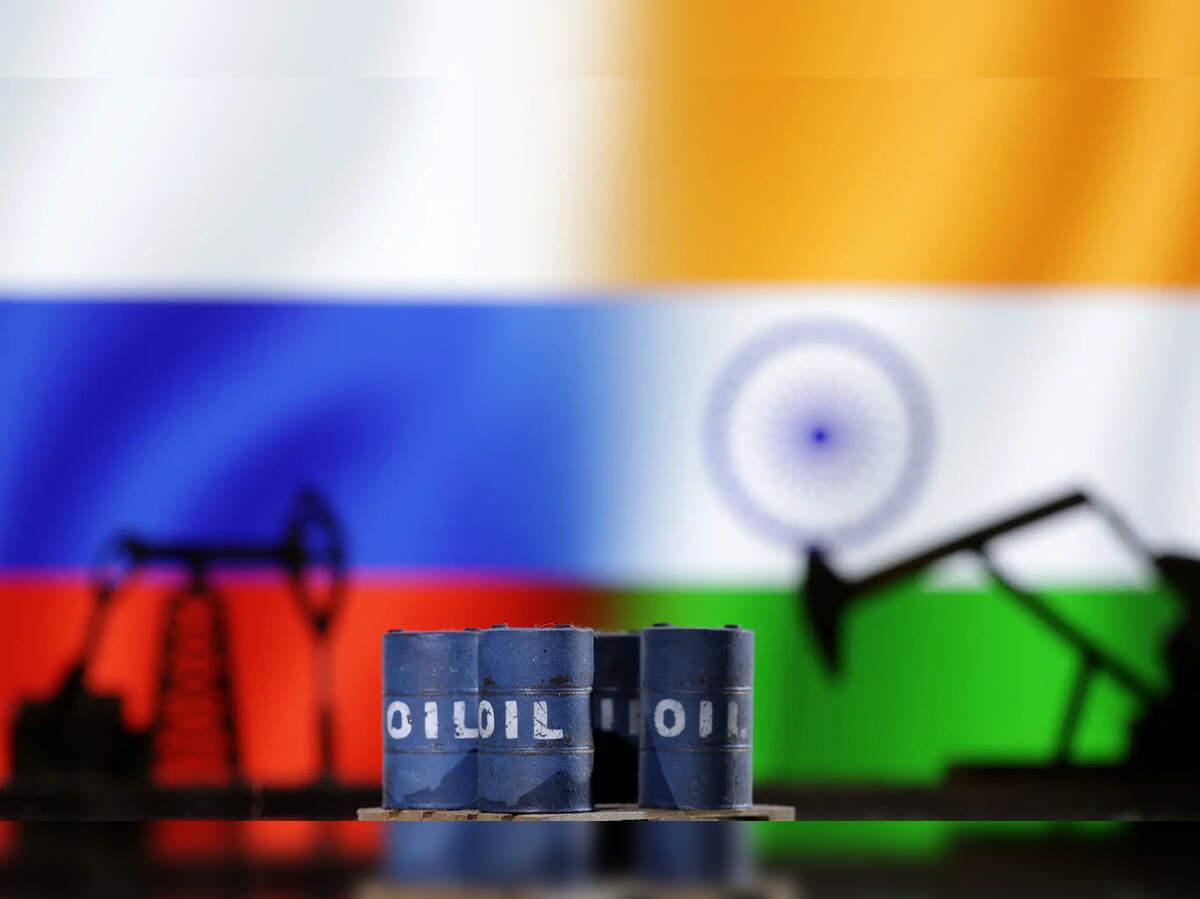
How A Supreme Court Ruling And A Russian Oil Gambit Rewrote India's Trade Destiny
(MENAFN- The Arabian Post)
By Ashok Nilakantan Ayers
NEW YORK: When the Supreme Court of the United States struck down Donald Trump's sweeping global tariffs on February 20, delivering a 6–3 verdict that the International Emergency Economic Powers Act of 1977 confers no authority to impose broad-spectrum duties without Congressional approval, the most consequential reverberations were felt not in Brussels or Beijing - but in New Delhi.
For India, the ruling did not arrive in isolation. It landed atop a fortnight of dizzying trade diplomacy: a freshly minted interim framework with Washington, a strategic retreat from Russian oil, and the tantalising prospect of a $530 billion bilateral trade relationship finally within reach.
What had begun as a punitive tariff war was, suddenly and improbably, becoming something else entirely - an opportunity. The story of how India got here is one of leverage courted through sacrifice, and of New Delhi playing its most complex hand in a generation.
How India got there – from 50% to zero, the cost of escaping a tariff trap. Between August 2025 and the first week of February 2026, Indian exporters lived through something close to an economic emergency. The United States had imposed a staggering 50 percent composite tariff on a broad swath of Indian goods - a 25 percent reciprocal rate compounded by an additional 25 percent penalty explicitly designed to punish India for what Washington called its“profiteering” from cheap Russian crude. After the Supreme Court verdict, a 10 per cent tariff is applicable for India as per Trump's latest order.
Sectors that are the backbone of India's working economy - textiles, garments, gems and jewellery, leather goods - faced what the Global Trade Research Initiative estimated could be a 70 percent collapse in export volumes to America, endangering hundreds of thousands of jobs from the diamond polishing workshops of Surat to the garment factories of Tiruppur and the craft clusters of Jaipur.
After ten months of escalating tariffs that pushed duties on Indian goods as high as 50 percent, the two countries hit reset on February 6. The price India paid was steep, and not merely commercial. President Trump agreed to remove the additional 25 percent tariff on imports from India in recognition of India's commitment to stop purchasing Russian Federation oil.
New Delhi had to abandon, at least formally, its most strategically advantageous energy relationship - one that had seen Russian crude's share of India's oil imports climb from near-zero before 2022 to nearly 40 percent at the peak. The executive order removed the additional 25 percent tariff; US officials will monitor and recommend reinstating it if India resumes oil procurement from Russia. The sword, in other words, remains unsheathed.
Yet New Delhi's trade negotiators, led by Commerce Minister Piyush Goyal, extracted something meaningful in return. The United States lowered the reciprocal tariff on India from 25 percent to 18 percent, given India's willingness to align with the US to confront systemic imbalances in the bilateral trade relationship and shared national security challenges.
And critically, subject to the successful conclusion of the Interim Agreement, the US will remove even this reduced 18 percent tariff on a wide range of goods including pharmaceutical products, gems and diamonds, and aircraft parts.
The anatomy of India's export interest in the United States is not that of a sophisticated industrial power seeking market access for high-value machinery. It is, at its core, a story of labour-intensive industries that employ tens of millions of people in small towns and semi-urban clusters, industries where global competitiveness is measured in percentage points of tariff differential. The question is what sectors benefit immediately and what needs to stay protected.
Pharmaceuticals represent India's single most strategically important export to the US, valued at approximately $13 billion in 2024, with India holding the largest number of US FDA-compliant plants outside America - more than 262, including facilities producing active pharmaceutical ingredients.
The sector had been spared the worst of Trump's tariff blitz, but a looming Section 232 investigation into pharmaceutical imports - framed as a national security concern - threatened to upend that protection. Contingent on the findings of the US Section 232 investigation of pharmaceuticals and pharmaceutical ingredients, India will receive negotiated outcomes with respect to generic pharmaceuticals and ingredients.
For New Delhi, securing a clear carve-out for generics in the full Bilateral Trade Agreement is not optional - it is existential. American consumers depend on Indian generics for affordability; Indian manufacturers depend on American prescriptions for survival. The BTA negotiators must now codify this mutual dependence into durable legal text before a future administration's national security review can unravel it.
See also Trumps Economic Policies Drowned Out By The Drumbeat Of Minneapolis OutrageGems and jewellery tell a more immediate story of revival. Commerce Minister Piyush Goyal hailed the zero duty on gems and diamonds exported to the United States, noting that several Indian goods, including pharmaceutical products and smartphones, will now attract zero duties.
Gems and jewellery exports see tariffs reduced from 50 percent to 18 percent, with zero-duty market access secured for major categories including diamonds, platinum, and coins. For the diamond polishers of Surat, who process roughly 90 percent of the world's rough diamonds and have watched their margins disintegrate under a 50 percent tariff wall, this is the difference between survival and closure.
The challenge in the full BTA will be locking in these gains permanently - ensuring that a future dispute over, say, Indian digital taxes, cannot be used as leverage to reimpose duties on Surat's workshops. Garments and textiles face perhaps the most competitive battleground. Tariffs on textile exports are reduced from 50 percent to 18 percent, with silk receiving zero-duty access. India holds a 14 percent share of US imports in cotton apparel.
But with the US imposing tariffs of 20 percent on Bangladesh exports and similar rates on Vietnam and Cambodia, India's competitiveness depends on securing tariff relief in the final agreement. A mere 2-percentage-point advantage over Bangladesh is not the prize New Delhi's garment exporters had in mind.
The BTA negotiations must push for deeper concessions - ideally toward zero or near-zero duties - to give Indian garment makers a structural edge over their South and Southeast Asian competitors.
Agriculture is the domain where India drew its hardest line, and largely held it. Trade Minister Piyush Goyal said the agreement safeguards farmers' interests and rural livelihoods by“completely protecting sensitive agricultural and dairy products,” while imports of genetically modified agricultural products would not be directly allowed. For agricultural exports from India to the US, zero reciprocal tariff will be applied to spices, tea, coffee, coconut and coconut oil, areca nut, cashews, chestnuts, and many fruits and vegetables.
The political logic is unassailable: India's farm sector employs over 40 percent of the workforce, and any prime minister who allows American genetically modified soya and wheat to flood Indian markets without adequate protection does so at enormous electoral peril. The full BTA must entrench these protections with safeguard clauses, tariff-rate quotas rather than blanket access, and clear anti-dumping provisions.
The numbers involved are staggering. India intends to purchase $500 billion of US energy products, aircraft and aircraft parts, precious metals, technology products, and coking coal over the next five years. Add India's current $86 billion in annual exports to the US, scale those with the tariff reductions already secured, and the bilateral trade relationship could realistically exceed $530 billion in annual flows by the end of the decade - roughly triple the current level.
Negotiators from both nations are gathering in Washington for a three-day meeting starting February 23 to finalise the legal text, with the interim agreement expected to be signed in March and implemented by April 2026. But the architecture of the full BTA - the comprehensive agreement that must follow the interim deal - is where the real negotiating battle lies. The interim framework is, in the blunt assessment of trade lawyers, not legally binding.
The agreement is not legally binding and could be changed by future presidential action unless codified through legislation in both nations. India's negotiators know this. The EU-India free trade deal, concluded in late January, offered a stark contrast: the EU-India agreement will eliminate tariffs on over 90 percent of goods traded between the two, with textiles, apparel, marine products, leather, gems, and jewellery incurring zero duty once it comes into force. That is the benchmark New Delhi will now use in Washington's corridors.
The sectors that remain the most fraught in BTA negotiations include digital trade - India's 6 percent equalisation levy on online advertising remains a live irritant - and intellectual property rights, where US pharmaceutical and technology companies have long complained about India's patent regime.
India will resist any weakening of its compulsory licensing provisions, which allow generic manufacturers to produce life-saving medicines without paying full royalty rates to Western patent holders. This will be among the hardest fights of the entire negotiation. So what will the dirty tricks department of Trump do now? The Supreme Court's decision to invalidate the IEEPA tariffs did not disarm the White House - it merely redirected its arsenal.
See also Jamaat-e-Islami Forges Ahead Bridging Gap With Dominant BNP Before Bangladesh PollsGiven India's IEEPA tariffs are now struck down, Trump signed an executive order instituting a temporary 10 percent global tariff under Section 122 of the Trade Act of 1974, allowing unilateral baseline duties lasting up to 150 days. The administration has also signalled aggressive use of Section 301 investigations - which can impose tariffs on countries deemed to engage in unfair trade practices - and Section 232 national security reviews targeting automobiles, pharmaceuticals, and semiconductors.
For India, the Section 232 pharmaceutical investigation is the most immediate threat. Should the administration conclude, as some White House advisers have argued, that dependence on Indian generic drugs constitutes a national security vulnerability, it could impose targeted tariffs on Indian pharma exports under legal cover that the Supreme Court would be far less likely to strike down.
The BTA's pharmaceutical chapter must therefore include a binding commitment from Washington to exclude India from any future Section 232 pharmaceutical tariff - a demand New Delhi will have to fight for hard.
The US has also issued an executive order proposing to impose 25 percent tariffs on countries trading with Iran, where India may have some risk exposure, requiring careful examination and possible special carve-outs under the BTA.
The pattern is clear: the Trump administration views tariff threats as a permanent diplomatic instrument, to be deployed not just in trade disputes but in geopolitical coercion. Any trade deal that does not include robust dispute resolution mechanisms and clear escape clauses protecting India from weaponised Section 232 and 301 investigations will be perpetually vulnerable to executive aggression.
So what is Russian oil bought in this new equation now? Leveraged trade negotiation or transformed one. India's decision to formally commit to halting Russian oil imports was the most geopolitically significant concession of the entire framework.
India had significantly reduced its purchase of Russian crude from a peak of 40 percent of its total imports to less than 25 percent in December, but state refiners have not stopped, and Russia has noted it received no formal communication from the Indian government indicating termination of purchases.
The ambiguity is deliberate - and characteristically Indian. New Delhi has long mastered the art of strategic ambiguity, making commitments it intends to honour partially, or conditionally, or at a pace that preserves maximum optionality.
What India gave up in publicly aligning with Washington's anti-Moscow energy stance, it partially recouped in bargaining capital. Having sacrificed its cheapest oil source, New Delhi now arrives at BTA negotiations not as a reluctant partner but as a country that has paid a visible geopolitical price for the relationship.
That sacrifice should, in theory, translate into greater Washington flexibility on pharma patents, digital trade, and agriculture - the three domains where India's core interests are most at risk. Whether Modi's negotiators are skilled enough, and Washington's trade hawks sufficiently generous, to convert that geopolitical goodwill into durable trade concessions is the central question of the months ahead.
The convergence of the Supreme Court's IEEPA ruling and the interim trade framework has created an unusual moment of openness in US trade policy - one that is unlikely to last. Trump will use Section 301, 232, and other tools to reassert executive trade authority. Congressional appetite for a comprehensive free trade agreement with India is modest at best. The 150-day window provided by the Section 122 temporary tariff creates an artificial urgency that Washington may exploit to extract maximum concessions before the legal landscape shifts again.
India's task between now and the finalisation of the BTA - likely late 2026 or 2027 - is to convert the gains of the interim framework into binding legal architecture: zero duty on pharma and gems, structural protection for agriculture and dairy, genuine competitiveness for garment exporters, and iron-clad insulation against future national security tariff gambits. The $530 billion prize is real. So is the risk that, without a legally robust text, it remains permanently within reach but never quite in hand. (IPA Service)
The article How A Supreme Court Ruling And A Russian Oil Gambit Rewrote India's Trade Destiny appeared first on Latest India news, analysis and reports on Newspack by India Press Agency).

Legal Disclaimer:
MENAFN provides the
information “as is” without warranty of any kind. We do not accept
any responsibility or liability for the accuracy, content, images,
videos, licenses, completeness, legality, or reliability of the information
contained in this article. If you have any complaints or copyright
issues related to this article, kindly contact the provider above.
Most popular stories
Market Research

More Story






Comments
No comment