





403
Sorry!!
Error! We're sorry, but the page you were looking for doesn't exist.
The Rise And Fall (And Rise Again) Of Gold Prices What's Going On?
Author: David McMillan
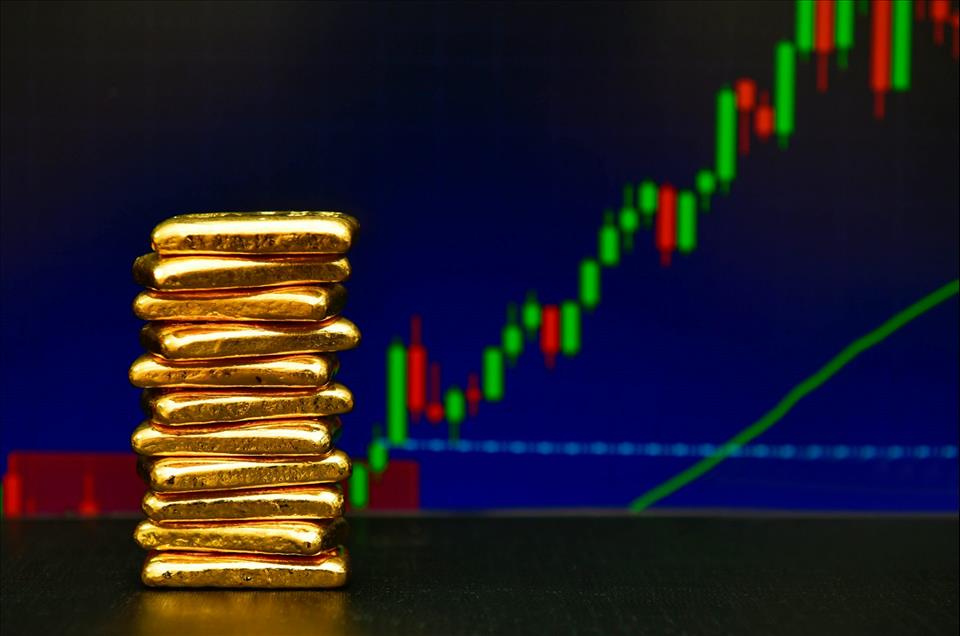
(MENAFN- The Conversation) In late January, the gold price reached an all-time peak of around US$5,500 (£4,025). January 30 saw one of the largest one-day falls in prices, which sank by nearly 10% after hitting a record high only the day before.

This was a dramatic about-turn, from a bullish gold market that rose by more than 300% in the last decade, over 150% in the last five years and (perhaps more pertinently) by 75% since US president Donald Trump's “liberation day” tariffs announcement. To make sense of it, we need to understand some of the factors that led to the rise.
The reasons broadly break down into two categories. The first concerns market uncertainty and gold in its“safe haven” role. As a financial asset, gold offers no income, unlike shares (which might provide dividends) or bonds (which offer coupon payments). So during good times, gold is eschewed for the former and during periods of high interest rates for the latter.
However, during periods of heightened risk and uncertainty, the tangibility of gold gives it value. This was seen during the financial (and subsequent sovereign debt) crisis and at the beginning of the COVID period. Here both share prices and interest rates were low (interest rates historically so) and gold became the favoured asset because it offered the chance of greater returns relative to risk.
These crisis periods can often be geopolitical in nature, and that is the case now with the war in Ukraine following the Russian invasion, as well as ongoing tensions in the Middle East.
But at the moment, what is providing a further boost to the gold price is the uncertainty created by Trump's tariffs. This is not only about international trade and growth but also its implications for the global financial system. The US dollar is used as a vehicle currency and means of payment for international trade and the currency in which commodities are priced.
The use of tariffs in this way undermines confidence in the dollar, especially where tariffs are threatened as a punishment – as Trump recently did against European countries for opposing his desire to annex Greenland.
And further buoyed by the weak US dollar, which has fallen by 10% in the last year, there has been significant gold-buying, including by central banks as part of their reserves.
As an important aside, while a lot has been said about central banks replacing the US dollar as a reserve currency, overseas holdings of treasuries (US government bonds) are at a record high, countering that view.
The level of debt that countries are building up shows no sign of abating. For example, Trump's One Big Beautiful Bill Act, which outlines tax cuts and increases to border security and defence spending among many other budget measures, is expected to add several trillion dollars to US debt.
Read more: The record gold price reflects a deeper problem than recent global instability
The second reason for the long-term increase in the gold price is its greater use in investor portfolios for speculative purposes. The“safe-haven” role of gold implies a negative correlation between stocks and gold. That is to say, when one rises the other falls – and vice versa.
However, with the S&P500 (the index tracking the top 500 companies listed in the US) also reaching record highs, stocks and gold have instead been moving in the same direction. This indicates that investors are buying both asset types.
A major component in the growth of gold as an investment asset (as opposed to only a safe haven) is the rise of gold ETFs (exchange-traded funds) that make it easier for non-professional investors to purchase gold.
So why the fall?Rather than a single event, there has been an accumulation of small changes, combined with the usual sways in investor sentiment. Geopolitical risk remains high, both in Ukraine and the Middle East (while the situation in Israel and Gaza is calmer, that is not the case with Iran). But there are some positive signs.
Trump's on-off use of tariffs as a means of political negotiation (this time regarding Greenland) also contributed to a rise and fall in the gold price. And the nomination of Kevin Warsh as the new governor of the US Federal Reserve is expected to lessen economic risk.
While Warsh generally supports Trump's preference for lower interest rates now (although investors are expressing concerns that this could fuel inflation), Warsh also has an equal desire to reduce the size of the Fed's balance sheet. So it would be unlikely to be an unreserved loosening of monetary policy.
But there is also the investor side. Profit is only realised when the asset is sold. Part of what we have seen is investors selling gold in a high (arguably over-priced ) market to make a profit. The price fall associated with these trades then arguably led to further selling.
This included stop-loss trading (when assets are automatically sold when they dip below a certain price) and sales by the likes of hedge funds and other institutional traders. These investors need to unwind positions to prevent major losses.
After the huge fall on January 30, gold prices surged back a couple of days later in the biggest one-day rise since 2008.
There are always corrections, and in fact current movements are likely to be over-corrections. But it's safe to assume that after this, the market will stabilise and most likely resume an upward trajectory albeit at a slower pace than immediately before the fall.
Institution:University of Stirling

Legal Disclaimer:
MENAFN provides the
information “as is” without warranty of any kind. We do not accept
any responsibility or liability for the accuracy, content, images,
videos, licenses, completeness, legality, or reliability of the information
contained in this article. If you have any complaints or copyright
issues related to this article, kindly contact the provider above.
Most popular stories
Market Research

More Story








Comments
No comment